Thursday, May 10, 2012

OREGON ON BOARD: DEMANDING GMO RIGHT TO KNOW

Right to Know Movement Heads to Oregon


There is a chance California won't be alone this November in the Right to Know Genetically Engineered Foods campaign. While we've just seen state legislatures in Vermont and Connecticut back down from passing similar GMO labeling legislation, even in the face of overwhelming public support, organizers in Oregon have a chance to take a cue from California and get an initiative on this year's ballot.
Oregon's Right to Know initiative, which mandates labeling for genetically engineered foods, has been jumping through the administrative hoops of the initiative process since March and is expected to emerge from that process ready for signature gathering at the beginning of June. That will give volunteers four weeks to gather at least 100,000 signatures before the initiative deadline. For the Oregon Right to Know initiative to succeed, they need your help. If you live in Oregon, visit the campaign's web site and volunteer to help gather signatures. Whether you collect signatures from your friends, family, and co-workers, collect at your church, or table at the farmers market, everyone's help is needed.
For more info visit the website or contact Scott Bates, the initiative's chief petitioner at scott@oregonrighttoknow.org and (971) 266-0920.

Organic and Non-GMO Farmers and Gardeners File Petition to Prohibit Growing Genetically Engineered Crops in Jackson County, Oregon

  • Group expects measure to be placed on the November ballot by initiative petition.
    GMO-Free Jackson County, May 3, 2012
    Straight to the Source

Medford, OR - A group of organic and non-GMO farmers and gardeners who feel threatened by the recent introduction of genetically engineered crops within crosspollination range, plan to ask voters to pass a County ordinance that will protect their livelihood, farms and gardens from damage by prohibiting the growing of genetically engineered crops in Jackson County. A student from Ashland High School, spoke Tuesday night at the Ashland City Council meeting, alerting them to the fact that gene drift threatens their ongoing seed-saving efforts for beets and chard due to the growing of genetically engineered sugar beets in Ashland.

The group has filed a prospective petition with the Jackson County Clerk that details the proposed ordinance. If passed by voters in November, the law would take effect the following year.

Volunteers are preparing to gather signatures on the initiative petition as soon as it is approved for circulation, which is expected to be around Memorial Day. They will have until August 8th to obtain 4,668 valid signatures of registered voters in the County.

For more information or to become involved in these efforts, GMO-Free Jackson County can be contacted at 541-708-3151, www.gmofreejacksoncounty.org, on Facebook, and at the Master Gardener Spring Fair at the Jackson County Expo this weekend.  
Source:  http://www.organicconsumers.org/articles/article_25418.cfm

Tuesday, May 8, 2012

CT GOV MOLLOY CAVES TO FRANKENFOOD GIANTS


Dear Clean Foodies,

The state of Connecticut was on the eve of a historic vote.  With 90% of Connecticut residents in favor of GMO labeling, pre-vote tallies indicating that a bi-partisan majority of legislators were in favor of the bill, and an unprecedented awareness of GMOs in CT, everything seemed to be falling into place for CT HB 5117, An Act Concerning Genetically Engineered Food. 


Unfortunately, in a devastating turn of events, before the bill had a chance to make it to the floor for debate and a vote, in a closed door meeting, Governor Malloy and his attorneys interfered in the legislative process by removing Section 2 of the bill.  Section 2 was the heart of the bill, the section that called for mandatory labeling of all products produced with the process of genetic engineering, leaving HB 5117 meaningless.  Governor Malloy chose to put the interests of the monstrous biotech industry in front of the rights of the people of Connecticut.    

The Governor has yet to make a statement about his actions, but individuals within
the administration indicated that the reason for removing Section 2 from the bill was because of concerns that the bill put CT at risk for being sued based on the outlandish and outdated concept that GMO labeling would be unconstitutional and violate the merchants' right to remain silent and not disclose what products contain GMOs. 

While it is yet to be determined whether governor Malloy is afraid of the biotech industry or actually in their pocket, one thing is clear, HB 5117 landed on the Governors desk because it was about to pass the CT House Legislature.  Legislators and activists in the Right To Know CT campaign alike are outraged that they were robbed of due process.

DO NOT allow Governor Malloy to get away with this.  This can happen in your state too!

Call, write, Facebook, and Twitter Governor Malloy to tell him we know what he did and we are demanding that he put our right to know in front of the interests of the biotech industry. 

Twitter - @govmalloyoffice

Send a message to our government and the industry.  STOP buying products with GMOs today.  If our government is not going to protect us we need to protect ourselves.  Go to www.nongmoshoppingguide.com to learn how to avoid GMOs. 

DONATE >


Thank you,

Tara Cook-Littman and the Institute for Responsible Technology Staff

*Photos courtesy of Tara Cook-Littman

IS THE MEAT YOU EAT ON DRUGS? US MEAT BANNED AROUND THE WORLD

American beefHow Safe is Our Food?

May 8, 2012More and more countries are banning imports of American food products for safety reasons.
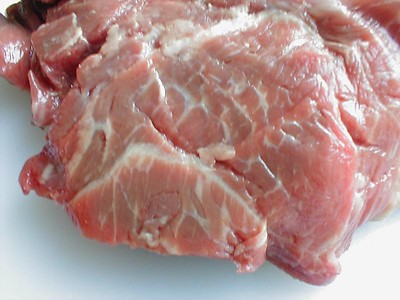
Last week, Indonesia became the first country to halt imports of US beef following the discovery of an American dairy cow infected with mad cow disease, or bovine spongiform encephalopathy. The disease is fatal to cows and can cause a deadly brain disease in people who eat tainted beef.
“We will lift the ban as soon as the US can assure us its dairy cows are free of mad cow disease,” said Rusman Heriawan, Indonesia’s vice agriculture minister. “It could be one month or one year. It depends on how long it takes to resolve this case.”
One would think the US government would immediately test beef to make sure it’s safe. But the USDA, which regulates the test, administers it to less than 1% of slaughtered cows. Worse, until 2007 it was illegal for private beef producers to test their own cows for the disease! Larger meat companies feared that if smaller producers tested their meat and advertised it as safe from mad cow disease, they too might be forced to test all their cows—so they persuaded USDA to block individual producers from doing the test. In 2007 a federal judge said this practice could no longer stand.
The highest risk occurs if animals or humans eat infected brain or nerve tissue. Meat unconnected to bone, milk, and hooves are supposed to be safe, but who knows for sure? The ultimate source of mad cow, of course, is the filthy and disease-ridden (not to mention inhumane) conditions in CAFOs, or concentrated animal feedlot operations.
In February, Taiwan began refusing meat products from the US because they contain ractopamine, a leanness- and growth-promoting drug used widely in pork and beef production in the United States. Taiwan has a zero-tolerance policy for the drug.
Ractopamine is banned in 160 nations including Europe because it is responsible for hyperactivity and muscle breakdown in pigs, and a 10% increase in their mortality rate. It was banned in China after more than 1700 people were “poisoned” from eating American pigs that had been given ractopamine. The drug bears the warning label, “Not for use in humans. Individuals with cardiovascular disease should exercise special caution to avoid exposure. Use protective clothing, impervious gloves, protective eye wear, and a NIOSH-approved dust mask’’—yet somehow it is considered safe in human food. How is this possible?
Most of the world’s developed countries ban, or have at least placed limits on, genetically modified organisms. The European Union and its member states, as well as Switzerland, Norway, Australia, New Zealand, Thailand, the Philippines, Saudi Arabia, Egypt, Algeria, Brazil, and Paraguay all have restrictions or outright bans on the use or importation of genetically engineered seeds, plants, or foods. A detailed map with the specific products banned in Europe is available here.
This is one reason the California Right to Know 2012 Ballot Initiative is so important. If California requires labeling products containing GMOs, it will be difficult for most manufacturers to create separate labels for their products sold in other states, so the labeling will become national. This is why we are trying to help the Right to Know Campaign raise one million dollars to drop a “money bomb” on Monsanto—to combat the anti-GMO propaganda and get this proposition passed in November. If you haven’t done so already, please make a donation to the Right to Know Campaign—and please give generously!     Source:  http://www.anh-usa.org/how-safe-is-our-food

250,000 GMO FARMER SUICIDES - NEW FILM


‘Bitter Seeds’ documentary reveals tragic toll of GMOs in India

When home-front battles over GMO labeling, beekeeping, and the Farm Bill get heated, we can sometimes lose sight of the fact that Big Ag’s influence extends far beyond our own borders. Micha Peled’s documentary Bitter Seeds is a stark reminder of that fact. The final film in Peled’s “globalization trilogy,” Bitter Seeds exposes the havoc Monsanto has wreaked on rural farming communities in India, and serves as a fierce rebuttal to the claim that genetically modified seeds can save the developing world.
The film follows a plucky 18-year-old girl named Manjusha, whose father was one of the quarter-million farmers who have committed suicide in India in the last 16 years. As Grist and others have reported, the motivations for these suicides follow a familiar pattern: Farmers become trapped in a cycle of debt trying to make a living growing Monsanto’s genetically engineered Bt cotton. They always live close to the edge, but one season’s ruined crop can dash hopes of ever paying back their loans, much less enabling their families to get ahead. Manjusha’s father, like many other suicide victims, killed himself by drinking the pesticide he spreads on his crops.

Why is Monsanto seen as responsible for these farmers’ desperation? The company began selling Bt cotton in India in 2004, after a U.S. challenge at the WTO forced India to adopt seed patenting, effectively allowing Monsanto to monopolize the market. Bt cotton seeds were — and still are — advertised heavily to illiterate Indian farmers, who have bought the company’s promises of high yields and the material wealth they bring. What the farmers didn’t know until it was too late is those seeds require an expensive regimen of pesticides, and must be fertilized and watered according to precise timetables. And since these farmers lack irrigation systems, and must instead depend on not-always-predictable rainfall, it’s incredibly difficult to control the success or failure of any year’s crops. As farmers bought the Bt cotton in droves, the conventional seed they’d been using — which needed only cow dung as fertilizer — disappeared in as little as one season. Now, in communities like Manjusha’s, it’s virtually impossible to buy anything but Monsanto’s seed.

Manjusha, the film’s protagonist, goes looking for answers after her father commits suicide.
To pay for seeds, pesticides, and fertilizer, farmers must take out loans, but most banks refuse to deal with them, so instead they turn to moneylenders, who charge exorbitant interest rates. Many farmers have nothing to offer as collateral besides their land. If a crop fails and they can’t pay back the loans, they lose everything.
The film offers a glimmer of hope in Manjusha, an aspiring journalist in a world where farmers’ daughters aren’t exactly encouraged to pursue independent careers. Scenes of her first earnest attempts at reporting are intimate and touching (“I had other questions to ask, but I forgot”), and her commitment to telling the story of her family’s and her community’s struggle always shines through her nervousness. This appealing heroine makes a story of global manipulation more personal, and thus more devastating.
Piece by piece, Bitter Seeds lays out the bleak situation in India, using interviews with all players, from condescending seed sales reps and callous Monsanto execs, to activist Vandana Shiva, to farmers, their families, and village old-timers who remember when life as an Indian cotton farmer was not so bitter.
Proponents hail GMO crops as a triumph of science over nature that could provide a solution to world hunger. But this film reveals a society of farmers whose way of life, and very lives, are threatened. If GMOs have any benefits, it would be hard to convince me that they outweigh the human costs portrayed in Bitter Seeds.


GET OFF THE BOTTLE! LOYOLA LEADS THE WAY!

Bottled waterLoyola University Chicago Ditches Bottled Water

- Common Dreams staff
Loyola University Chicago announced its plan to ban the sale of bottled water on Thursday following a year-long student campaign.
(photo: Myrtle Beach TheDigitel)
“It is exciting to see the leadership and commitment from the students on the topic of water,” said Aaron Durnbaugh, director of sustainability at Loyola, the nation’s largest Jesuit, Catholic university. “With our location on the banks of the greatest fresh water resource in the world, our drinking water could be taken for granted, but the students recognize its value and our responsibility to protect and preserve this resource for all.”
The campaign, called Uncap Loyola, was led by the Student Environmental Alliance (SEA), in partnership with Loyola’s Unified Student Government Association (USGA), and targeted bottled water as an environmental and social justice issue.
“We consider the sale of bottled water on campus in conflict with the Jesuit tradition and Loyola’s mission ‘to be in service of humanity through learning, justice and faith.’ We feel that safe and accessible water is a fundamental human right and must not be handled in ways that put profits over people,” SEA and USGA representatives said in a joint statement.
The university will remove bottled water from dining service venues and catering starting in the fall semesters, and will be phased out from vending starting in 2013.

HERE IT IS: YOUR TOP TEN USA LOCAVORE LIST

'Locavorism on the Rise Everywhere': US Consumers Turn to Smaller, Local Farms

New index ranks states using government agricultural and population data

- Common Dreams staff
Community-supported agriculture projects, farmers markets, and other 'local food' systems are on the rise nationwide, according to a first of its kind index based on US government data. And supporting this 'locavore' movement is a growing army of consumers who are see the connection between their food choices and the impact they have on communities, the environment, and their own health.
(Toby Talbot | AP) Using data exclusively from government sources (principally USDA and US Census) dating from 2010 and 2011, the Locavore Index measures the commitment of states to locally-sourced foods by measuring the per-capita presence of Community-Supported Agricultural enterprises and Farmers Markets, each of which is an indication of both the availability and demand for locally-produced food. According to Strolling with the Heifers, the Vermont-based group that assembled the index, local foods are more sustainable, healthier, better for the environment and economically positive than foods sourced from large-scale, globalized food systems.
Locavorism is about "creating an oasis... in the context of a globalized food system that's completely anonymous." --Jessica Prentice
The top five states for locavorism, according to the Index, in order, are Vermont (No. 1), Iowa, Montana, Maine and Hawaii, while the bottom five are Florida (No. 50), Arizona, New Jersey, Nevada and Louisiana. But, says Orly Munzing, founder and executive director of Strolling of the Heifers, “Locavorism is on the rise everywhere, so there’s no stigma in being closer to the bottom of the list. Our research shows that CSAs and Farmers Markets, as well as Farm-to-Plate programs, which bring local foods into schools and other institutional food systems, are becoming more numerous every day in every state.”
Vermont has 99 farmers markets and 164 CSAs, with a population of fewer than 622,000, according to the index, whereas Florida, which produces much of the nation's citrus, strawberries and tomatoes, was in the bottom five with only 146 farmers markets and 193 CSAs for 18.5 million people.
Roger Allbee, former Vermont Secretary of Agriculture, said, “Vermont’s position at the top of the Index shows the strength of Vermont’s commitment to innovation and entrepreneurship in local agriculture. We’ve been a leader in that area for generation.”
Jessica Prentice, a San Francisco Bay-area chef who coined the term locavore, spoke to the Associated Press about the locavore movement and said it was about more than 'food miles' and healthy eating. "Really what it's about is moving into a kind of food system where you're connected to the source of your food. You're buying from people that you know or can meet and you're buying food grown in a place that you can easily drive to and see."
"This is more about creating an oasis really in the context of a globalized food system that's completely anonymous," she said.
"The whole purpose of this is really to stimulate the conversation about locavorism, which fits into the mission of Strolling of the Heifers," said Martin Cohn, a spokesman for the group, which works to save farms in New England.
See below for a full listing of the 50 states as ranked by the Locavore Index. Click here for a PDF chart including the underlying data and sources used to develop the Index.
*  *  *
Strolling of the Heifers: 'Locavorism is on the rise everywhere!'(Photo by Shelby PDX, used under Creative Commons License.)
The Strolling of the Heifers announces the Locavore Index: an indicator of how states compare in their commitment to raising and eating locally grown food. In the 2012 Locavore Index, Vermont ranks first among the fifty states. (See Associated Press news story about the Index.)
Using data exclusively from government sources (principally USDA and US Census data) dating from 2010 and 2011, the Locavore Index measures the commitment of states to locally-sourced foods by measuring the per-capita presence of Community-Supported Agricultural enterprises and Farmers Markets, each of which is an indication of both the availability and demand for locally-produced food.
CSAs are a cooperative agreement between farmers and consumers; consumer buy shares in the farm's output and have some say in what is grown. When crops come in, they are divided among shareholders according to the volume of their shares, and the rest may be sold at market. CSA farmers get revenue in advance to cover costs of tilling, soil preparation and seed. Shareholders get fresh produce grown locally and contribute to sustainable farming practices.
Farmers Markets are generally cooperative efforts to market locally produced food in a central location where consumers can select and purchase food from multiple farm enterprises.
The Index incorporates both CSAs and Farmers Markets in its per-capita, 50-state comparison of consumers’ interest in eating locally-sourced foods — also known as locavorism. [...]
The term “locavore,” and the locavorism movement, are both comparatively recent. “Locavore” made its first appearance in 2005 and was designated the 2007 Word of the Year by the Oxford American Dictionary. As a movement, locavorism advocates a preference for local food for a variety of reasons, including:
  • Local food travels much less distance to market than typical fresh or processed grocery store foods, therefore using less fuel and generating fewer greenhouse gases.
  • Local food is fresher, and therefore healthier, spending less time in transit from farm to plate, and therefore losing fewer nutrients and incurring less spoilage.
  • Local food encourages diversification of local agriculture, which reduces the reliance on monoculture — single crops grown over a wide area to the detriment of soils.
  • Local food encourages the consumption of organic foods and reduces reliance on artificial fertilizers and pesticides.
  • Local foods create local jobs by supporting family farms and the development of local food processing and distribution systems.
  • Local foods create more vibrant communities by connecting people with the farmers and food producers who bring them healthy local foods.
In short, local foods are more sustainable, healthier, better for the environment and economically positive than foods sourced from large-scale, globalized food systems.
*  *  *
A committed “locavore,” Robin McDermott once struggled to stock her kitchen with food grown within 100 miles of her Vermont home. She once drove 70 miles to buy beans and ordered a bulk shipment of oats from the neighboring Canadian province of Quebec.
Six years later, she doesn’t travel far: She can buy chickens at the farmers market, local farms grow a wider range of produce, and her grocery store stocks meat, cheese and even flour produced in the area. A bakery in a nearby town sells bread made from Vermont grains, and she’s found a place to buy locally made sunflower oil.
Nationwide, small farms, farmers markets and specialty food makers are popping up and thriving as more people seek locally produced foods. More than half of consumers now say it’s more important to buy local than organic, according to market research firm Mintel, and Deputy Agriculture Secretary Kathleen Merrigan called the local food movement “the biggest retail food trend in my adult lifetime.”
But with no official definition for what makes a food local, the government can’t track sales. And consumers don’t always know what they are buying. A supermarket tomato labeled “local” may have come from 10, 100 or more miles away.
Strict locavores stick to food raised within a certain radius of their home — 50, 100 or 250 miles. Others may allow themselves dried spices, coffee or chocolate.
“I don’t treat it as a religion,” said Valerie Taylor, of Montgomery, Ohio, who tries to eat locally when she can but won’t go without a salad in the winter or an avocado if she wants it. She estimated 95 percent of the meat and 70 percent of the produce she eats is local in the summer, but not in the winter.
McDermott has eased up after eating locally during a Vermont winter, which meant a lot of meat and root vegetables. She now allows herself olive oil and citrus and in winter, greens.
“In 2006, I felt like a Vermonter of years past,” she said. “You know, I was going down into my root cellar and saying, ‘I guess it will be potatoes again.’”
Two of the more common standards used by locavores are food produced within 100 miles or within the same state that it’s consumed. A new locavore index ranked Vermont as the top state in its commitment to raising and eating locally grown food based on the number of farmers markets and community supported agriculture farms, where customers pay a lump sum up front and receive weekly deliveries of produce and other foods.
*  *  *
The 2012 Locavore Index ranking of states (Click here for a PDF chart including the underlying data and sources used to develop the Index):
1. Vermont
2. Iowa
3. Montana
4. Maine
5. Hawaii
6. Kentucky
7. North Dakota
8. South Dakota
9. Wyoming
10. Idaho
11. West Virginia
12. Nebraska
13. New Hampshire
14. Oregon
15. Wisconsin
16. New Mexico
17. Minnesota
18. Missouri
19. Kansas
20. Oklahoma
21. Arkansas
22. Washington
23. Mississippi
24. Rhode Island
25. Michigan
26. Alabama
27. Alaska
28. Massachusetts
29. Connecticut
30. Indiana
31. Colorado
32. North Carolina
33. South Carolina
34. Virginia
35. Ohio
36. Tennessee
37. Utah
38. Pennsylvania
39. Maryland
40. Illinois
41. California
42. New York
43. Texas
44. Georgia
45. Delaware
46. Louisiana
47. Nevada
48. New Jersey
49. Arizona
50. Florida
 
#  #  #

Sunday, May 6, 2012

ANY IDEA WHERE OUR DRINKING WATER COMES FROM??

It's National Drinking Water Week!

National Drinking Water Week starts on May 6 and ends May12.
Take some time to become aware of the status of our drinking water here on Long Island and across the planet. The attached documents have a lot of interesting information and the video is very well done.
From a previous posting-The water we have is millions of years old and the Earth repeatedly cycles this antique resource. Only about 3 percent of all water on Earth is fresh, and of that, almost 70 percent is locked up in glaciers. Less than one percent of usable freshwater is readily accessible to humanity. This means that about 0.007 percent of all water on Earth is available for human consumption.  
A billion people do not have access to clean water. Millions of people are facing water shortages, and millions more will suffer the same fate in the coming years. We received this life sustaining resource from the past and we are most certainly altering what we will leave to the future.
When you look at this blue planet we call Earth, you will see about 70% is covered by water. I think Earth should be called Water.
All we get is what we have. We cannot afford to mess this up. Try to imagine life without water.
Source:  http://easthampton.patch.com/blog_posts/its-national-drinking-water-week