Monday, June 29, 2015

EARTH IS NOT A MACHINE: GMO SEED PATENTS ARE REDUCTIONIST ANTI-SCIENCE FRAGMENTATION

Published on
by

Stupidity and Intelligence: Science, GMOs and Our Food

How industrial-scale farming is actually becoming anti-science.
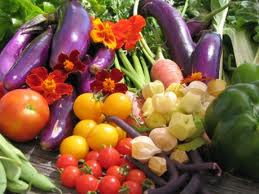
The intelligence of both human farmers and the natural world itself, writes Dr. Shiva, "is being thwarted by the false construction of the living Earth as dead matter, to be exploited limitlessly for human control, domination and greed." (Photo: fossen_42/flickr/cc)
"Science" is derived from the scire – "to know".
Each of us should know what we are eating, how it was produced, what impact it has on our health.
"Agroecology, not the mechanistic and blind paradigm of industrial agriculture, is the truly scientific approach to food production."
The knowledge we need for growing food is knowledge of biodiversity and living seed, of living soil and the soil food web, of interaction between different species in the agroecosystem and of different seasons. Farmers have been the experts in these fields, as have ecological scientists who study the evolution of microorganisms, plants and animals, the ecological web and the soil food web.
In industrial agriculture the knowledge of living systems is totally missing since industrial agriculture was externally driven by using war chemicals as inputs for agriculture. Soil was defined as an empty container for holding synthetic fertilizers, plants were defined as machines running on external inputs. This meant substituting the ecological functions and services that nature and farmers can provide through renewal of soil fertility, pest and weed control, and seed improvement. But it also implied ignorance of the destruction of the functions by the toxic chemicals applied to agriculture.
This complex knowledge of interacting, self-organizing, self-maintaining, self-renewing and self-evolving systems that farmers have had is now being confirmed through the latest in ecology. At the agricultural systems level, agroecology, not the mechanistic and blind paradigm of industrial agriculture, is the truly scientific approach to food production.
At the level of organisms, epigenetics and the new knowledge that cells are in constant communication with each other is leading to the emergence of a new paradigm of life as communication and intelligence. Living systems are not dead matter, assembled like a machine. 

Yet in recent times only one kind of knowledge, the Mechanistic Reductionist paradigm based on seeing the world as a machine, and reduction of a system its parts, has been elevated to the status of science.
The emerging sciences of complexity and connectedness expose the oceans of ignorance in which the mechanistic fundamentalism is steeped. Because living systems are self-organized complexity—and not machines— knowledge of a small fragmented part in isolation of its relationships with the rest of the system, translates into not-knowing.
This epistemic violence is now being combined with the violence of corporate interests to viciously attack all scientific traditions, including those that have evolved from within Western Science and transcended the mechanistic world view.
Industrial-scale farming, in this way, is actually becoming anti-science.
No where is this more evident than in how reductionism has  been used to colonise the seed. Seed is self organized intelligence – it reproduces, it multiplies, and it constantly evolves. Farmers, specially women, have combined their intelligence with the intelligence of the seed, and through breeding as co-creation, they have domesticated wild plants, increased diversity to adapt to diverse climates and cultures. Additionally, they have improved both nutrition and taste as well as increased resilience, which is the evolutionary potential of the seed. Seeds have been improved on the basis of ecological and social criteria.
The rhetoric for taking over food systems and seed supply is always based on "Improved Seed." But what is not mentioned is that industrial seeds are only "improved" in the context of higher dependence on chemicals, and more control by corporations.
The latest in the anti-scientific discourse of industrial agriculture is by reducing everything to "GMOs."
Genetic Engineering is used to redefine seed as a corporate "invention" to claim patents and collect royalties. Farmers suicides in the cotton belt of India are directly related to the extraction of super-profits from farmers as royalty. And this is illegal since Monsanto never had a patent on Bt cotton.
It is claimed the GMOs will increase food production but the technology does not increase yields.
It is claimed that genetic engineering is a precise technology. This is false for four primary reasons. First, genetic engineering is based on the false assumption that one gene gives rise to one trait. Second, it is so imprecise that antibiotic resistance marker genes have to be added to even know if the gene was actually introduced in the cell of the plant and genes from virulent viruses have to be added to promote the trait being introduced. Third, because the genes come from unrelated organisms, and include bacterial and viral genes, there are unknown impacts on the organism and the ecosystem in which it is introduced. This is why there are multidisciplinary sciences involved in Biosafety, and an international UN law to regulate GMOs for their Biosafety impact called the Cartagena Protocol to the Convention on the Conservation of Biodiversity.
"It is precisely on the denial of intelligence of humans and other species that the edifice of mechanistic reductionism is based."
Fourth, the anti-scientific claim that GMOs are accurate and selection and conventional breeding are inaccurate ignores the intelligence of plants and of farmers which is at play in evolution. In fact, the emergence of antibiotic resistance indicates the intelligence of bacteria to evolve under the pressure  of antibiotics. Bacteria, as intelligent beings, are remaking themselves in response to antibiotics. The emergence of superpests resistant to Bt toxin in plants, and superweeds resistant to Roundup with the spread of Roundup Ready GMOs indicates the intelligence of insects and plants to remake themselves under the pressure of toxins associated with GMOs which are designed to kill them. But it is precisely on the denial of intelligence of humans and other species that the edifice of mechanistic reductionism is based.
"Intelligence" is based on the Latin inter legere – "to choose". From the slime mold and bacteria, to plants and animals, including humans, intelligence is the choice we make to evolve in order to respond to changing contexts. Life is a cognitive system, with communication constantly taking place in a network on non-separable patterns of relationship. Living beings innovate all the time to deal with environmental challenges that face them. As evolutionary biologist Richard Lewontin says, "The characteristic of a living object is that it reacts to external stimuli rather than being passively propelled by them. An organisms life is constant mid-course corrections."
As a species, we as humans are falling behind the slime mold and bacteria to make an intelligent response to the environmental threats we face. And our intelligence is being thwarted by the false construction of the living Earth as dead matter, to be exploited limitlessly for human control, domination and greed.
The mid-course correction we need is to move beyond the mechanistic paradigm, and beyond exploitation which is manipulating not just living organisms, but knowledge itself.
It is claimed that the Bt toxin in GMOs degrades, but it has been found to survive in the blood of pregnant women and fetuses. It is claimed that Roundup and Roundup Ready crops are safe for humans because humans do not have the shikimate pathway. This is outright violence against science. Ninety percent of the genetic information in our body is not human but bacterial.

Out of the 600 trillion cells in our body only 6 trillion are human, the rest are bacterial. And bacteria have the shikimate pathway. The bacteria in our gut are being killed by Roundup leading to serious disease epidemics, from increasing intestinal disorders to neurological problems such as the increase in occurrence of autism and Alzheimers. The soil, the gut and our brain are one interconnected biome – violence to one part triggers violence in the entire inter-related system. The US Centers for Disease Control data shows that on current trends one in two children in the US could be autistic in a few decades. It is not an intelligent species that destroys its own future because of a distorted and manipulated definition of science.
As Einstein had observed: "Two things are infinite: the universe and human stupidity; and I’m not sure about the universe."
Dr. Vandana Shiva is a philosopher, environmental activist and eco feminist. She is the founder/director of Navdanya Research Foundation for Science, Technology, and Ecology. She is author of numerous books including, Soil Not Oil: Environmental Justice in an Age of Climate Crisis; Stolen Harvest: The Hijacking of the Global Food Supply; Earth Democracy: Justice, Sustainability, and Peace; and Staying Alive: Women, Ecology, and Development. Shiva has also served as an adviser to governments in India and abroad as well as NGOs, including the International Forum on Globalization, the Women’s Environment and Development Organization and the Third World Network. She has received numerous awards, including 1993 Right Livelihood Award (Alternative Nobel Prize) and the 2010 Sydney Peace Prize.
Source:  http://www.commondreams.org/views/2015/06/29/stupidity-and-intelligence-science-gmos-and-our-food

Friday, June 26, 2015

GMO ROUNDUP NEWS JUNE 26, 2015


Center for Research on Globalization - ‎3 hours ago‎


Russian President, Vladimir Putin has led a strong stance against biotech and their cultivation of GM crops in his country. Now, the Russian Deputy Prime Minister, Arkady Dvorkovich, has announced at the St. Petersburg International Economic Forum that ...
--------------------------------------------------------------------------
Axis of Logic - ‎Jun 24, 2015‎


Bill Freese, science policy analyst at the Center for Food Safety, told Common Dreams that it was important to note that France only banned the use of Roundup for homeowners, rather than the agricultural sector.
---------------------------------------------------------------------------------------------------

EcoWatch - ‎1 hour ago‎


Pope Francis Slams GMOs and Pesticides for Destroying the Earth's 'Complex Web of Ecosystems'. Lori Ann Burd, Center for Biological Diversity | June 26, 2015 11:04 am | Comments.
------------------------------------------------------------------------------------------------

International Business Times - ‎6 hours ago‎


The head of a leading U.S. consumer group has called for mandatory labeling of food with genetically modified ingredients. In this photo, employees stock shelves near a sign supporting non genetically modified organisms (GMO) at the Central Co-op in ...
-------------------------------------------------------------------------------------------
Tech Times - ‎19 hours ago‎


The wheat strain had been genetically engineered to give off pheromones mimicking insect alarms to scare away pests such as aphids while attracting their natural predators, and while successfully tested in the laboratory it failed to repel the damaging ...

teleSUR English - ‎7 hours ago‎


The World Health Organization ruled this week that a chemical in an herbicide used on genetically engineered corn and soy crops is “possibly” cancer-causing for humans.
----------------------------------------------------------------------

EcoWatch - ‎21 hours ago‎


“More than 300,000 people from across the country are asking Costco not to sell genetically modified salmon. Costco, a seemingly progressive company, is located in our backyard.

CSRwire.com (press release) - ‎Jun 25, 2015‎


UNIONVILLE, C.T., Jun. 25 /CSRwire/ - GMO Free USA will be joining Neil Young + Promise of the Real during their upcoming tour to promote their new studio album, The Monsanto Years.

eco-business.com - ‎8 hours ago‎


Backers of GMO corn are pushing for security certification from Chinese government authorities. If approved, GMO corn could be industrially planted in as little as three years, according to the financial and business website caijing.

CJAD - ‎Jun 25, 2015‎


A recent article in Forbes magazine examined the use of pesticides in connection with genetically modified crops and concluded that the introduction such crops has not reduced overall pesticide use.

Pioneer News - ‎9 hours ago‎


One major purpose of genetically modified crops is to make our grains and fruits and vegetables more resistant to disease and pests.
Manufacturing Business Technology - ‎2 hours ago‎


A recent study of genetically modified salmon led scientists to conclude that commercializing the altered fish would inherently pose some risk to the environment.

SCIENTIST PONTIFF: GMOs DESTROY ECONOMIES, ECOSYSTEMS AND DIVERSITY

Pope Francis Slams GMOs and Pesticides for Destroying the Earth’s ‘Complex Web of Ecosystems’

| June 26, 2015 11:04 am
popfmo650Pope Francis’s encyclical didn’t just cover climate change, he also denounced pesticides and genetically engineered (GE) crops, declaring “the spread of these crops destroys the complex web of ecosystems, decreases diversity in production and affects the present and the future of regional economies.”
Biotech companies claim their products are key to solving hunger, but the Pope knows this isn’t true. No commercial GE crops are engineered for increased yield. Five of every six acres of GE crops are engineered for herbicide-tolerance, i.e. to survive being drenched with what would normally be a toxic dose of herbicide, usually Round-up, or glyphosate.
The Pope’s message couldn’t come at a better time. Pesticide use is at an all-time high. The U.S. Department of Agriculture says glyphosate use on corn and soy increased from 10 million pounds in 1995, the year Roundup Ready crops were introduced, to 204 million in 2013. The U.S. Geological Survey routinely finds glyphosate in our water. The Word Health Organization just declared glyphosate a probable carcinogen.
The Pope observed that pesticide use “creates a vicious circle in which the intervention of the human being to solve a problem often worsens the situation further.” He said, “many birds and insects die out as a result of toxic pesticides created by technology … [and this] actually causes the Earth we live in to become less rich and beautiful, more and more limited and gray …”
Pesticides have already made our Earth less rich and more gray by nearly wiping out monarch butterflies, which have declined by 90 percent, largely because increased glyphosate use has wiped out the monarch’s sole host plant, milkweed. Pesticides are a leading cause of our current pollinator collapse. With one-third of the bites we eat requiring bee-pollination, many world leaders, including President Obama, are waking up to the need for action.
Like Pope Francis, I believe protecting the Earth is our moral imperative. With this encyclical, the Pope reminds us that our fates are intertwined with all species, and calls us to action.
Source:
 
http://ecowatch.com/2015/06/26/pope-francis-pesticides-gmos/

Thursday, June 18, 2015

ANOTHER CALL FOR GMO CROP BAN: GERMANY


100,000 German beekeepers call for GMO cultivation ban

Beekeepers on collision course with GMO cultivation opt-out law

German beekeepers have called for a nationwide ban on cultivating GM plants, reports the German NGO keine-gentechnik.de.

The call by the German Beekeepers Association (DIB), which represents almost 100,000 beekeepers, comes after Europe adopted controversial legislation enabling member states to opt-out of the cultivation of GMOs that have been approved at the EU level.

Under the law, a member state can ban a GMO in part or all of its territory. But the law has come under heavy criticism for failing to provide a solid basis for such bans.

The beekeepers are urging Agriculture Minister Christian Schmidt (CSU) to implement a Germany-wide ban on cultivation. The Minister pleads, however, for letting each state decide individually.

The beekeepers counter that a piecemeal approach will not work. Bees fly up to eight kilometres in search of food, the DIB said, so a juxtaposition of GM crop cultivation zones and GMO-free zones within Germany would be "environmentally and agriculturally unacceptable".

“Bees know no borders," the DIB added.

The beekeepers’ demand for a nationwide ban could bring them into direct conflict with the new opt-out law, as experts warn that such bans may not be legally solid.

National GMO cultivation bans will be tough to uphold

At a conference on the new European legislation hosted by the Hungarian Ministry of Agriculture in Budapest, Hungary, in April 2015, Dr H.-Christoph von Heydebrand of the German Federal Ministry of Food and Agriculture warned that a nationwide ban on GMO cultivation would be much harder to justify under the new law than a regional or local ban.

A lawyer from the EU Council, Matthew Moore, speaking at the same conference in a personal capacity, agreed that it would be far easier under the law to defend national measures that “do not extend to the whole territory”.

Mr Moore gave an example of the type of challenge that would-be opting-out countries will be faced with. If they argue that GMOs threaten small-scale and agroecological farmers in their nation, they could be asked: “Is the entirety of your agricultural sector really composed of small farmers whose domination by a large agro-industrial company and its single pesticide motivated you to act?”

Mr Moore explained that the principle of proportionality is written into the new law, as well as being a general principle of EU law.

This means that the ECJ will be more inclined to accept GMO cultivation opt-outs “in relation to a defined region than in relation to the entirety of the territory of a country the size of Hungary”. Any measure taken by an opting-out country to ban or restrict the cultivation of GMOs must not go beyond what is necessary to achieve the stated aim.

Mr Moore made clear that if opt-outs were challenged, for example, by the GMO industry, the case would end up in the European Court of Justice. And the ECJ has a presumption in favour of the EU single market.

In simple terms, that means the ECJ could take a lot of convincing to allow a country or even a region to opt out of cultivating a GMO that the European Food Safety Authority (EFSA) asserts is safe. Such an opt-out, if allowed to stand, could create divisions in the European single market and might bring the member state into conflict with the ECJ.

The current situation in Germany, with beekeepers ranged against government officials and pro-GMO farmers, also suggests that the new opt-out law will create internal divisions within a country.

The GMO industry may go down in history as having broken apart the European Union and set one sector of the food and agriculture industry against another.

Report: Claire Robinson

Read this article online here:

http://gmwatch.org/news/latest-news/16240

Monday, June 15, 2015

ROUNDUP on GMO NEWS June 15 2015


Op-Ed: Vandana Shiva and the anti-GMO movement

Digital Journal - ‎11 hours ago‎
Vandana Shiva is a well known environmental activist, eco-feminist, and anti-GMO campaigner. Time Magazine in 2003 called her an environmental hero and one of Asia's most powerful communicators.

Monsanto in the middle of upcoming congressional fight over GMO labeling

STLtoday.com - ‎10 hours ago‎
Pompeo said scientists have concluded GMO crops are safe and he sees them as essential to feeding an exploding global population.
 

Iwi fight to stay GMO free

Radio New Zealand - ‎19 hours ago‎
Iwi in Tai Tokerau are fighting to keep their rohe free of Genetically Modified Organisms. Tai Tokerau and environmental groups supported Whangarei District Council in successfully defending the right of local authorities to manage the use of ..
 

Free non-GMO seeds featured in garden program

Brainerd Daily Dispatch - ‎Jun 12, 2015‎
"Give it a Grow" is a collaboration with Crow Wing Energized, University of Minnesota Extension Crow Wing County Master Gardeners and the Brainerd Public Library to provide free open pollinated, non-GMO, untreated seeds that people can grow, eat and ...
 

Kashi settles GMO false ad class action for nearly $4 million

Lexology (registration) - ‎6 hours ago‎
Kashi Co., a unit of Kellogg Co., has agreed to pay up to $3.99 million in a class action alleging that the company advertised its products as “All Natural” despite containing genetically modified organisms (GMOs). Eggnatz v. The Kellogg Co., No. 12 ...
 

Monsanto's PR, Organic Farming vs. GMO: How the Great Food War Will Be Won

Center for Research on Globalization - ‎Jun 10, 2015‎
Anyone who wants a sustainable, pesticide-free, or non-GMO food future, or who wants to swim in a healthy river or lake again, or wants to avoid climate chaos, needs to know all this.
 

Consumers Becoming More Aware Food Ingredients as Non-GMO Certified ...

CNNMoney - ‎Jun 9, 2015‎
As more and more nations globally do not consider GMOs (genetically modified organisms) to be safe for consumer goods products, The Non-GMO Project, a non-profit organization, is on a mission of protecting the non-GMO food supply and giving ...


Friday, June 12, 2015

BIG FOOD & AG PR INDUSTRIAL-STRENGTH LYING MACHINE - VS - THE TRUTH

Monsanto’s PR, Organic Farming vs. GMO: How the Great Food War Will Be Won


Getting used to Life without Food
By conventional wisdom it is excellent news. Researchers from Iowa have shown that organic farming methods can yield almost as highly as pesticide-intensive methods. Other researchers, from Berkeley, California, havereached a similar conclusion. Indeed, both findings met with a very enthusiastic reception. The enthusiasm is appropriate, but only if one misses a deep and fundamental point: that even to participate in such a conversation is to fall into a carefully laid trap.

The strategic centrepiece of Monsanto’s PR, and also that of just about every major commercial participant in the industrialised food system, is to focus on the promotion of one single overarching idea. The big idea that industrial producers in the food system want you to believe is that only they can produce enough for the future population (Peekhaus 2010). Thus non-industrial systems of farming, such as all those which use agroecological methods, or SRI, or are localised and family-oriented, or which use organic methods, or non-GMO seeds, cannot feed the world.
  Dustbowl and soil erosion USA, 1935'sDustbowl and soil erosion USA, 1935
To be sure, agribusiness has other PR strategies. Agribusiness is “pro-science”, its opponents are “anti-science”, and so on. But the main plank has for decades been to create a cast-iron moral framing around the need to produce more food (Stone and Glover 2011).

Therefore, if you go to the websites of Monsanto andCargill and Syngenta and Bayer, and their bedfellows: the US Farm Bureau, the UK National Farmers Union, and the American Soybean Association, andCropLife International, or The Bill and Melinda Gates Foundation, The Rockefeller Foundation, USAID, or the international research system (CGIAR), and now even NASA, they very early (if not instantaneously) raise the “urgent problem” of who will feed the expected global population of 9 or 10 billion in 2050.
Likewise, whenever these same organisations compose speeches or press releases, or videos, or make any pronouncement designed for policymakers or the populace, they devote precious space to the same urgent problem. It is even in their job advertisements. It is their Golden Fact and their universal calling card. And as far as neutrals are concerned it wins the food system debate hands down, because it says, if any other farming system cannot feed the world, it is irrelevant. Only agribusiness can do that.

The real food crisis is of overproduction
Yet this strategy has a disastrous foundational weakness. There is no global or regional shortage of food. There never has been and nor is there ever likely to be. India has a superabundance of food. South America is swamped in food. The US, Australia, New Zealand and Europe are swamped in food (e.g. Billen et al 2011). In Britain, like in many wealthy countries, nearly half of all row crop food production now goes to biofuels, which at bottom are an attempt to dispose of surplus agricultural products. China isn’t quite swamped but it still exports food (see Fig 1.); and it grows 30% of the world’s cotton. No foodpocalypse there either.

Of all the populous nations, Bangladesh comes closest to not being swamped in food. Its situation is complex. Its government says it is self-sufficient. The UN world Food Program says it is not, but the truth appears to be that Bangladeshi farmers do not produce the rice they could because prices are too low, because of persistent gluts (1).
Chinese net food exportsFig 1. Chinese net food exports (Dr. Jikun Huang, Center for Chinese Agricultural Policy)
Even some establishment institutions will occasionally admit that the food shortage concept – now and in any reasonably conceivable future – is bankrupt. According to experts consulted by the World Bank Institute there is already sufficient food production for 14 billion people – more food than will ever be needed. The Golden Fact of agribusiness is a lie.

Truth restoration
So, if the agribusiness PR experts are correct that food crisis fears are pivotal to their industry, then it follows that those who oppose the industrialization of food and agriculture should make dismantling that lie their top priority.


Anyone who wants a sustainable, pesticide-free, or non-GMO food future, or who wants to swim in a healthy river or lake again, or wants to avoid climate chaos, needs to know all this. Anyone who would like to rebuild the rural economy or who appreciates cultural, biological, or agricultural diversity of any meaningful kind should take every possible opportunity to point out the evidence that refutes it. Granaries are bulging, crops are being burned as biofuels or dumped, prices are low, farmers are abandoning farming for slums and cities, all because of massive oversupply. Anyone could also point out that probably the least important criterion for growing food, is how much it yields. Even just to acknowledge crop yield, as an issue for anyone other than the individual farmer, is to reinforce the framing of the industry they oppose.

The project to fully industrialise global food production is far from complete, yet already it is responsible for most deforestation, most marine pollution, most coral reef destruction, much of greenhouse gas emissions, most habitat loss, most of the degradation of streams and rivers, most food insecurity, most immigration, most water depletion, massive human health problems, and so on (Foley et al 2005; Foley et al 2011). Therefore, it is not an exaggeration to say that if the industrialisation of food is not reversed our planet will be made unlivable for multi-cellular organisms. Our planet is becoming literally uninhabitable solely as a result of the social and ecological consequences of industrialising agriculture. All these problems are without even mentioning thetrillions of dollars in annual externalised costs and subsidies (Pretty et al. 2000).

So, if one were to devise a strategy for the food movement, it would be this. The public already knows (mostly) that pesticides are dangerous. They also know that organic food is higher quality, and is far more environmentally friendly. It knows that GMOs should be labeled, are largely untested, and may be harmful. That is why the leaders of most major countries, including China, dine on organic food. The immense scale of the problems created by industrial agriculture should, of course, be understood better, but the main facts are hardly in dispute.

But what industry understands, and the food movement does not, is that what prevents total rejection of bland, industrialised, pesticide-laden, GMO food is the standard acceptance, especially in Western countries, of the overarching agribusiness argument that such food is necessary. It is necessary to feed the world.

But, if the food movement could show that famine is an empty threat then it would also have shown, by clear implication, that the chemical health risks and the ecological devastation that these technologies represent are what is unnecessary. The movement would have shown that pesticides and GMOs exist solely to extract profit from the food chain. They have no other purpose. Therefore, every project of the food movement should aim to spread the truth of oversupply, until mention of the Golden Fact invites ridicule and embarrassment rather than fear.

Divide and Confuse
Food campaigners might also consider that a strategy to combat the food scarcity myth can unite a potent mix of causes. Just as an understanding of food abundance destroys the argument for pesticide use and GMOs simultaneously, it also creates the potential for common ground within and between constituencies that do not currently associate much: health advocates, food system workers, climate campaigners, wildlife conservationists and international development campaigners. None of these constituencies inherently like chemical poisons, and they are hardly natural allies of agribusiness, but the pressure of the food crisis lie has driven many of them to ignore what could be the best solution to their mutual problems: small scale farming and pesticide-free agriculture. This is exactly what the companies intended.


So divisive has the Golden Fact been that some non-profits have entered into perverse partnerships with agribusiness and others support inadequate or positively fraudulent sustainability labels. Another consequence has been mass confusion over the observation that almost all the threats to the food supply (salinisation, water depletion, soil erosion, climate change and chemical pollution) come from the supposed solution–the industrialisation of food production. These contradictions are not real. When the smoke is blown away and the mirrors are taken down the choices within the food system become crystal clear. They fall broadly into two camps.
Vegetables growingVegetables growing. (Credit: Sisters of St Francis, Oldenburg) VEGETABLES GROWING. (CREDIT: SISTERS OF ST FRANCIS, OLDENBURG)
 
On the one side lie family farms and ecological methods. These support farmer and consumer health, resilience, financial and democratic independence, community, cultural and biological diversity, and long term sustainability. Opposing them is control of the food system by corporate agribusiness. Agribusiness domination leads invariantly to dependence, uniformity, poisoning and ecological degradation, inequality, land grabbing, and, not so far off, to climate chaos.

One is a vision, the other is a nightmare: in every single case where industrial agriculture is implemented it leaves landscapes progressively emptier of life. Eventually, the soil turns either into mud that washes into the rivers or into dust that blows away on the wind. Industrial agriculture has no long term future; it is ecological suicide. But for obvious reasons those who profit from it cannot allow all this to become broadly understood.  That is why the food scarcity lie is so fundamental to them. They absolutely depend on it, since it alone can camouflage the simplicity of the underlying issues.

Reverse PR?
Despite all this, the food and environmental movements have never seriously contested the reality of a food crisis. Perhaps that is because it is a narrative with a long history. As early as the 1940s the chemical and oil industries sent the Rockefeller Foundation to Mexico to “fix” agriculture there. Despite evidence to the contrary, the Rockefeller scientists derived a now-familiar narrative: Mexican agriculture was obviously gripped by a production deficit that could be fixed by “modern” agribusiness products (The Hungry World, 2010). This story later became the uncontested “truth” that legitimised the green revolution and still propels the proliferation of pesticides, fertilizers, GMOs and other agribusiness methods into every part of the globe.


Yet in the age of the internet it is no longer necessary to let an industry decide where the truth resides. It is possible to restore reality to the global discussion about food so that all potential production methods can have their merits fairly evaluated (IAASTD, 2007). Until this is done agribusiness and chemical industry solutions will always be the default winner, alternative agriculture will always be alternative, if it exists at all.

The evidence with which to contradict the lie is everywhere; but in an unequal and unjust system truth never speaks for itself. It is a specific task that requires a refusal to be intimidated by the torrents of official misinformation and a willingness to unembed oneself from the intellectual web of industry thinking. (That will often mean ordinary people acting alone.)

The task requires two things; the first is familiarity with the basic facts of the food system. Good starting points (apart from the links in this article) are Good Food for Everyone Forever by Colin Tudge or World Hunger: Twelve Myths by Joseph Collins, Peter Rosset and Frances Moore Lappe.

Power, lies, and consent
The second requirement is a shift in perception. The shift is to move beyond considering only physical goals, such as saving individual species, or specific political achievements, and to move towards considering the significance of the underlying mental state of the citizenry.


Companies and industries pay huge sums of money for public relations (PR). PR is predicated on the idea that all human behaviour is governed by belief systems. PR is therefore the discovery of the structure of those belief systems, mainly through focus groups, and the subsequent manipulation of those belief structures with respect to particular products or other goals.

Thus human reasoning, which asks questions like: Is it fair? What will the neighbours think? can be accessed and diverted to make individuals and groups act often against their own self-interests. Two important general rules are that it works best when people don’t know they are being influenced, and that it comes best from a “friendly” source. PR is therefore always concealed which creates the widespread misunderstanding that it is rare or ineffective.

Anyone who desires social change on a significant scale should seek to understand this, and its corollary, that the food crisis lie is far from the only lie. As philosopher Michel Foucault documented for madness and also criminality, many assertions constituting supposed “reality” are best understood as establishment fabrications. Those described by Foucault mostly have deep historical roots; but others, such as the genetic origin of disease, or the validity of animal experiments, are untruths of recent origin. The function of these fabrications is always social control. As Edward Bernays, the father of modern PR, long ago wrote:
“The conscious and intelligent manipulation of the organized habits and opinions of the masses is an important element in democratic society. Those who manipulate this unseen mechanism of society constitute an invisible government which is the true ruling power of our country.”

The possibility of manipulating habits and opinions, which he also called “the engineering of consent” was not an idle boast.

Foucault, who was concerned mostly with the power held by governments, considered that the fabrications he had identified were not conspiracies. They were emergent properties of power. Power and knowledge grow together in an intertwined and mutually supportive fashion. He argued that knowledge creates power but is also deferential to power and so is deformed by it. An example is when US newspapers decline to use the word “torture” for when torture is used by the US government. These newspapers and the US government are together doing what Foucault theorised. The US government gets to torture and gains power in the process while the public is simultaneously deceived and disempowered. In this way the preferred language of the powerful has historically and continuously evolved into the established public truth, to the disadvantage of the people.
Bernays, however, worked mainly for corporations. He knew, since some of them were his own ideas, that many of the more recent fabrications were not emergent properties but were intentionally planted.

The essential point, however, is to appreciate not only that companies and others deliberately engineer social change; but also that when they do so it begins with the reordering of the “reality” perceived by the people. The companies first create a reality (such as Mexican hunger) for which their desired change seems to the people either obvious, or beneficial, or natural. When it comes, the people therefore do not resist the solution, many welcome it.

The structure of “reality”
Dictators and revolutionaries provide an interesting lesson in this. The successful ones have achieved sometimes extraordinary power. As always, they have done so first by changing the opinions of the people. The dictator, like any corporation, must make the people want them. As a general rule, dictators do this by creating new and more compelling false realities on top of older ones.


Hitler, to take a familiar example, harnessed a newly synthesised idea (German nationalism) to a baseless scientific theory (of racial genetics) and welded this to pre-existing “realities” of elitism and impugned manhood (the loss of WWI). These ideas were instrumental in his rise to power. But the important lesson for social change is that none of the ideas used by him possessed (now or then) any objective or empirical reality. They were all fabrications. It is true Hitler also had secret money, bodyguards, and so on, but so did others. Only Hitler found the appropriate combination of concepts able to colonise the minds of enough German people.

But Hitler is not known now for being just another leader of Germany. He is infamous for two events, the holocaust and World War II. The same lessons apply. Millions fought and died for almost a decade in a struggle to assert ideas that could have been destroyed by the intellectual equivalent of a feather. But that is how powerful ideas are.

The lies told in more democratic societies are not so very different to those used by Hitler in the sense that the important ones have predictable properties that can be categorised and sorted. What the food scarcity lie has in common with Hitler’s use of race, and with myths of nationalism, or of modern terrorism, and many others, is the creation of a threat, in this case of famine and possible social breakdown. The creation of an internal or external threat is thus the first category of lies.

The second category recognises the necessity of “efficient government”. No government can issue direct and separate orders to all the people all the time. Nor can it possess the resources for physical enforcement of those orders. It must therefore find ways to cause the people to govern, order, and regiment themselves, in exquisite detail. Therefore, governments supply and support guiding principles in the form of artificial unifying aspirations, such as “progress” or “civilisation”. Typically, they also strongly encourage the desirability of being “normal”; and especially they reinforce elitism (follow the leader), and so on.

Another structural category follows from the recognition that the effective operation of power over others, unless it is based on pure physical force or intimidation, usually requires an authoritative source of ostensibly unbiased knowledge. The population must be “convinced” by an unimpeachable third party. This function is typically fulfilled by either organised religion or by organised science. Scientific or religious institutions thus legitimate the ideas (progress, hierarchy, normality, inequality, etc.) of the rulers. These sources conceal the use of power because they combine the appearance of authority, independence and disinterestedness. These qualities are all or partly fictions.

Another category are fabrications intended to foster dependence on the state and the formal economy. These aim to undermine the ancient dependence of individuals on the land and each other, and transfer that dependence to the state. Thus the worship of competition, the exaggeration of gender differences, andgenetic determinism (the theory that your health, personality, and success derive only from within) are examples of fabrications that sow enmity and isolation among the population.

Another important category, which include the myths of papal infallibility, or scientific and journalistic objectivity, exist to reinforce the power of authority itself. These fabrications act to bolster the influence of other myths.

The above list is not exhaustive, but it serves to introduce the idea that the organising of detailed control over populations of millions, achieved mostly without resorting to any physical force, requires the establishing and perpetual reinforcement of multiple interlocking untruths. This itself has important implications.

The first and most important implication is that if the lies and fabrications exist to concentrate and exercise power over others (and then conceal its use), then it also follows that genuinely beneficial and humanitarian goals such as harmony, justice, and equity, require retrieval of the truth and the goals will follow naturally from that retrieval. 

The task of anyone who wants harmony, justice, peace, etc to prevail therefore becomes primarily to free the people from believing in lies and thus allowing them to attain mastery over their own minds. At that point they will know their own true needs and desires; they will no longer “want” to be oppressed or exploited.

The second implication of this entwining of knowledge with power is that, when properly understood, goals of harmony, understanding, health, diversity, justice, sustainability, opportunity, etc., are not contradictory or mutually exclusive. Rather, they are necessarily interconnected.

The third implication is that an empire built on lies is much more vulnerable than it seems. It can rapidly unravel.

Given that resources are limited, the problems of achieving broad social justice, of providing for the people, and of restoring environmental harms consequently become that of discerning which of the lies (since there are many) are most in need of exposing; and perhaps in what order.

Conclusion
Thus the necessary shift in perception is to see that, as in most wars, the crucial struggle in the food war is the one inside people’s heads. And that the great food war will be won by the side that understands that and uses it best.

This food war can be won by either side. The natural advantages of the grassroots in this realm are many. They include the power of the internet–which represents a historic opportunity to connect with others; second, that it takes a lot less effort to assert the truth than it does to build a lie-many people only need to hear the truth once; and thirdly, that in this particular battle the non-profit public-interest side doesn’t necessarily need a bigger megaphone because, unlike the industry, they are (broadly) trusted by the public.
Consequently, it is perfectly possible that a lie that took several powerful industries many decades to build up could be dismantled in months. It is necessary only to unleash the power of the truth and to constantly remember the hidden power of the people: that all the effort industries put into misleading them is an accurate acknowledgement of the potential of that power.

There are many writers and NGOs, such as Pesticides Action Network, IATP, the EWG, the Organic Consumers Association, the Center for Food Safety, and others, who are aligned with the grassroots, and who are doing a good and necessary job of explaining the problems and costs of industrial agriculture. But these arguments have so far proven inadequate. Agribusiness knows why that is.

But by combining these arguments with a refutation of the food crisis they can help destroy the industrial model of agriculture forever. And when that happens many of our worst global problems, from climate change and rainforest destruction down, will become either manageable or even negligible.

It is all in the mind.

Notes
(1) Thanks to Prof J Duxbury, Cornell University.
References
Billen et al (2011) Localising the Nitrogen Imprint of the Paris Food Supply: the Potential of Organic Farming and Changes in Human Diet. Biogeosciences Discuss 8: 10979-11002.
Cullather, N. (2010) The Hungry World: America’s Cold War Battle against Poverty in Asia (Harvard)
Foley et al (2005) Global Consequences of Land use. Science 309: 570.
Foley et al (2011) Solutions for a cultivated planet. Nature 478: 337–342.
Peekhaus W. (2010) Monsanto Discovers New Social Media. International Journal of Communication 4: 955–976.
Pretty J. et al., (2000) An Assessment of the Total External Costs of UK Agriculture Agricultural Systems65: 113-136.
Stone GD and Glover D. (2011) Genetically modified crops and the ‘food crisis’: discourse and material impacts. Development in Practice 21: DOI: 10.1080/09614524.2011.562876