Wednesday, March 15, 2017

20 YEARS OF LYING ABOUT POISONING THE PLANET - EPA COLLUDED WITH MONSANTO

Monsanto Finally Admits What We All Suspected About Roundup & Cancer

Monsanto Finally Admits What We All Suspected About Roundup & Cancer
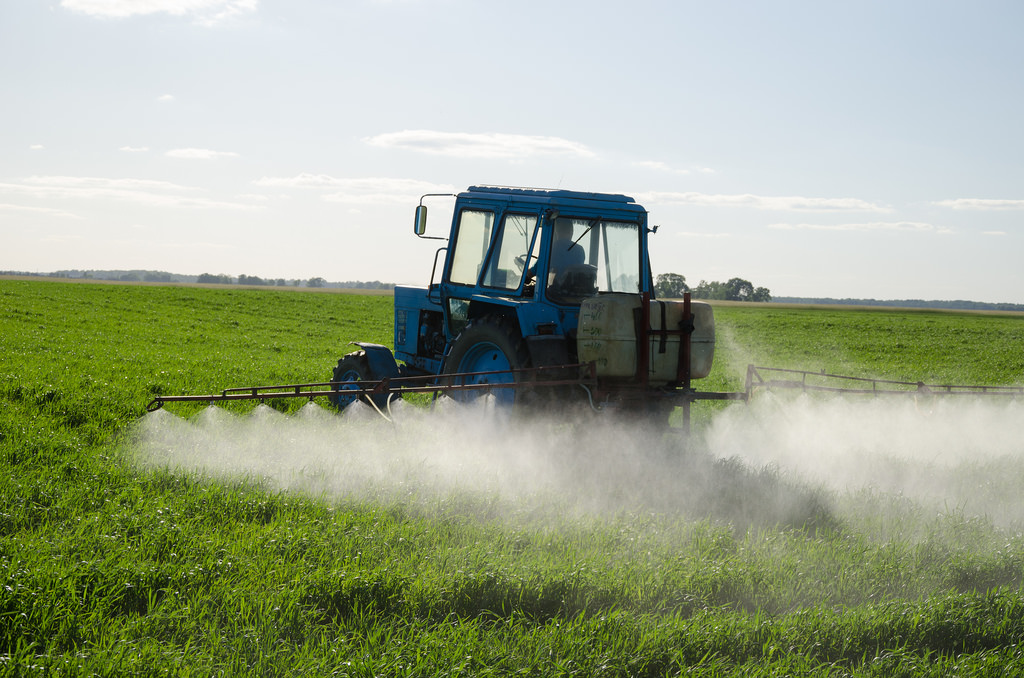
Image source: Pixabay.com
An EPA official bragged about helping Monsanto cover up cancer risks associated with Roundup, a new lawsuit is alleging.
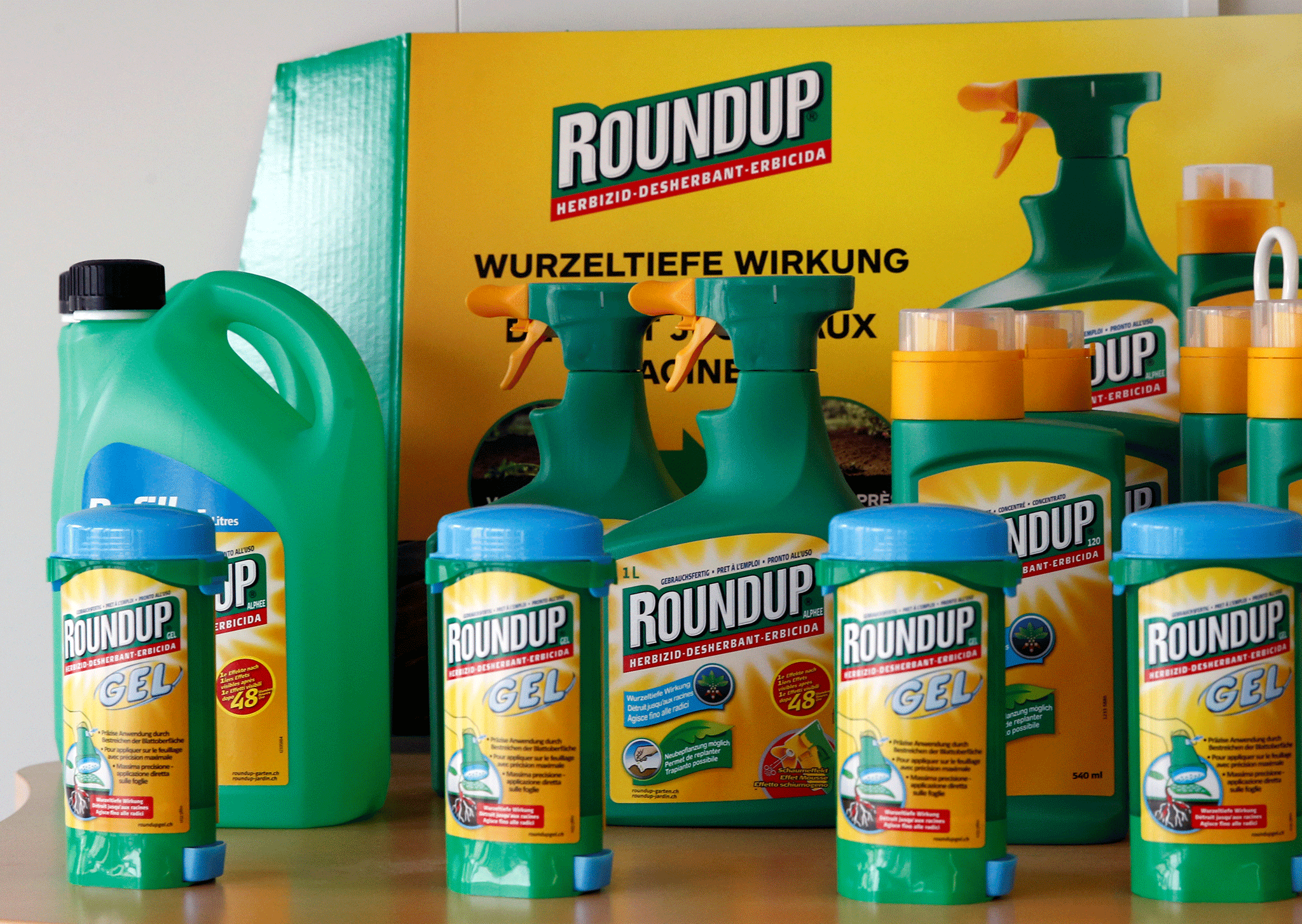
Roundup is one of the best-selling herbicides in the world.
“If I can kill this I should get a medal,” former EPA official Jess Rowland allegedly said in a phone call, discussing a federal investigation into glyphosate, the active ingredient in Roundup.
At the time, Rowland was a deputy division director in the Environmental Protection Agency’s pesticide division.
The phone call was entered as evidence in a federal lawsuit alleging that glyphosate-based herbicides like Roundup cause Non-Hodgkin’s Lymphoma, a deadly form of cancer, Bloomberg reported.
Just as significant, Monsanto’s Donna Farmer wrote in a now-public email that “you cannot say that Roundup does not cause cancer … we have not done carcinogenicity studies with Roundup.” The email is now part of the lawsuit.
Monsanto Finally Admits What We All Suspected About Roundup & CancerThe plaintiffs’ attorneys are alleging that Monsanto knew Roundup caused cancer but sold the herbicide anyway.
Rowland’s relationship with Monsanto was suspicious, U.S. District Judge Vince Chhabria said at a hearing in San Francisco. Plaintiffs’ attorneys want Rowland to testify and explain his actions.
The attorneys are charging that Rowland leaked a report to the media that claimed there was insufficient evidence to say glyphosate caused cancer. It was written by a committee he chaired. Rowland quit his job at the EPA days after the study was leaked.
“My reaction is when you consider the relevance of the EPA’s reports, and you consider their relevance to this litigation, it seems appropriate to take Jess Rowland’s deposition,” U.S. District Judge Vince Chhabria said, according to Reuters.
Monsanto employees were the ghost writers for two reports on Roundup that the committee headed by Rowland relied on for its findings, plaintiffs’ attorneys charged. The reports concluded that glyphosate was not carcinogenic.
“I think it’s important that people hold Monsanto accountable when they say one thing and it’s completely contradicted by very frank internal documents,” plaintiffs’ attorney, Timothy Litzenburg, told The New York Times.
Around 220 million pounds of glyphosate were used in the United States in 2015, The Times reported. Monsanto makes much of its money from selling corn, cotton and soybean seeds that are genetically engineered to resist glyphosate.

Sunday, March 12, 2017

CA PROP 65 TO ADD CANCER WARNING LABEL ON ITEMS CONTAINING GLYPHOSATE

California Judge Confirms Cancer Warning on Monsanto’s Roundup


Roundup-008
California is the first U.S. state to require Monsanto to label its blockbuster weed killer, Roundup, as a possible carcinogen, according to a ruling issued Friday by a California judge.

Fresno County Superior Court Judge Kristi Kapetan previously issued a tentative ruling on January 27 in Monsanto Company v. Office of Environmental Health Hazard Assessment, et al.
Judge Kapetan formalized her ruling against Monsanto on Friday, which will allow California to proceed with the process of listing glyphosate, the active ingredient in Roundup, as a chemical “known to the state to cause cancer” in accordance with the Safe Drinking Water and Toxic Enforcement Act of 1986, better known as Proposition 65.
In response to the ruling, Robert F. Kennedy, Jr. stated, “Democracy is alive and well in California where judges are still willing to stand up for science, even against the most powerful corporate polluters. This decision gives Californians the right to protect themselves and their families from chemical trespass.” Mr. Kennedy and the law firm of Baum, Hedlund, Aristei & Goldman represent people from California and across the U.S. who have been diagnosed with non-Hodgkin lymphoma after Roundup (glyphosate) use.
In January of 2016, Monsanto filed a lawsuit against the State of California Environmental Protection Agency’s Office of Environmental Health Hazard Assessment (OEHHA) over the agency’s notice of intent to list glyphosate as a Prop 65 chemical.
OEHHA issued the notice after the World Health Organization’s International Agency for Research on Cancer (IARC) issued a report on glyphosate, which classified the chemical as a “probable human carcinogen.” The IARC report compelled OEHHA to list glyphosate as a Prop 65 chemical and warn consumers about the possible danger associated with glyphosate exposure.
Why Did Monsanto Sue the State of California?
In 1986, California voters approved Proposition 65 to address concerns about exposure to toxic chemicals. Prop 65 requires California to publish a list of chemicals known to cause cancer, birth defects or other reproductive harm.
OEHHA is the administrator for the Proposition 65 program and determines in many cases whether chemicals or other substances meet the scientific and legal requirements to be placed on the Proposition 65 list. The agency uses a “Labor Code” listing mechanism, which directs the OEHHA to add chemicals or substances to the Prop 65 list of chemicals known to the state to cause cancer if they meet certain classifications by the IARC.
Monsanto’s lawsuit against OEHHA argued that the statutory basis underlying the agency’s action to list glyphosate as a Prop 65 chemical violates both the California and U.S. Constitutions. According to the complaint, listing glyphosate as chemical known to the state to cause cancer cedes regulatory authority to an “unelected, undemocratic, unaccountable, and foreign body” that isn’t subject to oversight by California or the United States.
According to the ruling, “…the Labor Code listing mechanism does not constitute an unconstitutional delegation of authority to an outside agency, since the voters and the legislature have established the basic legislative scheme and made the fundamental policy decision with regard to listing possible carcinogens under Proposition 65, and then allowed the IARC to make the highly technical fact-finding decisions with regard to which specific chemicals would be added to the list.”
“As Monsanto admits, the IARC‘s list is not created in response to the Labor Code listing mechanism or Proposition 65, and in fact IARC has stated that it disavows any policy or rulemaking role, and that it does not intend its determinations to carry the force of law,” Judge Kapetan wrote in her ruling.
In the months that followed, a number of interested nonparties joined the lawsuit as “intervenors,” either on behalf of Monsanto or on behalf of the State of California. When a case has the potential to affect the rights of interested nonparties (individuals or organizations not named in the lawsuit), they can become intervenors, effectively joining the litigation either as a matter of right or at the court’s discretion without the permission of the original litigants. Intervention simply gives nonparties that could be affected by a case’s outcome a chance to be heard.
Below are the intervenors in Monsanto Company v. Office of Environmental Health Hazard Assessment, et al.
Monsanto Intervenors:
  • California Citrus Mutual
  • Western Agricultural Processors Association (WAPA)
  • California Cotton Ginners and Growers Associations
  • California Grain & Feed Association
  • Almond Alliance of California
  • Western Plant Health Association
OEHHA Intervenors:
  • Center for Food Safety
  • Sierra Club
  • United Steel, Paper and Forestry, Rubber, Manufacturing, Energy, Allied Industrial and Service Workers International Union (AFL-CIO, CLC)
  • Natural Resources Defense Council
  • Environmental Law Foundation
  • Canadian Labor Congress
Ruling Against Monsanto
In her ruling, Judge Kapetan wrote that California’s voters and legislature “have established the basic legislative scheme and made the fundamental policy decision with regard to listing possible carcinogens under Proposition 65, and then allowed IARC to make the highly technical fact-finding decisions with regard to which specific chemicals would be added to the list.”
Teri McCall is one of many California residents to cheer the ruling against Monsanto. Her husband, Jack, sprayed Roundup on the family’s Cambia, California farm for nearly 30 years. In September 2015, Jack went to see a doctor to treat swollen lymph nodes in his neck. That day in the hospital, he learned that the swelling was caused by anaplastic large cell lymphoma (ALCL), a rare and aggressive version of non-Hodgkin lymphoma.
Three months later, Jack suffered a severe stroke due to complications with his cancer treatment. He died on Dec. 26, 2015.
In the wake of her husband’s death, Teri McCall filed a wrongful death lawsuit against Monsanto, alleging the company knew about the link between Roundup and cancer, but failed to warn the public about the risk.
“My husband Jack was very conscious of the dangers of chemicals and his misfortune was taking Monsanto’s word that Roundup was safe,” said McCall at a press conference held on January 27 in Fresno following Judge Kapetan’s tentative ruling.
“I don’t want to see any more unsuspecting people die from cancer because they didn’t know of the danger to their health from exposure to Roundup. Glyphosate in Roundup needs to be on the list of Prop 65 chemicals that are dangerous to our health so that people can make informed decisions for themselves about the risks they are willing to take. I don’t believe my husband would have been willing to take that risk,” McCall said.
McCall is represented in her Roundup cancer lawsuit by Baum, Hedlund, Aristei & Goldman and environmental lawyer Robert F. Kennedy, Jr.

Saturday, March 11, 2017

MONSANTO - EPA TRANSPARENCY DEMANDED BY JUDGE

Judge Threatens to Sanction Monsanto for Secrecy in Roundup Cancer Litigation


03/10/2017 01:59 pm ET  
Carey Gillam, Contributor


Nearly a year after a mysterious leak of industry-friendly information from the Environmental Protection Agency, many pressing questions remain about the agency’s interactions with agribusiness giant Monsanto Co. and its handling of cancer concerns with Monsanto’s top-selling herbicide. But thanks to a federal court judge in California, we may soon start getting some answers.
The transcript of a recent court hearing reveals that Judge Vince Chhabria, who is overseeing a combination of more than 55 lawsuits filed against Monsanto in the U.S. District Court for the Northern District of California, warned Monsanto that many documents it is turning over in discovery will not be kept sealed despite the company’s pleas for privacy. He threatened to impose sanctions if Monsanto persists in “overbroad” efforts to keep relevant documents out of public view.
The litigation against Monsanto has been filed by people from around the United States who allege that exposure to Monsanto’s Roundup herbicide caused them or their loved ones to develop non-Hodgkin lymphoma, a type of cancer that originates in the lymphatic system and has been on the rise in recent decades. While those lawsuits are being handled together as “multi-district litigation” (MDL) in San Francisco, hundreds of other plaintiffs are making similar allegations in multiple state courts as well. And the teams of lawyers involved say they are continuing to meet with prospective additional plaintiffs.
“I have a problem with Monsanto, because it’s —- it is insisting that stuff be filed under seal that should not be filed under seal,” Judge Chhabria stated in the hearing. When documents are “relevant to the litigation, they shouldn’t be under seal, even if they are not – are embarrassing to Monsanto, you know, even if Monsanto doesn’t like what they say.”
This week the judge also gave a green light – over Monsanto objection - to a plaintiffs’ request to obtain documents and depose a former Monsanto official from Europe. Other Monsanto officials are to be deposed within the next few weeks.
The central question to the mass of lawsuits is causation – can Roundup cause cancer, and has Monsanto wrongly covered up or ignored the risks. But the litigation is also threatening to pull back a curtain of secrecy that cloaks the government’s work with Monsanto and its assessment of glyphosate, the key ingredient in Roundup. There were concerns expressed years ago inside the EPA that glyphosate could be carcinogenic, and many independent scientists have pointed to research that raises red flags about both glyphosate and the formulated version that is Roundup. The International Agency for Research on Cancer (IARC) in 2015 classified glyphosate as a probable human carcinogen. But the EPA has been steadfast in its assessment that glyphosate is not likely carcinogenic.
Now plaintiffs’ attorneys allege they are finding evidence in the discovery documents of apparent collusion between Monsanto and at least one high-level EPA official, though Monsanto vehemently denies that.
Monsanto has made billions of dollars a year for decades from its glyphosate-based herbicides, and they are the linchpin to billions of dollars more it makes each year from the genetically engineered glyphosate-tolerant crops it markets. As it moves toward a planned merger with Bayer AG, defending the safety of what has been the world’s most widely used weed killer is critical.
So far, Monsanto had turned over close to 10 million documents to lawyers for the plaintiffs. Among those documents are some that detail Monsanto’s interactions with EPA officials, including Jess Rowland, head of the EPA’s Cancer Assessment Review Committee (CARC). A report by that committee was leaked to the public on April 29 of last year, posted on an EPA website when it should not have been, the agency said. The report stayed on the website only until May 2 before being deleted, but it was long enough for Monsanto to copy the report, and tout it on its website and in social media postings. Monsanto also referenced the report in a key MDL court hearing in May.
The timing of the leak of the report was favorable to Monsanto, which at that time was not only trying to slow the advancement of the MDL litigation, but was also trying to convince European regulators to re-approve glyphosate in Europe and was suing California to try to keep the state from adding glyphosate to a list of chemical carcinogens.
According to court filings by plaintiffs’ attorneys, discovery documents “strongly suggests that Mr. Rowland’s primary goal was to serve the interests of Monsanto.” Rowland left the agency last year and has not publicly addressed the matter. He did not respond to a request for comment.
Monsanto very much wants to keep its internal documents, including those related to Rowland, out of the public eye, saying the information can be taken out of context and exploited unfairly to try to sway public opinion. According to the transcript, Monsanto attorney Eric Lasker complained to the judge that the plaintiffs’ attorneys are “trying to try the case in litigation and the press.” This is litigation, he said, “that people are following, that what happens in this courtroom ends up on blogs, posts, ends up in articles.”
Nevertheless, Chhabria said he sees the documents related to Rowland and to the EPA and IARC as relevant and not appropriate for sealing, meaning they could be made available in court filings soon.
Plaintiffs’ attorneys are also preparing to depose Rowland, having subpoenaed him despite objections from the EPA. In the hearing, the judge indicated that he favored allowing the deposition, though he gave the EPA until March 28 to file a motion to quash the subpoena.
Plaintiffs’ attorneys are also preparing for the March 15 deposition of Monsanto’s chief regulatory liaison, Dan Jenkins, who was in regular contact with the EPA regarding glyphosate for years. They plan to depose Susan Martino-Catt, the company’s global supply chain strategy and operations lead on March 30. And the judge ruled that they may also depose and obtain documents from Mark Martens, a former employee of Monsanto in Belgium.
The judge is pushing both sides to keep to a frenzied pace for gathering experts and evidence. A key hearing is set for October in which the opposing parties will present expert witness testimony to the judge, and trial dates could begin in 2018, the attorneys project.
The consumer advocacy group I work for, U.S. Right to Know, on Thursday sued the EPA seeking a release of documents dealing with the CARC leak and other matters as questions persist about the safety of the product and whether or not assessments have been properly conducted.
The unfolding court case could soon start providing some answers.

Tuesday, March 7, 2017

EU CONFLICT OF INTEREST ON GLYPHOSATE (ROUNDUP) CARCINOGEN

EU experts accused of conflict of interest over herbicide linked to cancer

Controversy has raged about glyphosate, the key ingredient of Roundup, since World Health Organisation experts suggested it was 'probably' carcinogenic
Greenpeace has accused members of a European Union expert committee of having conflicts of interest over whether a controversial weedkiller linked to cancer and harmful effects on bees should be banned.
Glyphosate, the active ingredient in Roundup and the world’s most widely used herbicide, was said to “probably” cause cancer by the World Health Organisation’s cancer agency in 2015 in a paper in the journal Lancet Oncology.
However, other bodies, including the US Environmental Protection Agency, later said it probably did not cause cancer.
There has also been research suggesting glyphosate, so widely used it can be detected in bread, urine and even breast milk, causes harmful, but not lethal, effects on bees
The issue led to a spat between Chris Packham and the National Farmers Union, which has described the relicensing of glyphosate as a “top priority”, after the BBC Springwatch presenter urged people to sign a petition supporting a ban
On Wednesday, the European Chemical Agency (ECHA) is due to issue its recommendation to the European Commission about whether a new 15-year license to allow the chemical’s use should be issued.
But, just two days before the decision is due to be announced, Greenpeace sent a letter to the ECHA’s executive director, Geert Dancet, claiming several members of its Risk Assessment Committee (RAC) “appear to have a conflict of interest, according to ECHA’s own criteria”, The Independent can reveal.
The letter said the ECHA’s rules said this could arise if “the impartiality and objectivity of a decision, opinion or recommendation of the agency … Is or might in the public perception be compromised by an interest”.
Employment by a business or a research institute “whose funding is significantly derived from commercial sources” during the past five years could potentially be considered a conflict of interest.
“By these standards, RAC members Slawomir Czerczak and Tiina Santonen appear to have conflicts of interest,” the letter said.
“Both are employed by public scientific institutes that also generate income from providing risk assessment consultancy services to the chemical industry.
“The professional experience of the current chair, Tim Bowmer, principally consists of risk assessment consultancy for the chemical industry. He may not be best-placed to safeguard strict independence from industry interests.”
monsanto-roundup.gif
Monsanto's controversial Glyphosate pesticide, Roundup - the firm has patented crops resistant to the chemical (Reuters)
The letter also expressed concern that the ECHA committee was using “unpublished scientific evidence provided by the industry in formulating its opinions” in addition to studies published in peer-reviewed journals.
“Agencies such as ECHA, whose scientific opinions form the basis for regulatory action, should only consider scientific evidence that is publicly available so that any scientist can replicate the findings,” Greenpeace added.
“Their work should be transparent and carried out by independent experts without conflicts of interest.
“We respectfully ask you to enforce and improve ECHA’s policies to safeguard its independence from industry and transparency of its work.”
The ECHA, which had not received the letter when contacted by The Independent, said it published declarations of interest for key staff and committee members on its website.
On the two members and committee chair named by Greenpeace, an ECHA spokesman said: “As you can see their declarations give no cause for concern in terms of a conflict of interest in relation to glyphosate. 
“Please note that these two RAC members work for respected national institutions that offer consultation services to industry, which is a normal practice.
“So, the short answer to your question is that there are no conflicts of interest.”
The spokesman added that the two committee members named had not been part of the group that carried out the analysis of glyphosate or another group which acts as reviewers of the work.
“We will publish the names of the rapporteurs after the opinion has been agreed – we do not do it before so as to protect them from any lobbying,” the ECHA spokesman said.
A petition calling for people to “stand up for UK agriculture and save glyphosate from being banned by false knowledge and ignorance” has attracted nearly 3,800 signatures
The petition describes an Armageddon-style scenario if glyphosate is banned.
“Without glyphosate to control otherwise uncontrollable weeds … Whole areas of the east of England will become over run by weeds we have no other way of controlling,” it says.
“Glyphosate is keeping Britain farming – it’s as simple as that.”
The ECHA committee is due to reveal its recommendation on Wednesday, but may delay this until another meeting on 15 March.

UPDATE ON MONSANTO TRIBUNAL LEGAL DECISION

Logo Monsanto Tribunal

UPDATE on the Monsanto Tribunal

On 16 and 17 October 2016, more than 30 witnesses and experts from all over the world gathered in The Hague for the Monsanto Tribunal. They presented their testimonies and analyses on the effects of Monsanto’s business practices to a panel of 5 judges from different continents. The combined material of the witnesses and experts on the damage caused by Monsanto was so extensive that the judges have dedicated the eighteen weeks that elapsed since the civil society tribunal to carefully consider and evaluate it all.On April 18th, the Monsanto Tribunal judges will publicly present their conclusions and legal recommendations in The Hague. We will livestream the event in English, French, German and Spanish. It will take place in the afternoon (Central EU time), which will be morning in the Americas and evening in Asia. (Nighttime in Australia, sorry for that).


We look forward to a very thorough and important legal opinion. Remember the words of Judge Tulkens, former Vice-President of the European Court of Human Rights and Chair of the Monsanto Tribunal, in October: “[The legal opinion] will be addressed to Monsanto and to the United Nations. From this legal opinion, other jurisdictions can be involved and more judges will step in. We, as the judges [at the Monsanto Tribunal] have seen, heard, noted and deliberated. Chances are that the international law will take into consideration new issues such as the ones related to ecocide.”

In case of a Monsanto merger, make sure Bayer takes full legal responsibility -  letter to EU antitrust commission
As you will be aware of, Bayer and Monsanto want to merge into an even bigger agro-chemical and seed giant. Throughout the world there is a lot of protest to this concentration of power, from farmers’ organisations, NGOs and concerned citizens. To get the green light for the merger, the antitrust authorities in some 30 countries have to approve it. The request to the EU is expected to be filed by Bayer sometime this month.
This letter by the organisers of the Monsanto Tribunal asks the antitrust committee to take the findings of the international judges' council into account in their decision-making processes. "The implication of the judge’s opinion could be that new liability cases will be filed against Monsanto in regular courts. However, we have seen in the past that companies use mergers to evade their legal responsibilities. The Bhopal case in India stands out as a particularly troubling example. Till this day the Dow Chemical Company does not accept full responsibility for the disaster, which took place in 1984, although it merged in 2001 with Union Carbide Corporation, responsible for the deadly gas leak in Bhopal. We urge you to make sure that in case of a possible merger Bayer will take full responsibility for all acts and consequences of products, production methods and pollution caused by Monsanto and its products on health and environment, in existing and upcoming liability cases.”

Hostilities against Tribunal witness stopped after protests
One of the witnesses in the Monsanto Tribunal – the Argentinian researcher Doctor Damian Verzeñassi has been harrassed by the Dean of the University of Rosario. Directly after the hearings of the Tribunal. His office was closed with chains and two members of the team were fired. The issue raised a lot of reaction both in Argentina and international. As a result the hostilities were stopped and the office was reopened. The doctor and his team do very important research on the effect of pesticides on public health. You can find his testimony in the Tribunal here. His reaction when the problems were over: "Thanks a lot for your support. The solidarity we have received has been very important for us."

GMOs not substantially equivalent: new research
In January this year two ground-breaking studies were published on risks of GMOs and glyphosate. The first found that a genetically modified corn, NK 603, is not substantially equivalent to a non-GMO counterpart, which is contrary to claims of GMO proponents. This is very important, because the assumption that there is no substantial difference between GMO and other crops is the fundament of the (lack off) GMO regulation in the US.
The second study found that glyphosate, the main ingredient in Monsanto’s Roundup herbicide, can cause a serious liver disease at doses thousands of times lower than that allowed by law. Dr. Michael Antoniou, Head of the Gene Expression and Therapy Group at King’s College London in the United Kingdom, led the ground-breaking research. He is also a co-author of GMO Myths and Truths, an evidence-based examination of the claims made for the safety of genetically modified crops and foods. This can be found on the website of GMWatch and is also available as a very interesting book.

Please Donate
Thank you very much for your support, to help us raise the necessary funds to organize the Monsanto Tribunal. Now we need your help to spread the results as wide as possible and to help victims of Monsanto in their cases. Every donation, small or big, is very welcome.