Wednesday, February 11, 2015

WHAT'S SLIPPING THROUGH GMO REGULATION - OR LACK THEREOF?


Biotech critics claim GMO loophole will backfire

Mateusz PerkowskiCapital Press
Mateusz Perkowski/Capital Press Kristina Hubbard of the Organic Seed Alliance, left, George Kimbrell of the Center for Food Safety, center, and Frank Morton of Wild Garden Seed, right, participated in a recent panel discussion on genetically engineered crops during the Organicology conference in Portland, Ore., on Feb. 6 2015.
 
GMO critics say a loophole in federal biotech regulations will backfire against major developers of transgenic seed.

Critics say a loophole in federal regulations for genetically engineered crops will backfire against biotech companies.

Under current rules, USDA can only restrict biotech crops if they incorporate genes that pose a possible plant pest risk.

Many common genetically modified crops relied on a soil bacteria for gene transfer and thus were regulated until the agency determined they weren’t a hazard to other plants.
Since 2011, though, USDA has allowed companies to freely cultivate biotech crops without any environmental analysis because they’re not made with genes from plant pathogens.
Recent examples include varieties of glyphosate-resistant tall fescue, a non-bruising potato and a higher-density pine tree.

These approvals of biotech crops are a “trickle that turned into stream” and undermine claims by large biotech developers that genetically modified organisms are robustly scrutinized by the federal government, said George Kimbrell, attorney for the Center for Food Safety, a group that wants stronger biotech regulations.

“They need the facade,” Kimbrell said.

Most of the biotech crops allowed to sidestep USDA’s environmental reviews were developed by universities and small start-up companies, not major agribusiness firms that already dominate the market for biotech seed.

Minimal USDA oversight of GMOs that pose no plant pest risk will create problems for the mainstream biotech industry, as it strengthens the case for stronger regulations, said Frank Morton, an organic seed producer from Philomath, Ore., who sued the federal government over biotech sugar beets.

Trading partners may disregard USDA’s conclusions that crops altered with “gene gun” technology don’t fall under its biotech jurisdiction, he said.

Export complications created by unregulated biotech grass varieties could prompt calls for the Oregon Department of Agriculture to step in with state restrictions, he said.
Several such proposals will be considered by Oregon lawmakers during the current legislative session, said Ivan Maluski, policy director for Friends of Family Farmers, a group that supports stronger GMO regulations.

The legislature pre-empted local governments from setting GMO rules in 2013 with the idea that such regulations should be statewide rather than a county-by-county “patchwork,” he said.

While Oregon lawmakers have in the past been reticent to broach the GMO issue, advocates for stronger regulation can now hold their feet to the fire, Maluski said.

The Biotechnology Industry Organization believes that federal agencies adequately regulate biotech crops, including those produced with gene guns that aren’t considered possible plant pests, said Clint Nesbitt, the group’s director of regulatory affairs for food and agriculture.
Those that are resistant to herbicides, like certain turf grasses, would still need to be approved by the U.S. Environmental Protection Agency, he said.

“Current regulations cover all the risk of biotech,” Nesbitt said, adding that non-GMO crops aren’t subject to any regulatory scrutiny.

As for export concerns, that issue is not limited to biotech crops produced with gene guns, he said. “To some extent, that is always a concern with biotech crops. There is a patchwork of regulations all over the world.”

Oregon Gov. John Kitzhaber has proposal legislation — Senate Bill 207 — that would allow the Oregon Department of Agriculture to extend its “control area” authority to genetically modified crops that have been deregulated by USDA. The agency would be able to restrict production of GMOs within the control area limits. Its current control area authority is limited to biotech crops still under federal jurisdiction.

Legislation introduced in the House — House Bill 2674 — would require ODA to establish control areas for GMOS.

Under a separate bill, H.B. 2675, seed merchants would have to provide ODA with copies of royalty agreements for GMOs they’ve sold. The agency would also be able to set production areas for GMOs. Outside those boundaries, biotech crops would be under “control area” authority or prohibited, as determined by ODA.

Maluski called these concepts “a step in the right direction.”

“They represent to me a progression of this discussion,” he said.

Source:  http://www.capitalpress.com/Nation_World/Nation/20150211/biotech-critics-claim-gmo-loophole-will-backfire

Tuesday, February 10, 2015

DICAMBA TO BE SPRAYED ON MILLIONS OF GMO CROPS - "Xtend" COTTON AND SOY - NEARING APPROVAL

Monsanto Inches Closer To Biggest Biotech Launch In Company’s History

 9:23 pm
Sun February 8,2015

To counter a “super weed” epidemic plaguing farmers, agribusiness giant Monsanto is steadily moving forward on the introduction of its next major wave of genetically engineered crops.
But – citing environmental and sustainability concerns – critics argue that step forward is actually a substantial leap back.
Similar to viruses that have adapted to frequently used antibiotics over time, super weeds have gained immunity to herbicides. Weed scientists estimate there are more than 400 different herbicide-resistant weeds around the world. Resistant weeds hurt crops by competing for sunlight and nutrients.
St. Louis-based Monsanto’s biotechnology team has been working for nearly a decade on two new soybean and cotton varieties designed to withstand dicamba – an infrequently used herbicide that weeds have not caught up with yet.
“These new technologies will help farmers achieve better harvests, which will help meet the demand to nourish the growing population,” said Miriam Paris, Monsanto’s Xtend system launch manager.
Propelled by recent U.S. Department of Agriculture deregulation, Monsanto anticipates the seeds will help fight the super weeds and lead what a January first-quarter earnings report labeled the largest biotechnology launch in company history.
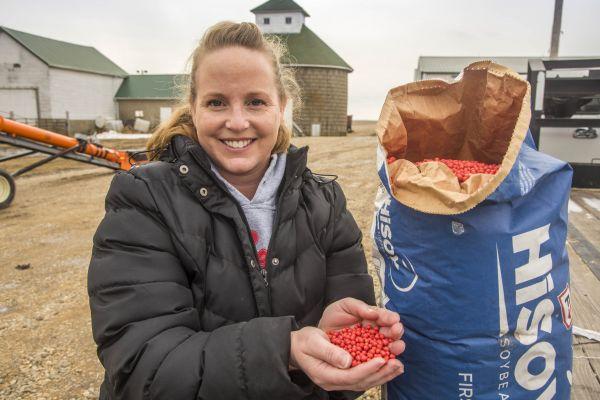
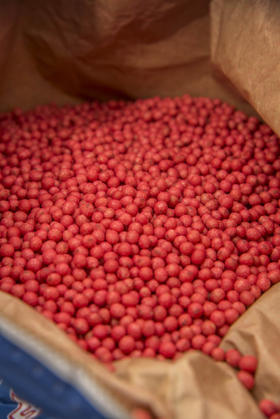
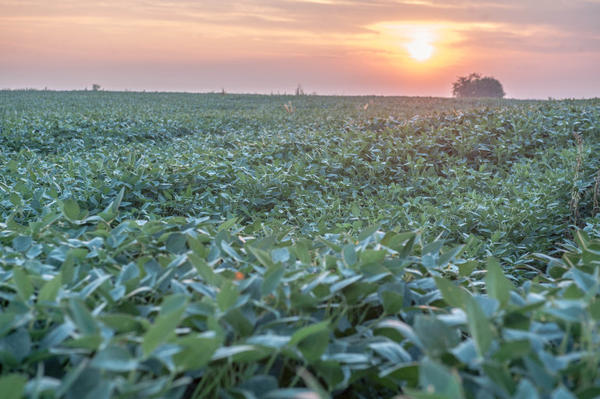
Most soybean acres are planted with a genetically modified seed, such as the ones shown here, according to the USDA.
Credit Darrell Hoemann | Midwest Center for Investigative Reporting
The varieties were fully deregulated by the USDA’s Animal and Plant Health Inspection Service on Jan. 15. They will be part of the company’s Roundup Ready Xtend package and are scheduled for a 2016 launch. The USDA deregulation followed a profitable year for Monsanto, as the company’s annual report shows it posted $2.74 billion in net income for 2014.
While small-scale farmers and industry officials have welcomed the deregulation, critics worry it will prompt a greater dependence on the toxic chemicals that caused the super weed problem in the first place.
“I think APHIS is being entirely irresponsible in terms of its obligations to the public and to the environment,” said Doug Gurian-Sherman, senior scientist and director of the sustainable agriculture program for the Center for Food Safety, a national nonprofit advocacy group that supports organic and sustainable agriculture..
Currently, 1 percent of all soybean acres are treated with the 1960s’ herbicide dicamba.
If farmers planted the new Monsanto crops, USDA assessments warn dicamba use would increase by about 88-fold in soybeans and about 14-fold in cotton.
“In the medium to longer run, commercializing these crops without any real mandatory controls on how they’re used is going to lead to a lot of environmental and potentially human health problems,” said Gurian-Sherman, a plant pathologist by trade who has also worked for the Environmental Protection Agency. “They are going to just exacerbate what we’re already seeing.”
Although the company’s soybean and cotton varieties cleared one required hurdle by earning USDA approval, the varieties still cannot enter market until EPA approves their related use of dicamba. The USDA, the EPA and the Food and Drug Administration share the responsibility of commercializing all new genetically engineered crops.
The FDA has already supported deregulation.
The EPA will finalize its assessment later this year.
“U.S. soybean and cotton growers continue to tell us that they need these products to help manage tough-to-control weeds on their farms, and we remain committed to commercializing these next-generation technologies, pending regulatory approval,” Paris said.
Foreign countries will need to approve the cotton and soybean before Monsanto could export the varieties, as well.
Canada and Australia are among the countries that have approved the herbicide-resistant cotton.
Canada, Mexico, Japan, Korea, Taiwan, Australia and India have approved the herbicide-resistant soybean.
China has not approved either crop variety.
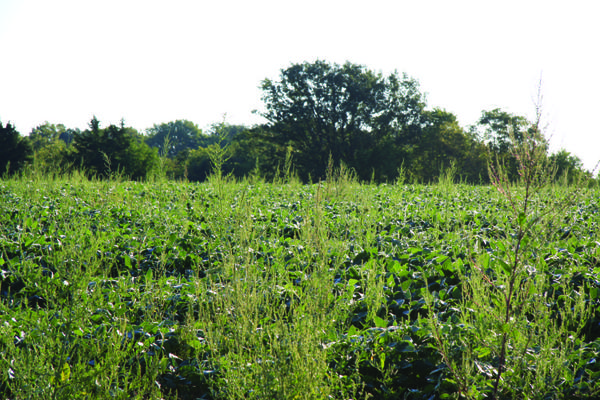
The weed waterhemp begins to overtake a soybean field. Researchers estimate there are more than 400 types of herbicide-resistant weeds globally.
Credit Provided by Monsanto
USDA deregulation marks next generation of crops
Monsanto, founded in 1901, made a lasting impact in the agriculture industry during the 1990s with the introduction of its genetically engineered Roundup Ready crops created to resist glyphosate, the herbicide of choice for many farmers.
With the introduction, farmers were able to plant Roundup Ready seeds knowing they could safely use glyphosate to efficiently kill any weeds that popped up in their fields. The products saved farmers time and energy, while also allowing them to till their fields less frequently.
“I remember when Roundup Ready soybeans first came out,” said Jeff Bunting, crop protection division manager for the agriculture cooperative Growmark headquartered in Bloomington, Ill. “Glyphosate, being a broad spectrum herbicide, controlled many of the weeds that we had issues with and were dealing with.”
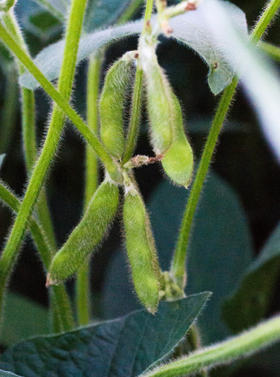
Soybeans near Mansfield, Ill., on Aug. 20, 2013.
Credit Darrell Hoemann | Midwest Center for Investigative Reporting
Herbicide-resistant soybeans were so effective that U.S. farmers planted varieties on nearly every acre. In 2011, roughly 90 percent of soybean acres were planted with genetically engineered seeds, according to USDA data.
The technology helped make the U.S. soybean and cotton industries the multi-billion dollar sectors they are today.
In 2013, U.S. farmers planted more than 10.4 million acres of cotton worth more than $5 billion. The same year, farmers planted more than 76.8 million acres of soybean worth slightly less than $42 billion.
But the weeds adapted.
“Too much of one thing is probably not good,” said Bunting, who grew up on a family farm in east central Illinois and has been pulling weeds from soybean fields since he could barely see over the plants.
As weeds adapted, Monsanto started to experiment with new technology with oversight from the Animal and Plant Health Inspection Service. In 2006, the company began testing dicamba-resistant soybean and cotton – which were also still resistant to glyphosate – in 19 states and Puerto Rico. Combined, the tests were distributed throughout more than 180,000 acres.
USDA agency balances deregulation and ‘protecting plants’
Monsanto routinely spends more than $1 billion annually on research and development. Its annual report shows the company spent more than $1.73 billion in 2014 and more than $1.53 billion the previous two years.
“Our crops and technologies undergo a rigorous and in-depth review by third-party scientists and government agencies and have a proven safety record with no adverse effects to people, wildlife or the environment,” Paris said.
Other companies have followed suit.
Each year, the Animal and Plant Health Inspection Service receives 10,000 to 11,000 requests for testing authorization, according to Michael Firko, the agency’s deputy administrator and head of its biotechnology regulatory team.
Since 2006, the agency – armed with inspectors in throughout the country – monitored Monsanto’s results and ensured the genetically engineered cotton and soybeans were not planted too close to already approved crops. During the testing period, the agency also issued permits to select farmers who sought to grow the soybean and cotton.
“We’re in the business of protecting plants,” Firko said.
Then, Monsanto submitted a request for deregulation in 2012.
“After a developer has been field testing a plant for a number of years,” Firko said. “They may come to us and say, ‘Ok, we’ve got something that we’ve been working on, and we don’t think it represents any plant pest risk.’”
Under the Plant Protection Act passed in 2000, the Animal and Plant Health Inspection Service evaluates whether a genetically engineered crop would pose a “plant pest” once deregulated. Another piece of legislation, the National Environmental Policy Act, requires the agency to publish its findings, typically in a smaller environmental assessment or a larger environmental impact statement.
In its review of Monsanto’s dicamba-resistant soybean and cotton seeds, the agency compiled an impact statement, which Firko said is the “most complete environmental analysis that can be done.”
The Animal and Plant Health Inspection Service published a draft statement in August. It published its final statement in December, which was then subject to a 30-day public viewing window before completion.
Both versions recommended “full deregulation,” concluding the Monsanto soybean and cotton would be “widely used” by growers.
“It is clear there is high demand in the market from farmers,” Paris said. “Farmers will ultimately determine the value based on on-farm use.

Soybeans at sunrise near Mansfield, Ill., on Aug. 20, 2013.
Credit Darrell Hoemann | Midwest Center for Investigative Reporting
Critics question regulatory oversight
Gurian-Sherman said the regulatory process that shepherded the Monsanto soybean and cotton toward deregulation is “limited” and “in shambles.”
The main problem is a “loophole” in jurisdiction, he said.
The Animal and Plant Health Inspection Service determined in its impact statement that the deregulation of new genetically engineered crops would likely result in an increased development of weeds resistant to dicamba. The agency found that the soybean and cotton do not pose a direct plant pest risk alone, but their overuse would repeat the same problem that happened with glyphosate and the early Roundup Ready crops.
But since it is tasked with identifying direct plant pests and not indirect consequences, the agency settled on deregulation.
“The USDA, APHIS, has very limited authority to really regulate the risks from these crops,” Gurian-Sherman said.
Others were also critical. Between Monsanto’s initial filing and the Animal and Plant Health Inspection Service’s final environmental impact statement, the agency provided more than 180 days for the public to comment on the petition.
Individuals and groups posted more than 4,700 comments during that time.
“Increased use of genetically engineered crops such as dicamba cotton is not the answer to super weed problems – do not approve it,” commenter Roslyn Fedberg wrote.
“Please work to move farming away from an over-reliance on chemical agriculture,” another commenter, Tom Bellamy, wrote.
Gurian-Sherman said the petition received so many public comments because agriculture is connected to important topics that people care about, such as food safety and environmental stewardship.
“The way we do agriculture has huge impacts on people’s lives,” he said.
Story source: Midwest Center for Investigative Reporting

NEW ZEALAND HOSTS GMO PANEL OF EXPERTS

World experts will discuss the pros and cons of GM food.

World experts to discuss impacts of GM food


New Zealand. World experts will discuss the pros and cons of GM food.


International trends in sustainable food production will be discussed by a line-up of global experts visiting Hawke's Bay next week.

The five academics, along with a top Swiss chef, will speak about issues including the European and Chinese markets for quality foods, the health impacts of genetically-modified organisms in food production, and the use of glyphosate herbicide.

Their presentations, in Havelock North next Monday and Tuesday, will follow this weekend's Food Matter Aotearoa Conference in Wellington.

The Wellington conference looks at questions such as how nutritious our food is, and whether New Zealand should embrace genetically-modified food production.

Participants travelling up to Hawke's Bay to speak after the conference include US Defence Department biosecurity threat specialist Don Huber, a professor of plant nutrition and microbiology, Vandana Shiva, an Indian professor of physics who founded Navdanya, an organisation of 70,000 farmers aimed at protecting the diversity of living resources such as traditional seeds, and French molecular biologist Dr Gilles-Eric Seralini who has conducted the only long-term study thus far on the effects of genetically engineered foods and associated pesticides on animals.

Also speaking in Havelock North will be Chinese Professor Gu Xiulin who lectures in agricultural economics and globalisation, and Swiss chef Jerome Douzelet.

Event organiser Phyllis Tichinin said all the speakers were talking on topics Hawke's Bay food producers and marketers would benefit from considering, including what do the high-end consumers really want and can we produce it?

"It is unusual to have one professor of such world standing visit Hawke's Bay with this timely information. It is an unrepeatable opportunity to have four of them at once," she said. "I encourage everyone who eats to come listen to these world luminaries. Details of the speaking tour can be found at wwww.foodconference.co.nz.

Thursday, February 5, 2015

GMO-FREE CROPS MAKE BIG $$$

Fields of Gold: GMO-Free Crops Prove Lucrative for Farmers

Wall Street Journal - ‎Feb 2, 2015‎
Last spring, for the first time in 20 years, Indiana farmer Jim Benham planted his fields entirely with soybean seeds that hadn't been genetically modified to withstand herbicides. It wasn't because the 63-year-old suddenly had embraced the anti-GMO ...

Monday, February 2, 2015

STATE OF GMO DISUNION AROUND THE USA

State of the GMO Union

Courts Address Localism, Federalism Amid New Legislation

January 23, 2015
Just how hot is GMO-labeling legislation? On Jan. 6, 2015, a Republican state senator introduced just such a bill − in Indiana, the nation’s breadbasket. Still, federal legislation on both sides of the issue has stalled, the first federal court decisions have denied localities the right to regulate genetically engineered crops, and two mandatory-labeling proposals were recently defeated at the polls. In the first weeks of 2015, even as bills like Indiana’s were also introduced in New York, Virginia, Arizona, and Missouri, a federal court heard arguments implicating states’ rights in the battle over Vermont’s new labeling law. 

Since 2013, state and local measures aimed at regulating genetically modified organisms (GMOs) have proceeded along two tracks. Some are aimed at restricting − or increasing the transparency of − GMO cultivation, while others would require the disclosure of genetically engineered ingredients on product labels. Both approaches have been hotly contested at the ballot box and in the courts. In the latter half of 2014, a federal court in Hawaii twice struck local ordinances aimed at regulating GMO husbandry, citing state and federal preemption. In November 2014, voters in Colorado declined, by a 2-to-1 margin, to require mandatory labeling, but a vote in Oregon on a similar measure was so close it required a recount. That same month, a lawsuit filed by two farmers prompted Jackson County, Oregon, to suspend its six-month-old ban on the cultivation of genetically engineered plants. 

For now, the frenzy has culminated in a hearing on a motion to enjoin the country’s first statewide mandatory labeling law, in Vermont. The argument, which was heard on Jan. 7, is expected to produce the first federal court decision regarding how such laws fare against free speech and preemption arguments. It will have clear implications for the various bills introduced in state legislative sessions on that very same day. 

Varied Legislative Outcomes Leave Mandatory Labeling in a State of Flux
In April 2013, six months after a mandatory labeling measure failed to pass in California, two U.S. legislators − Sen. Barbara Boxer, D-CA, and Rep. Peter DeFazio, D-OR − got in front of a groundswell of GMO activity in New England by introducing identical bills known as the Genetically Engineered Food Right-to-Know Act. The law would have amended the federal Food, Drug and Cosmetic Act (FD&CA) to classify as “misbranded” any food that has been genetically engineered, or that contains genetically engineered ingredients, unless that fact is clearly disclosed. Later that year, in November 2013, a mandatory-labeling measure on the ballot in Washington failed after a sustained and expensive campaign by opponents. Boxer’s and DeFazio’s bills ultimately died in committee. 

At about the same time, however, labeling proponents were enjoying their first state-level successes. A Connecticut law requiring labels on GMO-containing foods became effective in December 2013, and Maine’s governor signed a similar requirement into law in early January 2014. The Connecticut and Maine laws, however, do not actually take effect until a critical mass of nearby states adopt similar laws, and less than two weeks after Maine’s law was enacted, the New Hampshire House of Representatives voted down a similar provision.

Barely three months later, as Vermont’s mandatory-labeling law moved forward in that state’s senate, the U.S. Congress saw the introduction of a second GMO-labeling bill: the Safe and Accurate Food Labeling Act of 2014 (SAFLA), introduced by U.S. Rep. Mike Pompeo. SAFLA would establish a federal labeling standard for foods with genetically modified ingredients and give sole authority to the Food and Drug Administration to require their mandatory labeling. It would also expressly preempt any state or local labeling requirements, as well as any other laws affecting bioengineered organisms intended for use in food. 

Vermont’s bill proceeded through the legislative process, however, and in May 2014 − shortly after SAFLA was referred to the House’s Subcommittee on Health − Vermont became the first state in the U.S. to require the labeling of genetically modified foods by a date certain. Six months later, in the November 2014 elections, the winds shifted once again. Colorado’s Proposition 105, which would have required food companies to label packaged foods with the text “produced with genetic engineering,” was soundly defeated, by a 2-1 vote. Oregon’s Measure 92, which would have required affected food labels to include the words “genetically engineered,” also failed, but by a much narrower margin; of 1,506,311 ballots cast, the difference was 837 votes. Although SAFLA died without fanfare at the end of the second session of the 113th Congress, it seemed it wasn’t needed − at least with respect to mandatory-labeling laws. 

Local Cultivation Bans Find Popular Appeal, but No Friends in the Court
Measures aimed at regulating the local cultivation of GMOs fared better at the November 2014 polls than did their labeling counterparts. Voters in Maui County, Hawaii, approved an ordinance prohibiting the growth, testing, or cultivation of genetically engineered crops pending a safety study, and voters in Humbolt County, California, approved a similar initiative, to “prohibit the propagation, cultivation, raising, or growing of genetically modified organisms.” 

Such laws are only the latest in the GMO war’s second front. Various other counties, such as San Juan in Washington and Trinity, Marin, and Mendocino in California, also bar the local cultivation of genetically engineered foods, and some have done so since 2004. Last May, two counties in Oregon, Jackson and Josephine, approved measures similar to Maui County’s. A third county in Oregon, Benton County, is likely to vote on the issue this coming May. 

Despite such grassroots momentum, two court decisions since August 2014 have delighted opponents of GMO regulation and previewed the challenges − preemption in particular − likely to be faced by labeling laws. On Aug. 25, 2014, the U.S. District Court for the District of Hawaii invalidated Kauai County Code §§ 22-23 et seq., which mandated the filing of annual public reports identifying and describing GMOs under local cultivation. See Kauai County Code 22-23.4(b)(2). The court concluded that the field was preempted by a state statutory scheme that vests the Hawaii Department of Agriculture with the authority to designate “restricted plants” and to control and eradicate “noxious weeds.” Syngenta Seeds v. Couty of Kauai, 2014 WL 4216022, at *9 (D. Haw. Aug. 25, 2014). 

The court also concluded, however, that the law’s GMO-reporting requirements did not conflict with, and were not otherwise preempted by, the federal Plant Protection Act (PPA). Id. at 13–14. Three months later, on Nov. 26, 2014, the same court struck a more aggressive local ordinance, Hawaii County Code §§ 14-128 et seq., which had been signed into law barely a year before and which prohibited − with certain exemptions − “the open air cultivation, propagation, development, or testing of genetically engineered crops or plants.” See Hawai’i Floriculture and Nursery Assoc. v. County of Hawaii, Case No. 1:14-cv-00267-BMK (D. Hawaii), Dkt. No. 70 at 2. The court concluded that, as was true of the Kauai County ordinance in Syngenta, the Hawaii County law was impliedly preempted by the state statutory scheme. Id. at p. 10. 

But it also determined that the local law’s ban on open-air field testing of genetically engineered crops and plants that meet the PPA’s definition of “plant pests” or “noxious weeds” regulated by 7 CFR Part 340 was preempted. Id. at 22. The ban on field testing of plants that are not “plant pests” or “noxious weeds” regulated under Part 340, however, was not preempted by the PPA. Id. Moreover, the court concluded, federal law − specifically, the PPA, the Federal Food, Drug and Cosmetic Act, and the Federal Insecticide, Fungicide, and Rodenticide Act − did not impliedly preempt (whether via field preemption or conflict preemption) the ordinance. Id. at 23–24. In so holding, it stressed the presumption against federal preemption of state law.
At least one more court is expected to weigh in soon on the question of whether local bans are preempted, at least by state law. Voters in Jackson County, Oregon, passed a measure in May 2014 aimed at creating “a genetically engineered crop-free zone,” to protect local farmers from transgenic contamination. The county later delayed enforcement of the measure, in response to a state court lawsuit filed in November 2014 by two alfalfa farmers. The suit asserts that the GMO ban violates Oregon’s Right to Farm Act and seeks damages for restricting the farmers’ use of their land. On New Year’s Eve 2014, two Jackson County farmers and two nonprofits, including the Center for Food Safety, filed a motion to intervene as defendants. 

First Light 2015: Seminal Hearing in GMA v. Sorrell; (Re)Introduction of Mandatory-Labeling Bills 
 
The new year brought new developments in a higher-profile GMO lawsuit in which the Center for Food Safety had also moved to intervene. Exactly five weeks to the day after enactment of Vermont’s mandatory labeling law, 2014 Vt. Acts & Resolves No. 120 (Act 120), a coalition of trade associations led by the Grocery Manufacturers Association challenged the statute in the U.S. District Court for the District of Vermont. (The Center for Food Safety and the Vermont Public Interest Research Group were ultimately denied the right to intervene, but they have been allowed to participate as amici curiae.)
Like the challengers of cultivation bans, the plaintiffs in GMA v. Sorrell assert that Act 120 is preempted − in this case, expressly, by the FD&CA, the Federal Meat Inspection Act, and the Poultry Products Inspection Act. In arguments that have no obvious parallel in the context of cultivation bans, however, they also assert that the law violates the First Amendment, because it is a “politically motivated speech regulation” that does not serve a legitimate government interest, and because its ban on such words as “natural” on the packaging of GMO-containing foods constitutes viewpoint discrimination. Plaintiffs also argue that Act 120’s ban on such words as “natural” is void for vagueness and a violation of the Fifth Amendment. 

Unsurprisingly, the defendants − Vermont’s attorney general and an assortment of other state officials − moved to dismiss the case for failure to state a claim upon which relief can be granted and, among other things, lack of standing. Plaintiffs countered with a motion for a preliminary injunction. The dueling motions were heard on Jan. 7 by U.S. District Court Judge Christina Reiss, a 2009 Obama appointee. Because plaintiffs’ motion in particular will require a thorough analysis of the merits, her pioneering decision will be momentous. 

Meanwhile, in a flurry of other activity during that first full week of January, legislators in multiple states introduced a number of bills much like Act 120. On Jan. 6, in Indiana, Sen. Dennis Kruse, R-Auburn, introduced a bill that would require labeling of foods produced by genetic engineering and bar the use of “natural” to describe foods containing GMOs. On Jan. 7, a democratic legislator in Missouri introduced a similar bill. Also on Jan. 7, a mandatory-labeling bill that had failed in 2014 was re-introduced in both chambers of New York’s legislature; the Assembly version alone had some 65 sponsors. A different bill introduced the same day would establish a GMO registry. The sponsors of New York’s proposed GMO legislation not only cite consumers’ right to know, but also assert that genetically engineered crops can have serious environmental effects, and that labeling will protect New York exports in the more than 60 countries that mandate disclosure of GMO foods. 

On Jan. 8, a mandatory labeling law was introduced in the Virginia House of Delegates that would make violators guilty of a Class 3 misdemeanor. Nor did activity slow the following week; mandatory labeling laws were introduced in Rhode Island and Arizona on January 14 and 15, respectively. In New Jersey, meanwhile, where legislative business during a single term can be carried over from one legislative session to the next, a mandatory-labeling law introduced in early 2014 is still alive. 

How Judge Reiss will rule, and whether all or none of the proposed legislation will become law, is unclear. Certainly, advocates of mandatory labeling, cultivation bans and greater transparency surrounding the use of GMOs have not been daunted by their recent losses − in Colorado, Oregon and before the U.S. District Court in Hawaii. Just as certainly, an unequivocal decision by Judge Reiss in defendants’ favor will prompt a faster introduction of the Safe and Accurate Food Labeling Act of 2015 than would a plaintiffs’ win. Either way, expect to see SAFLA again. 

Source:  http://www.mcguirewoods.com/Client-Resources/Alerts/2015/1/State-of-the-GMO-Union.aspx?utm_source=Mondaq&utm_medium=syndication&utm_campaign=View-Original

Saturday, January 31, 2015

MONSANTO SHAREHOLDERS MET BY PROTESTING MOMS AND DOCTORS

Published on
by

Moms and Doctors Have a Message for Monsanto: 'You're Making Us Sick'

As shareholders gather in St. Louis on Friday, concerned parents, doctors, and environmental and food safety advocates will hold a memorial to the agrichemical giant's victims.
As shareholders of the agrichemical giant Monsanto  gather in St. Louis, Missouri for their annual meeting on Friday, they will be met by a coalition of doctors, concerned parents, and food and environmental safety advocates delivering a simple message: "You're making us sick."

At issue are the company's genetically modified crops and pesticides, including the herbicide Roundup—whose key ingredient glyphosate has been tied by researchers to a host of human health problems, from Parkinson's to cancer to autism.

"We're bringing message that glyphosate and genetically-modified foods have never been thoroughly safety tested for human consumption," Katherine Paul of the Organic Consumers Association told Common Dreams.

Inside the shareholders' meeting, the coalition intends to present a proposal for greater corporate accountability. Outside the meeting, advocates plan to hold a mid-day memorial to "victims of Monsanto's products."

"Numerous scientific studies show, and Moms see, that GMOs and related chemicals are connected to our children's skyrocketing health issues," said Zen Honeycutt, founder, Moms Across America, in a press statement. "Taking the first step in being responsible and having a pediatrician on their board makes sense for Monsanto Shareholders and for our children and the future of our country."

Monsanto has long been a target of world-wide protests for its role in spreading the agro-industrial model, which critics say undermines peasants and farmworkers while increasing food insecurity, environmental destruction, and climate change.

Protesters plan to highlight the impact the Monsanto has in the United States, where it is the country's third most hated company, according to a Harris poll last year.

According to Paul, federal authorities play a key role in allowing the company to avoid tough regulations despite serious questions about the safety of their products and practices. "We are also sending a message to the Food and Drug Administration to, at the very least, label GMO foods," said Paul. "Furthermore, it is time to ban Roundup."

"We go back to the previous examples of DDT and Agent Orange, where corporate America and the federal government told Americans they were perfectly safe until proof they they weren't safe came to light. But by that time, it was already too late for a lot of people."
Reports and commentary on the protest will be posted to Twitter throughout the day:

Wednesday, January 28, 2015

GMA MERGES FOR MASSIVE FOOD CONTROL MONOPOLY

Safeway in Washington, DC. (Photo: Daniel Lobo/flickr/cc)Published on
by

Buyers Beware: New Grocery Merger Creates Mammoth That Puts 'Stranglehold on Consumers'

The U.S. Federal Trade Commission announced on Tuesday it has approved the $9.2 billion merger of Safeway Inc. and Albertsons
Safeway in Washington, DC. (Photo: Daniel Lobo/flickr/cc)
The U.S. Federal Trade Commission announced on Tuesday it has approved the $9.2 billion merger of Safeway Inc. and Albertsons, clearing the way for the creation of the country's third largest grocery retailer (behind Walmart and Kroger) and, according to critics, leaving consumers vulnerable at a time of poverty, low wages, and food insecurity.
The Commission green-lighted the merger after the companies agreed to sell 168 of their stores. FTC Chairwoman Edith Ramirez claimed in a statement that the sales alleviate any concerns that the merger will lead to higher prices. "This settlement will ensure that consumers in those communities continue to benefit from competition among their local supermarkets," she said.

But the divested stores represent just seven percent of the chains' combined 2,400 stores, and in the words of Wenonah Hauter, executive director for Food and Water Watch, amount to "a paltry number of grocery stores in a handful of cities." The deal, therefore, allows the supermarkets to maintain their "stranglehold on consumers," said Hauter, almost certainly leading to higher prices and lower quality.

Furthermore, Hauter continued, "The FTC did not require the chains to divest a single store in twenty metropolitan areas where the merger combined local rivals. In these markets, the four largest retailers will sell two-thirds of all groceries, and 12 million consumers will face higher prices and reduced choices.

"The FT approved a divestiture plan that is simply inadequate to protect consumers," concluded Hauter. "It largely permits supermarkets to tighten their stranglehold on consumers at a time of rising grocery prices and stagnant wages."
A USDA study published in September found that nearly 50 million people in the U.S. struggled with food insecurity in 2013.

It is not immediately clear how the merger, which both companies say they want to complete withing five business days, will impact the tens of thousands of unionized workers at both chains.