Thursday, June 9, 2011

FUTURE OF ORGANICS - IS AT STAKE

Quote of the Week 

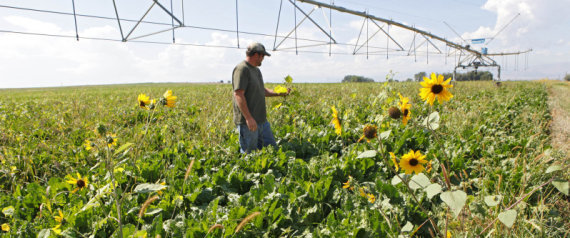
Organic Farmers v. Monsanto

Organic Farmers Turn the Tables on Monsanto: Lawsuit Asserts Legal Protections Against Genetic Contamination
"Society stands on the precipice of forever being bound to transgenic agriculture and transgenic food. Coexistence between transgenic seed and organic seed is impossible because transgenic seed contaminates and eventually overcomes organic seed. History has already shown this, as soon after transgenic seed for canola was introduced, organic canola became virtually extinct as a result of transgenic seed contamination. Organic corn, soybean, cotton, sugar beet and alfalfa now face the same fate, as transgenic seed has been released for each of those crops, too. And transgenic seed is being developed for many other crops, thus putting the future of all food, and indeed all agriculture, at stake."
- Organic Seed Growers v. Monsanto, filed in federal court on June 1, 2011

LAND GRAB - CARVING UP AFRICA IS BIG, BIG BIZ AT AMERICAN UNIVERSITIES

US Universities in Africa 'Land Grab'

Institutions including Harvard and Vanderbilt reportedly use hedge funds to buy land in deals that may force farmers out

by John Vidal and Claire Provost
(Photograph: Boston Globe via Getty Images)
Harvard and other major American universities are working through British hedge funds and European financial speculators to buy or lease vast areas of African farmland in deals, some of which may force many thousands of people off their land, according to a new study.
Institutions including Harvard and Vanderbilt reportedly use hedge funds to buy land in deals that may force farmers out. These universities are reportedly using endowment funds to make deals that 'drive up food prices and increase the risks of climate change' and may force thousands from their land in Africa.  Researchers say foreign investors are profiting from "land grabs" that often fail to deliver the promised benefits of jobs and economic development, and can lead to environmental and social problems in the poorest countries in the world.
The new report on land acquisitions in seven African countries suggests that Harvard, Vanderbilt and many other US colleges with large endowment funds have invested heavily in African land in the past few years. Much of the money is said to be channelled through London-based Emergent asset management, which runs one of Africa's largest land acquisition funds, run by former JP Morgan and Goldman Sachs currency dealers.
Researchers at the California-based Oakland Institute think that Emergent's clients in the US may have invested up to $500m in some of the most fertile land in the expectation of making 25% returns.
Emergent said the deals were handled responsibly. "Yes, university endowment funds and pension funds are long-term investors," a spokesman said. "We are investing in African agriculture and setting up businesses and employing people. We are doing it in a responsible way … The amounts are large. They can be hundreds of millions of dollars. This is not landgrabbing. We want to make the land more valuable. Being big makes an impact, economies of scale can be more productive."
Chinese and Middle Eastern firms have previously been identified as "grabbing" large tracts of land in developing countries to grow cheap food for home populations, but western funds are behind many of the biggest deals, says the Oakland institute, an advocacy research group.
The company that manages Harvard's investment funds declined to comment. "It is Harvard management company policy not to discuss investments or investment strategy and therefore I cannot confirm the report," said a spokesman. Vanderbilt also declined to comment.
Oakland said investors overstated the benefits of the deals for the communities involved. "Companies have been able to create complex layers of companies and subsidiaries to avert the gaze of weak regulatory authorities. Analysis of the contracts reveal that many of the deals will provide few jobs and will force many thousands of people off the land," said Anuradha Mittal, Oakland's director.
In Tanzania, the memorandum of understanding between the local government and US-based farm development corporation AgriSol Energy, which is working with Iowa University, stipulates that the two main locations – Katumba and Mishamo – for their project are refugee settlements holding as many as 162,000 people that will have to be closed before the $700m project can start. The refugees have been farming this land for 40 years.
In Ethiopia, a process of "villagisation" by the government is moving tens of thousands of people from traditional lands into new centres while big land deals are being struck with international companies.
The largest land deal in South Sudan, where as much as 9% of the land is said by Norwegian analysts to have been bought in the last few years, was negotiated between a Texas-based firm, Nile Trading and Development and a local co-operative run by absent chiefs. The 49-year lease of 400,000 hectares of central Equatoria for around $25,000 (£15,000) allows the company to exploit all natural resources including oil and timber. The company, headed by former US Ambassador Howard Eugene Douglas, says it intends to apply for UN-backed carbon credits that could provide it with millions of pounds a year in revenues.
In Mozambique, where up to 7m hectares of land is potentially available for investors, western hedge funds are said in the report to be working with South Africans businesses to buy vast tracts of forest and farmland for investors in Europe and the US. The contracts show the government will waive taxes for up to 25 years, but few jobs will be created.
"No one should believe that these investors are there to feed starving Africans, create jobs or improve food security," said Obang Metho of Solidarity Movement for New Ethiopia. "These agreements – many of which could be in place for 99 years – do not mean progress for local people and will not lead to food in their stomachs. These deals lead only to dollars in the pockets of corrupt leaders and foreign investors."
"The scale of the land deals being struck is shocking", said Mittal. "The conversion of African small farms and forests into a natural-asset-based, high-return investment strategy can drive up food prices and increase the risks of climate change.
Research by the World Bank and others suggests that nearly 60m hectares – an area the size of France – has been bought or leased by foreign companies in Africa in the past three years.
"Most of these deals are characterised by a lack of transparency, despite the profound implications posed by the consolidation of control over global food markets and agricultural resources by financial firms," says the report.
"We have seen cases of speculators taking over agricultural land while small farmers, viewed as squatters, are forcibly removed with no compensation," said Frederic Mousseau, policy director at Oakland, said: "This is creating insecurity in the global food system that could be a much bigger threat to global security than terrorism. More than one billion people around the world are living with hunger. The majority of the world's poor still depend on small farms for their livelihoods, and speculators are taking these away while promising progress that never happens."

Wednesday, June 8, 2011

END WATER PRIVATIZATION BY GLOBAL CORPORATIONS!


June 8, 2011
Top Docs tell McDonald's: Stop marketing junk food to kids!
Last month, support from members like you helped create a media blitz. An open letter from more than 550 health professionals and institutions was published in newspapers across the country calling on McDonald’s CEO to stop marketing junk food to kids. The Wall Street Journal, NBC Nightly News, and hundreds of other media outlets took notice. Now, more than 1500 health professionals have signed the letter. Click here to add your name to the letter, urge your doctor to take part, and/or help run the ad in still more papers nationwide.

Nestlé bottling plans run aground in Wacissa, Fla. 
Over the last several months, Corporate Accountability International has worked with community members living along the Wacissa River in north Florida to prevent Nestlé from pumping out spring water and threatening the river basin residents love. After calling critical media attention to Nestlé's plans, the County passed a resolution to keep Nestlé out. This important victory is no guarantee Nestlé won't make another push to pump the river. Join the people of Wacissa and tell Nestlé – not in my backyard, or anyone’s.
Corporate CEOs run for U.N. cover
Corporate Accountability International is saying not so fast to the world's largest water corporations, including Coca-Cola and Veolia. These water profiteers are using the United Nations to deflect responsibility for their role in the global water crisis. With your help, the organization has exposed their influence at the U.N. and organized more than 100 allies in 24 countries to call for an end to it.

BLAME THE USDA and THE FDA (Run by Ex-Monsanto Men!) for E.Coli break-outs -

E. Coli: Don’t Blame the Sprouts!


Mark Bittman
Mark Bittman The New York Times on food and all things related.   June 7, 2011, 8:30 pm 
One hundred thousand E. coli can dance on the head of a pin; it may only take 50 to make you sick enough to die. Benign E. coli are everywhere, even in your own pink gut right now, and all E. coli can live on (or in) things as different as sprouts, burgers and water. But if you were able to trace back far enough, their reservoir is mostly likely the gut of mammal: a goat, a sheep, a deer, even a majestic elk or a dog. They’re most often associated with cows.
The dangerous E. coli, the ones causing the horror show in Germany right now, are called STEC (Shiga-toxin-producing E. coli, for the name of their horrific poison, and pronounced ess-teck). And if you think it’s only a German problem, you’re so wrong.
STEC usually migrate to food through direct or indirect contact with the contents of the animal’s intestinal tract: dung, not to put too fine a point on it. Whether the growth or even origin of STEC — which have only been associated with human illness for 30 years — could have resulted in part from feeding cattle grain (as opposed to their natural grass), or was aided by industrial agriculture’s unnecessary reliance on prophylactic antibiotics (a shameful story, but one that must wait), may never be known.
What is known is that if you keep STEC out of beef you partially solve the problem, and if you keep manure off other foods you partially solve the problem, too. It isn’t easy, and it’s never going to be foolproof, but these are the steps to take. If you’re the cattle industry, you’d rather blame the whole thing on sprouts that were “somehow” contaminated. (Ban sprouts! No one really likes them anyway.) But blaming the sprouts is like blaming your nose for a virus-containing sneeze: That STEC came from somewhere, and in its history is an animal’s gut.

Because they’re grown in a warm, moist, gut-like environment, sprouts are an excellent vehicle for maintaining and maybe even reproducing STEC (indeed, so excellent that the Centers for Disease Control un-recommends them), but their involvement may never be proven.
Still, it’s likely that most of the thousands of people sickened in Germany ate a vegetable that was contaminated in its handling: manure (Mark, as usual gets near but misses the point: manure from manure "lagoons" common to CAFO - confined animal feedlot operations- is liquefied and SPRAYED as fertilizer on millions of acres of crops worldwide...-Clean Food Earth Woman) got into the growing or rinsing water; or it was on the hands of a picker; or it got dropped on a veggie by a bird, or brushed onto it by a wandering animal; or it was in a truck that took the sprouts to the packager, or some other innocent accident, the kind we must do our best to prevent, the kind that’s magnified by combining huge lots of food from dozens of different sources and handling them all together. Remember, 50 STEC are enough to make you sick; one head of lettuce with a few hundred thousand bacteria, tossed together with a few tons of uncontaminated greens, then sold in thousands of packages, can mess up a lot of people.
Outbreaks of the deadly kinds of STEC — there are at least seven really toxic strains, including the German one — are common enough. But these outbreaks are the tip of the iceberg; there are tens of thousands of “sporadic” cases from STEC every year in the United States alone, most of them unreported but no less deadly for that.
Although the U.S. has a pretty good track record when it comes to identifying and fighting STEC — thanks to much struggle on the part of lawyers and public health officials, and sound thinking in the USDA and FDA — we’re falling way behind in preventing outbreaks like the current one, and we are even further behind in preventing the sporadic ones, those that get no headlines, remain unreported and probably comprise the majority of cases. As is so common these days, a lack of funding and political will is the root of the problem.
The STEC that caused the infamous Jack in the Box outbreak of 1993 is formally called E. coli O157:H7. The U.S. has zero tolerance for that STEC, because in 1994 — against the predictable protests of the meat industry — O157 was labeled an “adulterant,” which means that any food in which it’s discovered is recalled; happens all the time, though sometimes too late. There are, as I said, other STEC just as murderous, and we have a much more lenient policy about their presence in food: they’re unregulated. Their presence in food is, legally speaking, just fine.
In theory, if the German thing happened here and the culprit were O157, it might have been prevented. But if the German thing happened here and the culprit were a non-O157 STEC, as it was in Germany (for those of you keeping score at home, that one has been labeled O104:H4), we’d be in the same boat — er, hospital — as our Saxon cousins.
To slow the deadly effects of STEC, we need more and better basic and applied ( INDEPENDENT, LONG TERM HUMAN TESTING -Clean Food Earth Woman) research to identify them and test for them. We also need more testing of water used for irrigation and washing; reduced animal intrusions; alert farmworkers (an aside: people tend to be more alert if they’re more valued and less overworked and underpaid); and increased testing before people get sick and better reporting when they do get sick. (Less cow manure would help, but that isn’t about to happen.) All of these steps take money.
Even more important, we need to immediately acknowledge that O157 is not the only deadly STEC out there (non-O157 STEC has been found in up to six percent of a random sampling of meat, and not just hamburger), an acknowledgment that — of course — the meat industry is unwilling to make. And we need to declare those other STEC as “adulterants” and get them out of the food supply to the best of our ability. The two agencies that can act on this are USDA (AGAIN, missing the point: Run by Tom Vilsack, Ex Monsanto Man - Clean Food Earth Woman)  and FDA (Ditto: missing the point: Run by Secretary of AG Michael Taylor - Ex Monsanto Man  -Clean Food Earth Woman), and both are hamstrung by budget policy (the FDA needs more money for inspection; the House wants to give it less) and, of course, by the meat lobby and its allies.
Public health — arguably among the most important reasons for society’s existence in the first place — has somehow become a “liberal” cause and therefore unfashionable. But if the origin of these illnesses were bio-terrorism, money would be no object and even politics might be shunted aside. The fact is that a huge and powerful lobby would rather see a few thousand annual underreported deaths and the occasional high-visibility outbreak than submit to further regulation and smaller profits. Especially if that outbreak is in Germany, a world away. But next time it might not be.

ANOTHER REPORT: BIRTH DEFECTS FROM "ROUNDUP READY" POISON ON OUR PLATES!

Roundup Ready Roundup Birth Defects: Regulators Knew World's Best-Selling Herbicide Causes Problems, New Report Finds

Lucia Graves
Lucia Graves lucia@huffingtonpost.com 
First Posted: 06/ 7/11 07:48 PM ET Updated: 06/ 8/11 12:53 AM ET

WASHINGTON -- Industry regulators have known for years that Roundup, the world's best-selling herbicide produced by U.S. company Monsanto, causes birth defects, according to a new report released Tuesday.
The report, "Roundup and birth defects: Is the public being kept in the dark?" found regulators knew as long ago as 1980 that glyphosate, the chemical on which Roundup is based, can cause birth defects in laboratory animals.
But despite such warnings, and although the European Commission has known that glyphosate causes malformations since at least 2002, the information was not made public. Instead regulators misled the public about glyphosate's safety, according to the report, and as recently as last year, the German Federal Office for Consumer Protection and Food Safety, the German government body dealing with the glyphosate review, told the European Commission that there was no evidence glyphosate causes birth defects.
The report comes months after researchers found that genetically-modified crops used in conjunction Roundup contain a pathogen that may cause animal miscarriages. After observing the newly discovered organism back in February, Don Huber, a emeritus professor at Purdue University, wrote an open letter to Secretary of Agriculture Tom Vilsack (former MONSANTO Man - Clean Food Earth Woman) requesting a moratorium on deregulating crops genetically altered to be immune to Roundup, which are commonly called Roundup Ready crops.
In the letter, Huber also commented on the herbicide itself, saying: "It is well-documented that glyphosate promotes soil pathogens and is already implicated with the increase of more than 40 plant diseases; it dismantles plant defenses by chelating vital nutrients; and it reduces the bioavailability of nutrients in feed, which in turn can cause animal disorders."
Although glyphosate was originally due to be reviewed in 2012, the Commission decided late last year not to bring the review forward, instead delaying it until 2015. The chemical will not be reviewed under more stringent, up-to-date standards until 2030.

Saturday, June 4, 2011

OBAMA: DEFEND THE US AGAINST FOOD TERRORISM!

Open Letter to President Barack Obama from E.coli 0104:H4

June 3, 2011
Dear President Obama:
My name is E.coli 0104:H4. I am being detained in a German Laboratory in Baveria, charged with being "a highly virulent strain of bacteria." Together with many others like me, the police have accused us of causing about 20 deaths and nearly five hundred cases of kidney failure--so far. Massive publicity and panic all around.
You can't see me, but your scientists can. They are examining me and I know my days are numbered. I hear them calling me a "biological terrorist," an unusual combination of two different E.coli bacteria cells. One even referred to me as a "conspiracy of mutants".
It is not my fault, I want you to know. I cannot help but harm innocent humans, and I am very sad about this. I want to redeem myself, so I am sending this life-saving message straight from my Petri dish to you.
This outbreak in Germany has been traced to food--location unknown. What is known to you is that invisible terrorism from bacterium and viruses take massively greater lives than the terrorism you are spending billions of dollars and armaments to stop in Iraq, Afghanistan and Pakistan.
Malaria, caused by infection with one of four species of Plasmodium, a parasite transmitted by Anopheles mosquitoes destroys a million lives a year. Many of the victims are children and pregnant women. Mycobacterium tuberculosis takes nearly three million lives. The human immuno-deficiency virus (HIV) causes over a million deaths. Many other microorganisms in the water, soil, air, and food are daily weapons of mass destruction. Very little in your defense budget goes for operational armed forces against this kind of violence. Your agencies, such as the Center for Disease Control, conduct some research but again nothing compared to the research for your missiles, drones, aircraft and satellites.
Your associates are obsessed with possible bacteriological warfare by your human enemies. Yet you are hardly doing anything on the ongoing silent violence of my indiscriminate brethren.
You and your predecessor George W. Bush made many speeches about fighting terrorism by humans. Have you made a major speech about us?
You speak regularly about crushing the resistance of your enemies. But you splash around so many antibiotics (obviously I don't like this word and consider it genocidal) in cows, bulls, chickens, pigs and fish that your species is creating massive antibiotic resistance, provoking our mutations, so that we can breed even stronger progeny. You are regarded as the smartest beings on Earth, yet you seem to have too many neurons backfiring.
In the past two days of detention, scientists have subjected me to "enhanced interrogation," as if I have any will to give up my secrets. It doesn't work. What they will find out will be from their insights about me under their microscopes. I am lethal, I guess, but I'm not very complicated.
The United States, together with other countries, needs more laboratories where scientists can detain samples of us and subject us to extraordinary rendition to infectious disease research centers. Many infectious disease scientists need to be trained, especially in the southern hemispheres to staff these labs
You are hung up on certain kinds of preventable violence without any risk/benefit analysis. This, you should agree, is utterly irrational. You should not care where the preventable violence comes from except to focus on its range of devastation and its susceptibility to prevention or cure!
Well, here they come to my Petri dish for some more waterboarding. One last item: You may wonder how tiny bacterial me, probably not even harboring a virus, can send you such a letter. My oozing sense is that I'm just a carrier, being used by oodles of scientists taking advantage of a high profile infectious outbreak in Europe to catch your attention.
Whatever the how does it really matter to the need to act Now?
E-cologically yours,
E.coli 0104:H4 (for the time being)
Ralph Nader is a consumer advocate, lawyer, and author. His most recent book - and first novel - is, Only The Super-Rich Can Save Us. His most recent work of non-fiction is The Seventeen Traditions.

GET OFF THE BOTTLE! CARRY RE-USABLES - REFILL THEM YOURSELF!

Duped by the Bottled Water Industry

The bottled water business has become a multi-billion dollar industry. But bottled water isn't the pristine elixir you've been told it is.
Consider the following:
  • Studies show that 40 percent of bottled water is actually regular tap water with possibly no additional filtering treatment.
  • The EPA standards that apply to public water supplies do NOT apply to bottled water. Overall, bottled water is less regulated than tap water.
  • There are no restrictions preventing a source of bottled water from being located near industrial facilities or waste dumps.
A recent EWG report uncovered 38 contaminants in 10 brands of plain bottled water, including DBPs, nitrate, caffeine, arsenic, Tylenol, bacteria and industrial chemicals. There is every reason to expect that, if tested, these new flavored bottled waters would be found similarly contaminated with hormone disruptors and industrial waste chemicals. Not the type of "enhancement" you thought you were paying for!

The High Cost of Plastic Water Bottles

In the time it takes you to read this one short sentence, over 8,000 empty water bottles are being thrown into the trash worldwide. According to the Container Recycling Institute, in the U.S. alone, more than 67 million plastic water bottles are discarded each day. That's enough plastic water bottles to fill 5,500 garbage trucks each day or wrap around the Earth 149 times each year.
Plastic bottles have become an enormous problem for humanity due to the following four problems:
  1. The sheer volume of plastic waste they create
  2. The lack of adequate recycling capability for plastics
  3. The amount of oil required to manufacture these millions of plastic bottles
  4. The adverse health problems caused by the plastic itself
As good as it feels to haul your plastic bottles to a recycler, realize that 86 percent of plastic bottles never get recycled, leaving a massive number of them sitting in landfills and floating like massive plastic islands in our oceans. In fact, the enormous plastic "stew" of bottles discarded into the Pacific Ocean is currently twice the size of Texas and growing steadily. Only 5 percent of all discarded plastic waste is currently recycled in the U.S.
And the plastic bottle you toss out today will not finish biodegrading until the year 3011.
But waste isn't the only problem. It takes a lot of OIL to manufacture those plastic bottles.
According to the Sierra Club, the United States alone uses 1.5 million barrels of oil to create the water bottles we toss into those landfills every year, releasing toxic by-products like nickel, ethylbenzene, ethylene oxide, and benzene into the environment. 1.5 million barrels is enough oil to fuel 250,000 homes or 100,000 cars for a year!
And to compound the issue, drinking from plastic water bottles can pose serious health risks from industrial chemicals like BPA and phthalates, which leach from the plastic itself into the contents of the bottle.
BPA (or Bisphenol A) is an estrogen-mimicking chemical linked to reproductive defects, learning and behavioral problems, immune dysfunction, and prostate and breast cancer. Phthalates are also endocrine disruptors and have been linked to a wide range of developmental and reproductive effects, as well as liver cancer.
There is an excellent 2009 documentary called "Tapped," about the high cost of plastic water bottles to human health, as well to as the environment, which can be watched online for free
Another excellent film is the recently released "Waste Land," which poignantly illustrates the sheer volume of our plastic waste. This award-winning documentary tells the uplifting story of how New York artist Vik Muniz teams up with Brazilian locals to artistically turn waste into money at the world's largest landfill near Rio de Janeiro. You can watch the trailer here.

Your Bridge Over Troubled Waters

The answer to all of this is to minimize your use of plastic water bottles (and plastics in general) and refrain from buying plastic-bottled waters, enhanced or otherwise. Why not make plain, pure water your beverage of choice?
You can filter you own water at home, inexpensively and easily, and take it with you in reusable glass water bottles, which have a much smaller ecological footprint. The very best water, however, comes from a natural spring.
If you want to jazz it up with something, why not add natural ingredients that are actually GOOD for you? By avoiding the sugar, chemicals and caffeine in so-called energy drinks, you'll be able to truly rehydrate while avoiding the energy "crash" that inevitably follows.
Here are a few suggestions for spiffing up your water without sacrificing your health:
  • Add fresh lemon or lime juice (or peels) to your water, whole gingerroot, or even slices of cucumber can add a refreshing twist. If you want it sweet, you can add natural stevia, which is an herb that has no downsides for your health.
  • Try adding a drop or two of natural peppermint extract or a few crushed mint leaves from your herb garden.
  • If you're adventurous, there are mint-flavored chlorophyll drops on the market that can be added to a glass of water. Chlorophyll may help flush toxins out of your blood and improves your breath.
  • If you want an electrolyte type "sports drink," try coconut water, which is a rich natural source of potassium and electrolytes. Look for one that has no additives. Or choose a fresh, young coconut and harvest it yourself!
  • If you want the ultimate refreshing vitamin-rich drink, make up some green juice from fresh, organic veggies. Avoid adding fruits due to their high sugar content when juiced. Add a pinch of sea salt and some lemon juice for a very refreshing beverage that is heavy on nutrition and light on calories.
  • Iced green tea is also a great pick-me-up that's high in antioxidants. Although green tea contains caffeine, it also contains a natural protein called theanine, which actually mediates caffeine's adverse effects.
  • Here's a recipe for a refreshing homemade fruit drink that's actually good for you. You can even throw in frozen berries, instead of ice cubes.

Sources:

  Men’s Journal October 23, 2009