Friday, June 12, 2015

BIG FOOD & AG PR INDUSTRIAL-STRENGTH LYING MACHINE - VS - THE TRUTH

Monsanto’s PR, Organic Farming vs. GMO: How the Great Food War Will Be Won


Getting used to Life without Food
By conventional wisdom it is excellent news. Researchers from Iowa have shown that organic farming methods can yield almost as highly as pesticide-intensive methods. Other researchers, from Berkeley, California, havereached a similar conclusion. Indeed, both findings met with a very enthusiastic reception. The enthusiasm is appropriate, but only if one misses a deep and fundamental point: that even to participate in such a conversation is to fall into a carefully laid trap.

The strategic centrepiece of Monsanto’s PR, and also that of just about every major commercial participant in the industrialised food system, is to focus on the promotion of one single overarching idea. The big idea that industrial producers in the food system want you to believe is that only they can produce enough for the future population (Peekhaus 2010). Thus non-industrial systems of farming, such as all those which use agroecological methods, or SRI, or are localised and family-oriented, or which use organic methods, or non-GMO seeds, cannot feed the world.
  Dustbowl and soil erosion USA, 1935'sDustbowl and soil erosion USA, 1935
To be sure, agribusiness has other PR strategies. Agribusiness is “pro-science”, its opponents are “anti-science”, and so on. But the main plank has for decades been to create a cast-iron moral framing around the need to produce more food (Stone and Glover 2011).

Therefore, if you go to the websites of Monsanto andCargill and Syngenta and Bayer, and their bedfellows: the US Farm Bureau, the UK National Farmers Union, and the American Soybean Association, andCropLife International, or The Bill and Melinda Gates FoundationThe Rockefeller FoundationUSAID, or the international research system (CGIAR), and now even NASA, they very early (if not instantaneously) raise the “urgent problem” of who will feed the expected global population of 9 or 10 billion in 2050.
Likewise, whenever these same organisations compose speeches or press releases, or videos, or make any pronouncement designed for policymakers or the populace, they devote precious space to the same urgent problem. It is even in their job advertisements. It is their Golden Fact and their universal calling card. And as far as neutrals are concerned it wins the food system debate hands down, because it says, if any other farming system cannot feed the world, it is irrelevant. Only agribusiness can do that.

The real food crisis is of overproduction
Yet this strategy has a disastrous foundational weakness. There is no global or regional shortage of food. There never has been and nor is there ever likely to be. India has a superabundance of food. South America is swamped in food. The US, Australia, New Zealand and Europe are swamped in food (e.g. Billen et al 2011). In Britain, like in many wealthy countries, nearly half of all row crop food production now goes to biofuels, which at bottom are an attempt to dispose of surplus agricultural products. China isn’t quite swamped but it still exports food (see Fig 1.); and it grows 30% of the world’s cotton. No foodpocalypse there either.

Of all the populous nations, Bangladesh comes closest to not being swamped in food. Its situation is complex. Its government says it is self-sufficient. The UN world Food Program says it is not, but the truth appears to be that Bangladeshi farmers do not produce the rice they could because prices are too low, because of persistent gluts (1).
Chinese net food exportsFig 1. Chinese net food exports (Dr. Jikun Huang, Center for Chinese Agricultural Policy)
Even some establishment institutions will occasionally admit that the food shortage concept – now and in any reasonably conceivable future – is bankrupt. According to experts consulted by the World Bank Institute there is already sufficient food production for 14 billion people – more food than will ever be needed. The Golden Fact of agribusiness is a lie.

Truth restoration
So, if the agribusiness PR experts are correct that food crisis fears are pivotal to their industry, then it follows that those who oppose the industrialization of food and agriculture should make dismantling that lie their top priority.


Anyone who wants a sustainable, pesticide-free, or non-GMO food future, or who wants to swim in a healthy river or lake again, or wants to avoid climate chaos, needs to know all this. Anyone who would like to rebuild the rural economy or who appreciates cultural, biological, or agricultural diversity of any meaningful kind should take every possible opportunity to point out the evidence that refutes it. Granaries are bulging, crops are being burned as biofuels or dumped, prices are low, farmers are abandoning farming for slums and cities, all because of massive oversupply. Anyone could also point out that probably the least important criterion for growing food, is how much it yields. Even just to acknowledge crop yield, as an issue for anyone other than the individual farmer, is to reinforce the framing of the industry they oppose.

The project to fully industrialise global food production is far from complete, yet already it is responsible for most deforestation, most marine pollution, most coral reef destruction, much of greenhouse gas emissions, most habitat loss, most of the degradation of streams and rivers, most food insecurity, most immigration, most water depletion, massive human health problems, and so on (Foley et al 2005Foley et al 2011). Therefore, it is not an exaggeration to say that if the industrialisation of food is not reversed our planet will be made unlivable for multi-cellular organisms. Our planet is becoming literally uninhabitable solely as a result of the social and ecological consequences of industrialising agriculture. All these problems are without even mentioning thetrillions of dollars in annual externalised costs and subsidies (Pretty et al. 2000).

So, if one were to devise a strategy for the food movement, it would be this. The public already knows (mostly) that pesticides are dangerous. They also know that organic food is higher quality, and is far more environmentally friendly. It knows that GMOs should be labeled, are largely untested, and may be harmful. That is why the leaders of most major countries, including China, dine on organic food. The immense scale of the problems created by industrial agriculture should, of course, be understood better, but the main facts are hardly in dispute.

But what industry understands, and the food movement does not, is that what prevents total rejection of bland, industrialised, pesticide-laden, GMO food is the standard acceptance, especially in Western countries, of the overarching agribusiness argument that such food is necessary. It is necessary to feed the world.

But, if the food movement could show that famine is an empty threat then it would also have shown, by clear implication, that the chemical health risks and the ecological devastation that these technologies represent are what is unnecessary. The movement would have shown that pesticides and GMOs exist solely to extract profit from the food chain. They have no other purpose. Therefore, every project of the food movement should aim to spread the truth of oversupply, until mention of the Golden Fact invites ridicule and embarrassment rather than fear.

Divide and Confuse
Food campaigners might also consider that a strategy to combat the food scarcity myth can unite a potent mix of causes. Just as an understanding of food abundance destroys the argument for pesticide use and GMOs simultaneously, it also creates the potential for common ground within and between constituencies that do not currently associate much: health advocates, food system workers, climate campaigners, wildlife conservationists and international development campaigners. None of these constituencies inherently like chemical poisons, and they are hardly natural allies of agribusiness, but the pressure of the food crisis lie has driven many of them to ignore what could be the best solution to their mutual problems: small scale farming and pesticide-free agriculture. This is exactly what the companies intended.


So divisive has the Golden Fact been that some non-profits have entered into perverse partnerships with agribusiness and others support inadequate or positively fraudulent sustainability labels. Another consequence has been mass confusion over the observation that almost all the threats to the food supply (salinisation, water depletion, soil erosion, climate change and chemical pollution) come from the supposed solution–the industrialisation of food production. These contradictions are not real. When the smoke is blown away and the mirrors are taken down the choices within the food system become crystal clear. They fall broadly into two camps.
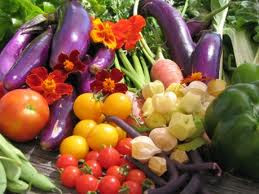
Vegetables growingVegetables growing. (Credit: Sisters of St Francis, Oldenburg) VEGETABLES GROWING. (CREDIT: SISTERS OF ST FRANCIS, OLDENBURG)
 
On the one side lie family farms and ecological methods. These support farmer and consumer health, resilience, financial and democratic independence, community, cultural and biological diversity, and long term sustainability. Opposing them is control of the food system by corporate agribusiness. Agribusiness domination leads invariantly to dependence, uniformity, poisoning and ecological degradation, inequality, land grabbing, and, not so far off, to climate chaos.

One is a vision, the other is a nightmare: in every single case where industrial agriculture is implemented it leaves landscapes progressively emptier of life. Eventually, the soil turns either into mud that washes into the rivers or into dust that blows away on the wind. Industrial agriculture has no long term future; it is ecological suicide. But for obvious reasons those who profit from it cannot allow all this to become broadly understood.  That is why the food scarcity lie is so fundamental to them. They absolutely depend on it, since it alone can camouflage the simplicity of the underlying issues.

Reverse PR?
Despite all this, the food and environmental movements have never seriously contested the reality of a food crisis. Perhaps that is because it is a narrative with a long history. As early as the 1940s the chemical and oil industries sent the Rockefeller Foundation to Mexico to “fix” agriculture there. Despite evidence to the contrary, the Rockefeller scientists derived a now-familiar narrative: Mexican agriculture was obviously gripped by a production deficit that could be fixed by “modern” agribusiness products (The Hungry World, 2010). This story later became the uncontested “truth” that legitimised the green revolution and still propels the proliferation of pesticides, fertilizers, GMOs and other agribusiness methods into every part of the globe.


Yet in the age of the internet it is no longer necessary to let an industry decide where the truth resides. It is possible to restore reality to the global discussion about food so that all potential production methods can have their merits fairly evaluated (IAASTD, 2007). Until this is done agribusiness and chemical industry solutions will always be the default winner, alternative agriculture will always be alternative, if it exists at all.

The evidence with which to contradict the lie is everywhere; but in an unequal and unjust system truth never speaks for itself. It is a specific task that requires a refusal to be intimidated by the torrents of official misinformation and a willingness to unembed oneself from the intellectual web of industry thinking. (That will often mean ordinary people acting alone.)

The task requires two things; the first is familiarity with the basic facts of the food system. Good starting points (apart from the links in this article) are Good Food for Everyone Forever by Colin Tudge or World Hunger: Twelve Myths by Joseph Collins, Peter Rosset and Frances Moore Lappe.

Power, lies, and consent
The second requirement is a shift in perception. The shift is to move beyond considering only physical goals, such as saving individual species, or specific political achievements, and to move towards considering the significance of the underlying mental state of the citizenry.


Companies and industries pay huge sums of money for public relations (PR). PR is predicated on the idea that all human behaviour is governed by belief systems. PR is therefore the discovery of the structure of those belief systems, mainly through focus groups, and the subsequent manipulation of those belief structures with respect to particular products or other goals.

Thus human reasoning, which asks questions like: Is it fair? What will the neighbours think? can be accessed and diverted to make individuals and groups act often against their own self-interests. Two important general rules are that it works best when people don’t know they are being influenced, and that it comes best from a “friendly” source. PR is therefore always concealed which creates the widespread misunderstanding that it is rare or ineffective.

Anyone who desires social change on a significant scale should seek to understand this, and its corollary, that the food crisis lie is far from the only lie. As philosopher Michel Foucault documented for madness and also criminality, many assertions constituting supposed “reality” are best understood as establishment fabrications. Those described by Foucault mostly have deep historical roots; but others, such as the genetic origin of disease, or the validity of animal experiments, are untruths of recent origin. The function of these fabrications is always social control. As Edward Bernays, the father of modern PR, long ago wrote:
“The conscious and intelligent manipulation of the organized habits and opinions of the masses is an important element in democratic society. Those who manipulate this unseen mechanism of society constitute an invisible government which is the true ruling power of our country.”

The possibility of manipulating habits and opinions, which he also called “the engineering of consent” was not an idle boast.

Foucault, who was concerned mostly with the power held by governments, considered that the fabrications he had identified were not conspiracies. They were emergent properties of power. Power and knowledge grow together in an intertwined and mutually supportive fashion. He argued that knowledge creates power but is also deferential to power and so is deformed by it. An example is when US newspapers decline to use the word “torture” for when torture is used by the US government. These newspapers and the US government are together doing what Foucault theorised. The US government gets to torture and gains power in the process while the public is simultaneously deceived and disempowered. In this way the preferred language of the powerful has historically and continuously evolved into the established public truth, to the disadvantage of the people.
Bernays, however, worked mainly for corporations. He knew, since some of them were his own ideas, that many of the more recent fabrications were not emergent properties but were intentionally planted.

The essential point, however, is to appreciate not only that companies and others deliberately engineer social change; but also that when they do so it begins with the reordering of the “reality” perceived by the people. The companies first create a reality (such as Mexican hunger) for which their desired change seems to the people either obvious, or beneficial, or natural. When it comes, the people therefore do not resist the solution, many welcome it.

The structure of “reality”
Dictators and revolutionaries provide an interesting lesson in this. The successful ones have achieved sometimes extraordinary power. As always, they have done so first by changing the opinions of the people. The dictator, like any corporation, must make the people want them. As a general rule, dictators do this by creating new and more compelling false realities on top of older ones.


Hitler, to take a familiar example, harnessed a newly synthesised idea (German nationalism) to a baseless scientific theory (of racial genetics) and welded this to pre-existing “realities” of elitism and impugned manhood (the loss of WWI). These ideas were instrumental in his rise to power. But the important lesson for social change is that none of the ideas used by him possessed (now or then) any objective or empirical reality. They were all fabrications. It is true Hitler also had secret money, bodyguards, and so on, but so did others. Only Hitler found the appropriate combination of concepts able to colonise the minds of enough German people.

But Hitler is not known now for being just another leader of Germany. He is infamous for two events, the holocaust and World War II. The same lessons apply. Millions fought and died for almost a decade in a struggle to assert ideas that could have been destroyed by the intellectual equivalent of a feather. But that is how powerful ideas are.

The lies told in more democratic societies are not so very different to those used by Hitler in the sense that the important ones have predictable properties that can be categorised and sorted. What the food scarcity lie has in common with Hitler’s use of race, and with myths of nationalism, or of modern terrorism, and many others, is the creation of a threat, in this case of famine and possible social breakdown. The creation of an internal or external threat is thus the first category of lies.

The second category recognises the necessity of “efficient government”. No government can issue direct and separate orders to all the people all the time. Nor can it possess the resources for physical enforcement of those orders. It must therefore find ways to cause the people to govern, order, and regiment themselves, in exquisite detail. Therefore, governments supply and support guiding principles in the form of artificial unifying aspirations, such as “progress” or “civilisation”. Typically, they also strongly encourage the desirability of being “normal”; and especially they reinforce elitism (follow the leader), and so on.

Another structural category follows from the recognition that the effective operation of power over others, unless it is based on pure physical force or intimidation, usually requires an authoritative source of ostensibly unbiased knowledge. The population must be “convinced” by an unimpeachable third party. This function is typically fulfilled by either organised religion or by organised science. Scientific or religious institutions thus legitimate the ideas (progress, hierarchy, normality, inequality, etc.) of the rulers. These sources conceal the use of power because they combine the appearance of authority, independence and disinterestedness. These qualities are all or partly fictions.

Another category are fabrications intended to foster dependence on the state and the formal economy. These aim to undermine the ancient dependence of individuals on the land and each other, and transfer that dependence to the state. Thus the worship of competitionthe exaggeration of gender differences, andgenetic determinism (the theory that your health, personality, and success derive only from within) are examples of fabrications that sow enmity and isolation among the population.

Another important category, which include the myths of papal infallibility, or scientific and journalistic objectivity, exist to reinforce the power of authority itself. These fabrications act to bolster the influence of other myths.

The above list is not exhaustive, but it serves to introduce the idea that the organising of detailed control over populations of millions, achieved mostly without resorting to any physical force, requires the establishing and perpetual reinforcement of multiple interlocking untruths. This itself has important implications.

The first and most important implication is that if the lies and fabrications exist to concentrate and exercise power over others (and then conceal its use), then it also follows that genuinely beneficial and humanitarian goals such as harmony, justice, and equity, require retrieval of the truth and the goals will follow naturally from that retrieval. 

The task of anyone who wants harmony, justice, peace, etc to prevail therefore becomes primarily to free the people from believing in lies and thus allowing them to attain mastery over their own minds. At that point they will know their own true needs and desires; they will no longer “want” to be oppressed or exploited.

The second implication of this entwining of knowledge with power is that, when properly understood, goals of harmony, understanding, health, diversity, justice, sustainability, opportunity, etc., are not contradictory or mutually exclusive. Rather, they are necessarily interconnected.

The third implication is that an empire built on lies is much more vulnerable than it seems. It can rapidly unravel.

Given that resources are limited, the problems of achieving broad social justice, of providing for the people, and of restoring environmental harms consequently become that of discerning which of the lies (since there are many) are most in need of exposing; and perhaps in what order.

Conclusion
Thus the necessary shift in perception is to see that, as in most wars, the crucial struggle in the food war is the one inside people’s heads. And that the great food war will be won by the side that understands that and uses it best.

This food war can be won by either side. The natural advantages of the grassroots in this realm are many. They include the power of the internet–which represents a historic opportunity to connect with others; second, that it takes a lot less effort to assert the truth than it does to build a lie-many people only need to hear the truth once; and thirdly, that in this particular battle the non-profit public-interest side doesn’t necessarily need a bigger megaphone because, unlike the industry, they are (broadly) trusted by the public.
Consequently, it is perfectly possible that a lie that took several powerful industries many decades to build up could be dismantled in months. It is necessary only to unleash the power of the truth and to constantly remember the hidden power of the people: that all the effort industries put into misleading them is an accurate acknowledgement of the potential of that power.

There are many writers and NGOs, such as Pesticides Action NetworkIATP, the EWG, the Organic Consumers Association, the Center for Food Safety, and others, who are aligned with the grassroots, and who are doing a good and necessary job of explaining the problems and costs of industrial agriculture. But these arguments have so far proven inadequate. Agribusiness knows why that is.

But by combining these arguments with a refutation of the food crisis they can help destroy the industrial model of agriculture forever. And when that happens many of our worst global problems, from climate change and rainforest destruction down, will become either manageable or even negligible.

It is all in the mind.

Notes
(1) Thanks to Prof J Duxbury, Cornell University.
References
Billen et al (2011) Localising the Nitrogen Imprint of the Paris Food Supply: the Potential of Organic Farming and Changes in Human Diet. Biogeosciences Discuss 8: 10979-11002.
Cullather, N. (2010) The Hungry World: America’s Cold War Battle against Poverty in Asia (Harvard)
Foley et al (2005) Global Consequences of Land useScience 309: 570.
Foley et al (2011) Solutions for a cultivated planet. Nature 478: 337–342.
Peekhaus W. (2010) Monsanto Discovers New Social MediaInternational Journal of Communication 4: 955–976.
Pretty J. et al., (2000) An Assessment of the Total External Costs of UK Agriculture Agricultural Systems65: 113-136.
Stone GD and Glover D. (2011) Genetically modified crops and the ‘food crisis’: discourse and material impactsDevelopment in Practice 21: DOI: 10.1080/09614524.2011.562876

Tuesday, June 2, 2015

ENLISTDUO's 2,4-D (half of Agent Orange) PESTICIDE UP FOR WHO SCRUTINY

Agribusiness nervous as WHO cancer unit analyzes popular pesticide      Markets | Fri May 29, 2015 1:00pm EDT

May 29 The World Health Organization is set to examine a widely used pesticide and agribusiness is bracing for bad news, less than three months after the group classified another popular herbicide as "probably" cancer-causing.


Twenty-four scientists representing WHO's International Agency for Research on Cancer (IARC) are set to analyze scientific findings regarding links between cancer in humans and the herbicide known as 2,4-D at a June 2-9 meeting in Lyon, France.


A separate group of IARC scientists in March unanimously decided to classify glyphosate, the key ingredient in Monsanto Co's Roundup weedkiller, as "probably carcinogenic to humans." The designation prompted outrage and calls for a retraction from Monsanto, and demands by some public officials and consumers for bans on the pesticide.
 

Many believe the same could happen for 2,4-D.


"I do think they are going to upgrade 2,4-D," said Michael Hansen, a senior scientist at Consumers Union who has served on an advisory committee of the U.S. Department of Agriculture as well as a WHO consultation project.


"There is just as strong, or even a stronger case (for links to cancer), on 2,4-D than there was for glyphosate," he said.


IARC's work is of particular concern to Dow AgroSciences, a unit of Dow Chemical Co. The company manufactures 2,4-D and this year is rolling out a product that combines 2,4-D with glyphosate after gaining approval from the Environmental Protection Agency last year.

Dow will have representatives at the meeting, and a 2,4-D task force backed by Dow funded an analysis of 14 studies that refutes concerns about 2,4-D and cancer that has been submitted to IARC.


"The epidemiology evidence does not support an association between 2,4-D and NHL (non-Hodgkin lymphoma), gastric cancer, or prostate cancer risk," said Julie Goodman, a scientist and consultant working for the 2,4-D task force.


However, a different analysis of scientific studies did find cancer connections with 2,4-D, said IARC scientist Maria Leon, who co-authored the analysis last year.


There were indications that farm exposure to 2,4-D was associated with a 40 percent higher risk of NHL. Determining the strength of the evidence will be up to the IARC working group, Leon said.


Maarten Bosland, a U.S. cancer scientist and member of the IARC group evaluating 2,4-D, said he knows the work will be closely watched and that the outcome will rely on the scientific evidence.


"There is nothing that anybody can say at this point. We haven't seen all the evidence," Bosland said.


Like glyphosate, 2,4-D (2,4-dichlorophenoxyacetic acid) is a long-used, popular herbicide. Homeowners as well as farmers and ranchers use products containing 2,4-D.

Critics for years have said 2,4-D has very clear ties to several types of cancer and note that it was a key ingredient in Agent Orange, which was used to defoliate jungles in the Vietnam War. But agribusiness interests, U.S. regulators and others say evidence of cancer connections is lacking.


A coalition of U.S. farmer and environmental groups have sued the EPA, seeking to overturn approval for Dow's new herbicide.


(Reporting by Carey Gillam in Kansas City, Missouri; Editing by Richard Chang)

Tuesday, May 26, 2015

ROUNDUP OF ACTIONS - MARCHES


Genetically modified organisms (GMO) are bad for people, the environment, and water supplies, at least. This is according to the protestors involved in the “March Against Monsanto.” Their protests cover 421 cities, 48 countries, and six continents, by ...
Hawaii groups plant coconut trees, protest against Monsanto

Reverend Billy marching in Chicago against Monsanto

WGN-TV - ‎May 22, 2015‎
CHICAGO - Rev. Billy joined WGN Morning News again to discuss his Chicago march against agrochemical company Monsanto and his mission for people to 'stop shopping.

CHICAGO - Rev. Billy joined WGN Morning News again to discuss his Chicago march against agrochemical company Monsanto and his mission for people to 'stop shopping.


Maui Now - ‎May 24, 2015‎


While communities around the world participated in “March Against Monsanto” events, GMO Free Maui and Simpmli Fresh Farms hosted a special “Outgrow Monsanto” community food planting event on Saturday, May 24, 2015 in West Maui.
Fox News - ‎May 23, 2015‎


The protesters complained about the impacts that companies like Monsanto have on the community when they spray fields with chemical pesticides.
U-T San Diego - ‎May 23, 2015‎


BALBOA PARK - More than 1,000 people gathered in Balboa Park Saturday to join the worldwide “March Against Monsanto,” the third annual protest against Monsanto, the multinational corporation whose products include seeds that are genetically modified ...
Central Florida Future - ‎17 hours ago‎


Protesters worldwide rallied in Downtown Orlando on Saturday against food-industry-giant Monsanto to raise awareness about the dangers and controversies surrounding the company.
Sacramento Bee - ‎May 21, 2015‎


Several dozen environmental advocates demonstrated outside the Monsanto plant in Woodland on Thursday to call attention to the company's business practices and its role in producing pesticides and genetically modified foods.
Seattle Sun Times - ‎12 hours ago‎


March Against Monsanto says the movement is a way to raise awareness of the dangers surrounding Monsanto's genetically modified seeds and cancer-linked herbicide Roundup.
Bay Area Indymedia - ‎18 hours ago‎


The World Health Organization's International Agency for Research on Cancer announced just two months ago that glyphosate, a key ingredient in Monsanto's pesticide RoundUp, is probably carcinogenic to humans. The time was ripe to demand a ban on ...
Center for Research on Globalization - ‎3 hours ago‎


Monsanto recently made a bid to take over European agrichemical giant Syngenta, the world's largest pesticide producer.
Yahoo News - ‎May 22, 2015‎


But Monsanto's ongoing efforts to try to take over Swiss agrochemicals firm Syngenta, a rival whose product portfolio offers an array of agricultural chemicals, could spark a sell-off or de-emphasis of a product line that last year brought in roughly ...
Markets Wired - ‎21 hours ago‎


Monsanto Co (NYSE:MON) (TREND ANALYSIS) shares were traded with thin volume. The stock closed last trading session at $120.29, up by 0.24%, with a volume of 2,663,124 shares against an average volume for the last 3 months of 3,210,720.
Wall Street Daily - ‎May 19, 2015‎


The company made a $45-billion unsolicited offer for its rival, Syngenta AG (SYT) - a Swiss chemical company. But on May 8, Syngenta rejected the offer, saying the price undervalued the company.
St. Louis Public Radio - ‎May 24, 2015‎


About 70 anti-Monsanto protesters lined the sidewalks outside the garden, some carrying 3-D monarch butterfly props. One protester brought along a dog in a bee costume.


Friday, May 22, 2015

NEW YORKERS - CALL TO PASS GMO FOOD LABELING BILL MAY 22-2015!


CALL YOUR ASSEMBLYMEMBER TODAY IN THEIR ALBANY OFFICE!!!  
Even if you've called in the past, CALL AGAIN TODAY! And get everyone you know to do the same. Armchair activism isn't enough -- you need to pick up the phone! I've spoken to far too many Assemblymembers who say they've barely heard from their constituents by phone (and they don't seem to care very much about all the "robo" emails they get when you sign onto letters written by others). So we need up make more calls.

I can't stress enough how good a job the biotech and big food lobbyists have been doing in Albany convincing our legislators to keep us in the dark. I hear their b.s. talking points coming out of the mouths of our elected officials over and over again! So we need to fight back NOW by drowning out their b.s.!

STEP 1. Find out who your Assemblymember is: http://assembly.state.ny.us/mem/ and make note of their ALBANY office phone number.

STEP 2: See if they are already a cosponsor of bill A.617 (check the list below). If yes, go to Step 3. If no, go to Step 4.

STEP 3: If they ARE a cosponsor, call their ALBANY office, identify yourself as a constituent, and say something like: "Thank you for supporting GMO labeling by cosponsoring bill A.617. However, the bill has not moved since it was voted out of the Consumer Affairs committee over two months ago and session is almost over. I need to know if the food I'm buying is GMO -- it's unacceptable that we're all being kept in the dark about something as fundamental as the way our food is being produced because of corporate interests. Would you please talk to Speaker Heastie and ask him to bring the bill to a floor vote? Thank you!"

STEP 4: If they are NOT a cosponsor, call their ALBANY office, identify yourself as a constituent, and say something like, "I need to know if the food I'm buying is made with GMOs -- it's unacceptable that we're all being kept in the dark about something as fundamental as the way our food is being produced because of corporate interests. Please cosponsor bill A.617 this session and help bring it to a floor vote. Thank you!"

STEP 5: If you got an answer one way or the other, please post a comment below.

Bill A.617
Sponsor: Linda Rosenthal
Cosponsors: Abinanti, Arroyo, Barron, Benedetto, Bichotte, Blake, Braunstein, Brennan, Brindisi, Brook-Krasny, Ceretto, Clark, Colton, Cook, Crespo, Curran, Davila, Dinowitz, Englebright, Fahy, Farrell, Galef, Glick, Goldfeder, Gottfried, Hevesi, Jaffee, Jean-Pierre, Kaminsky, Katz, Kavanagh, Kearns, Kim, Lavine, Lentol, Lifton, Linares, Lopez, Magnarelli, Markey, Mayer, McDonald, Mosley, Moya, Murray, Nolan, Ortiz, Otis, Paulin, Peoples-Stokes, Perry, Persaud, Pichardo, Quart, Ramos, Rivera, Roberts, Robinson, Rodriguez, Rozic, Schimel, Seawright, Sepulveda, Simon, Simotas, Skartados, Steck, Thiele, Walker, Weinstein, Weprin

US CORPORATIONS ALREADY PRESSURING THE REST OF THE WORLD TO ACCEPT TOXIC DEALS

EU dropped pesticide laws due to US pressure over TTIP

EXCERPT: The series of events was described as “incredible” by the the Green MEP Bas Eickhout. “These documents offer convincing evidence that TTIP not only presents a danger for the future lowering of European standards, but that this is happening as we speak,” he told the Guardian.

EU dropped pesticide laws due to US pressure over TTIP, documents reveal

Arthur Neslen
The Guardian, 22 May 2015
http://www.theguardian.com/environment/2015/may/22/eu-dropped-pesticide-laws-due-to-us-pressure-over-ttip-documents-reveal?utm_medium=twitter&utm_source=dlvr.it

* US trade officials pushed EU to shelve action on endocrine-disrupting chemicals linked to cancer and male infertility to facilitate TTIP free trade deal

EU moves to regulate hormone-damaging chemicals linked to cancer and male infertility were shelved following pressure from US trade officials over the Transatlantic Trade and Investment Partnership (TTIP) free trade deal, newly released documents show.

Draft EU criteria could have banned 31 pesticides containing endocrine disrupting chemicals (EDCs). But these were dumped amid fears of a trade backlash stoked by an aggressive US lobby push, access to information documents obtained by Pesticides Action Network (PAN) Europe show.

On the morning of 2 July 2013, a high-level delegation from the US Mission to Europe and the American Chambers of Commerce (AmCham) visited EU trade officials to insist that the bloc drop its planned criteria for identifying EDCs in favour of a new impact study. By the end of the day, the EU had done so.

Minutes of the meeting show commission officials pleading that “although they want the TTIP to be successful, they would not like to be seen as lowering the EU standards”.

The TTIP is a trade deal being agreed by the EU and US to remove barriers to commerce and promote free trade.

Responding to the EU officials, AmCham representatives “complained about the uselessness of creating categories and thus, lists” of prohibited substances, the minutes show.

The US trade representatives insisted that a risk-based approach be taken to regulation, and “emphasised the need for an impact assessment” instead.

Later that day, the secretary-general of the commission, Catherine Day, sent a letter to the environment department’s director Karl Falkenberg, telling him to stand down the draft criteria.

 “We suggest that as other DGs [directorate-generals] have done, you consider making a joint single impact assessment to cover all the proposals,” Day wrote. “We do not think it is necessary to prepare a commission recommendation on the criteria to identify endocrine disrupting substances.”

The result was that legislation planned for 2014 was kicked back until at least 2016, despite estimated health costs of €150bn per year in Europe from endocrine-related illnesses such as IQ loss, obesity and cryptorchidism – a condition affecting the genitals of baby boys.

A month before the meeting, AmCham had warned the EU of “wide-reaching implications” if the draft criteria were approved. The trade body wanted an EU impact study to set looser thresholds for acceptable exposure to endocrines, based on a substance’s potency.

“We are worried to see that this decision, which is the source of many scientific debates, might be taken on political grounds, without first assessing what its impacts will be on the European market,” the chair of AmCham’s environment committee wrote in a letter to the commission.

These could be “dramatic” the letter said.

In a high-level internal note sent to the health commissioner, Tonio Borg, shortly afterwards, his departmental director-general warned that the EU’s endocrines policy “will have substantial impacts for the economy, agriculture and trade”.

The heavily redacted letter, sent a week before the EU’s plans were scrapped continued: “The US, Canada, and Brazil [have] already voiced concerns on the criteria which might lead to important repercussions on trade.”

The series of events was described as “incredible” by the the Green MEP Bas Eickhout. “These documents offer convincing evidence that TTIP not only presents a danger for the future lowering of European standards, but that this is happening as we speak,” he told the Guardian.

Earlier this year, 64 MEP’s submitted questions to the commission about the delay to EDC classifications, following revelations by the Guardian about the scale of industry lobbying in the run up to their abandonment. Sweden, the European Parliament and European Council have brought court proceedings against the commission for the legislative logjam.

Just weeks before the regulations were dropped there had been a barrage of lobbying from big European firms such as Dupont, Bayer and BASF over EDCs. The chemical industry association Cefic warned that the endocrines issue “could become an issue that impairs the forthcoming EU-US trade negotiations”.

The German chemicals giant BASF also complained that bans on pesticide substances “will restrict the free trade with agricultural products on the global level”.

Around this time, the commission’s more industry-friendly agriculture department weighed into the internal EU debate after being “informed by representatives of the US chemical industry” about it.

A common theme in the lobby missives was the need to set thresholds for safe exposure to endocrines, even though a growing body of scientific results suggests that linear threshold models – in which higher doses create greater effects – do not apply to endocrine disruptors.

“The human endocrine system is regulated by hormones and the hormone receptors are sensitive to low doses,” said Hans Muilerman, PAN Europe’s chemicals coordinator. “In animal toxicity studies, effects are seen from low doses [of endocrines] that disappear with higher ones. But in the regulatory arena, lower doses are not tested for.”

A commission spokesperson insisted that health and environmental concerns would be fully addressed, despite pressure from industry or trade groups.

“The ongoing EU impact assessment procedure is not linked in any way to the TTIP negotiations,” the official said. “The EU will proceed to the adoption of definitive criteria to identify endocrine disruptors, independently from the further course of our TTIP negotiations with the US.”

An EU-TTIP position paper on chemicals published last May, cited endocrine disruptors as as one of the “new and emerging scientific issues” which the EU and the US could consider for “enhanced regulatory cooperations” in a future TTIP deal.

“However, given the fact that a possible future TTIP Agreement will most likely not enter into force before the adoption of definitive EU criteria to identify endocrine disruptors, it is clear that the EU’s ongoing impact assessment and adoption of definitive criteria will not be dealt with in the TTIP negotiations,” the spokesperson said.
__________________________________________________________
Website: http://www.gmwatch.org
Profiles: http://www.powerbase.info/index.php/GM_Watch:_Portal
Twitter: http://twitter.com/GMWatch
Facebook: http://www.facebook.com/pages/GMWatch/276951472985?ref=nf

Wednesday, May 6, 2015

NEWS FROM ORGANIC AND NON-GMO ROUNDUPS

Thanks to Mark Kastel and his team at The Cornucopia Institute who blogged and Tweeted from last week’s National Organic Standards Board meeting in California.

Mark said  this morning, taht the divisiveness between the organic non-profits and big corporates/OTA is as strong as ever – not something that anyone likes to hear.

Check out the daily recaps of the meeting on Cornucopia’s website. http://www.cornucopia.org/

IN OTHER NEWS

Chipotle claims that GMOs “don’t make the cut” anymore at its restaurant chain. I beg to differ.
http://bit.ly/1FL2mJ8

Judge upholds Vermont GMO labeling law while case continues. http://shrd.by/PPrBQp

Gary Hirshberg and Just Label It launch #concealorreveal campaign, target Quaker.
http://shrd.by/vVzSE6

Costco's organic food sales approach $3 billion.
http://shrd.by/Zxl4FB

Wendy's to start selling its first organic product – tea.
http://shrd.by/brTeOs

USDA to launch certified organic database.
http://shrd.by/slLr9b

Saturday, April 25, 2015

"STOP PRODUCING GLYPHOSATE" - WORLD'S LARGEST PRODUCER -CHINA- ASKED TO AWAIT TESTING RESULTS

Ten NGOs ask China to stop producing glyphosate to protect world health

Ten NGOs, including GMWatch, have written to the Chinese Ambassador to the UK asking China to suspend exports and imports of glyphosate herbicides while independent testing is carried out.

Open letter to the people of China

Ambassador Liu Xiaoming
Embassy of the People's Republic of China
49 Portland Place, London W1B 1JL

Request for urgent letter to be forwarded to President Xi Jin-ping and Premier Li Ke-qiang

To the Chinese people,
To Xi Jin-ping, President of the People's Republic of China
To  Li Ke-qiang, Premier of the People's Republic of China

OPEN LETTER: The Impact of Glyphosate/Roundup on global health

April 2015

Dear Friends

We write to you as members of various non-governmental organizations in Europe, to draw your attention to one of the biggest health problems currently facing the planet – namely the ill health epidemic associated with the ongoing (and expanding) use of the chemical glyphosate and its main formulation called Roundup.  As you will know, the latter is a proprietary product marketed by the Monsanto Corporation and other companies worldwide, on the pretence that it is harmless to human beings but lethal to plants. In addition to being widely used as a weedkiller, it is also used increasingly with herbicide-tolerant GMO crops and as a desiccant prior to the harvesting of wheat and other crops.  In situations where "industrial agriculture" is practised, it is sprayed on a vast scale, affecting not just farm workers but also the inhabitants of neighbouring communities. It is therefore widely found nowadays in the food supplies of many countries, including the People's Republic of China, and is traceable in animal tissues, human urine and breast milk, and a wide variety of marketed food products. This is well documented in the science literature.

We have been investigating the claims that glyphosate and Roundup are "safe" products, and we respectfully ask you to bear in mind the following recent findings:

1. A working party of the World Health Organization (WHO) has declared that glyphosate is now considered to be “a probable human carcinogen”. (1) Their full report  – as yet unpublished – will contain the full evidence underpinning the conclusion. The IARC Panel has given glyphosate a 2A categorisation for humans, as well as stating that genotoxic effects in other mammals are "sufficiently demonstrated”. As you may know, a 2A categorisation in the IARC is equivalent to category 1B in the European Union, which means that glyphosate cannot receive a new EU authorisation (the matter is currently under review).

2.  Recently the Argentinian Federation of Health Professionals (representing 30,000 members) stated: "Glyphosate not only causes cancer. It is also associated with increased spontaneous abortions, birth defects, skin diseases, and respiratory and neurological disease.” On the basis of accumulated experience over many years, the doctors have called for an immediate ban on glyphosate herbicides in their country (2).

3. Following various leads into the archives of the American Environmental Protection Agency (EPA), we issued a short report (3) that shows that both Monsanto and the EPA knew of the link between glyphosate and cancer as long ago as 1980, since malignant tumours and other organ damage had been recorded in rat and mouse feeding studies which were, and still are, treated as trade secrets (4). Our revelations confirmed other findings published by Caroline Cox in 1995 and by the Institute of Science in Society in 2014 (5) . The myth relating to the "relative safety" of glyphosate herbicides was promoted by both Monsanto and the EPA in 1981, and has been kept alive ever since by American, EU and other regulators around the world for purely commercial reasons. We are also uncomfortable with the business practice of hiding away important scientific findings by classifying them as trade secrets, thus disallowing public scrutiny of such documents. From a European perspective, in our view EFSA and other EU agencies have also turned a blind eye to the accumulating evidence of harm since 2002.

Arising out of the above, we are genuinely frightened by the harm currently being done to the health of your citizens and indeed the health of people across the planet.

We understand that China already is the largest producer and exporter of glyphosate in the world, including supplies exported to Monsanto for use in the manufacture of Roundup formulations worldwide. Accordingly, we ask that your Government accepts that it shoulders, together with Monsanto, some responsibility for the devastating harm to public health in those countries importing glyphosate/Roundup from China. We are also concerned that there may be massive claims for compensation in the near future.

China is also the largest importer of "Roundup Ready" (RR) soybeans and maize, thus contributing to the ongoing production of these varieties in the USA, Argentina and Brazil. It will be no easy thing to close down factories and to ban the use of the chemical in town and country; and if imports of RR soy and maize are stopped, they will have to be replaced with other products.

But we respectfully ask you to take a global lead in this matter.

First, will you please commission appropriate scientific institutions in China to carry out independent long-term carcinogenicity, teratogenicity, endocrine developmental disruption, and multiple-generation reproduction toxicity tests on glyphosate alone, and on Roundup formulations? These studies should be carried out by institutions with no commercial or academic interest links with the glyphosate and/or related products industries, and with no connections to the earlier safety evaluation of glyphosate and/or related products. We also believe that in China, as elsewhere, there should now be a nationwide programme of testing for glyphosate residues in surface water, underground water, animal and human urine, breast milk and blood. In parallel, we hope that you will see merit in a nationwide epidemiological investigation of the link between glyphosate/Roundup pollution (including traces contained in imported GM soybeans) and the increased incidence of malignant diseases during the past 20 years.

Second, before such studies are commissioned, we ask you as an essential precautionary measure immediately to suspend production/sales and exports of glyphosate, to suspend imports of Roundup formulations, and to suspend imports of all agriculture products (such as RR varieties) containing any glyphosate residues.

Finally, given the past frauds practised by IBT and Craven Labs in carrying out industry tests on pesticides, including glyphosate, we urge you to challenge Monsanto to place certain key reports (6) immediately into the public domain. If the corporation will not cooperate by releasing these documents without deletions or alterations, we will assume that there has been scientific malpractice and that the WHO findings of a glyphosate/cancer link are well founded. Glyphosate should have been banned globally 35 years ago, and Roundup should never have been placed on the market. After decades of health damage, it must be in the interests of the whole world for these lethal chemicals to be taken immediately out of use before any more harm is done.

While many scientists in Europe and the Unites States share the concerns expressed above, there are many political and commercial obstacles to change. If China could take a lead in the manner which we respectfully suggest, placing the safety and good health of future generations above the commercial aspirations of multinational corporations, that would be something of truly historical importance for our planet.

Thank you very much for your consideration.

Sincerely yours,

Dr Brian John, GM-Free Cymru, Wales, UK
Peter Melchett, The Soil Association, UK
Dr John Fagan, Earth Open Source, London, UK
Dr Mae-wan Ho, Institute of Science in Society, London, UK
Michael O'Callaghan, Global Vision Foundation, Geneva, Switzerland
Henry Rowlands, Global GMO Free Coalition, Bulgaria
Claire Robinson, GM Watch, UK
Pat Thomas, Beyond GM, London, UK
Sandra Smith, GM-Free Scotland, UK
Lawrence Woodward, GM Education - Citizens Concerned about GM, UK


NOTES

1.  Carcinogenicity of tetrachlorvinphos, parathion, malathion, diazinon, and glyphosate (2015)
Kathryn Z Guyton, Dana Loomis, Yann Grosse, Fatiha El Ghissassi, Lamia Benbrahim-Tallaa, Neela Guha, Chiara Scoccianti, Heidi Mattock, Kurt Straif,  on behalf of the International Agency for Research on Cancer Monograph Working Group, IARC, Lyon, France
Lancet Oncol 2015.  Published Online March 20, 2015 http://dx.doi.org/10.1016/ S1470-2045(15)70134-8
International Agency for Research on Cancer 16 Volume 112: Some organophosphate insecticides and herbicides: tetrachlorvinphos, parathion, malathion, diazinon and glyphosate. IARC Working Group. Lyon; 3–10 March 2015. IARC Monogr Eval Carcinog Risk Chem Hum (in press).

2.  Argentina: 30,000 doctors and health professionals demand ban on glyphosate
http://www.gmwatch.org/index.php/news/archive/2015-articles/16084-argentina-30-000-doctors-and-health-professionals-demand-ban-on-glyphosate

3.   http://www.gmfreecymru.org/documents/monsanto_knew_of_glyphosate.html

4.  It has been further revealed to us by our consultant, that Bio/dynamics used three studies to dilute the data found on kidney tumors, but went even further by fraudulently using five unrelated historical controls to dilute the tumor data found in the testes of male rats.   The study clearly showed that glyphosate caused testicular tumors in all three of the test groups. However, the experiment's own control animals showed zero incidence of tumors in the testes of male rats.

5.  Cox C. Glyphosate, Part 1: Toxicology. J Pesticide Reform, 1995, 15, Northwest Coalition for Alternatives to Pesticides, Eugene, OR.
http://www.1hope.org/glyphos8.htm
http://www.i-sis.org.uk/Glyphosate_and_Cancer.php
ISIS Report 26/03/14
Glyphosate and Cancer: New research shows that the low levels of glyphosate found in human urine can promote the growth of human breast cancer cells, confirming the carcinogenic potential of the herbicide known since the 1980s
Dr Mae Wan Ho

6. "A Three-Generation Reproduction Study in Rats with Glyphosate" (Final Report; Bio/dynamics Project No. 77-2063; March 31, 1981)  -- submitted by Monsanto to EPA
"Addendum to Pathology Report for a Three-Generation Reproduction Study in Rats with Glyphosate.  R.D. #374; Special Report MSL-1724; July 6, 1982" EPA Registration No 524-308, Action Code 401. Accession No 247793.  CASWELL#661A" -- submitted by Monsanto to EPA
"A Lifetime Feeding Study of Glyphosate (Roundup Technical)  in Rats"  (Report by GR Lankas and GK Hogan from Bio/dynamics for Monsanto.  Project #77-2062, 1981:  MRID 00093879) -- submitted by Monsanto to EPA. Including the study's 4-volume Quality Control evaluation of the Bio/dynamic assessment performed by Experimental Pathology Laboratories, Inc. (2,914 pp).
Also Addendum Report  #77-2063
Knezevich, AL and Hogan, GK (1983) "A Chronic Feeding study of Glyphosate (Roundup Technical) in Mice".  Project No 77-2061. Bio/dynamics Inc for Monsanto.  Accession No #251007-251014  -- document not available but cited in EPA 1986 Memo.
Follow-up study:  McConnel, R. "A chronic feeding study of glyphosate (Roundup technical) in mice: pathology report on additional kidney sections". Unpublished project no. 77-2061A, 1985, submitted to EPA by Bio/dynamics, Inc.
__________________________________________________________
Website: http://www.gmwatch.org
Profiles: http://www.powerbase.info/index.php/GM_Watch:_Portal
Twitter: http://twitter.com/GMWatch
Facebook: http://www.facebook.com/pages/GMWatch/276951472985?ref=nf