Saturday, July 5, 2014

"NOT YOUR GRANDDAD'S 2,4-D" : ENLIST DUO's DOUBLE DEADLY DOW-MONSANTO DREAM "CROP SYSTEM"


CORN FIELD SCHOOL

Federal Support For Potent New Weedkiller Raises Fears About Children's Health


Lynne Peeples Headshot
  Posted: Updated:


In his public plea for the Environmental Protection Agency to reject registration of a potent new weedkiller, Christopher Lish of Olema, California, revisited a decades-old warning from environmental prophet Rachel Carson: "As crude a weapon as the cave man's club, the chemical barrage has been hurled against the fabric of life."

Lois Rose, a registered nurse in South Milwaukee, Wisconsin, posted her own, less ornate caution to the EPA website: "Stop listening to the chemical lobby and start listening to the humans affected by these poisons."

As a federal decision looms over whether to approve Dow AgroSciences' proposed Enlist Duo herbicide -- a mix of 2,4-D and glyphosate, the main ingredient in Monsanto's Roundup weedkiller -- challenges from critics across the country have poured in. And children's health advocates are among the most vocal.

More than half a million people shared their thoughts before the EPA closed its public comment period on Monday. Among the submissions was a letter signed by 35 doctors, scientists and researchers, which highlighted human health risks they suggested had been overlooked by the agency -- especially for "young children in residential communities, schools, and daycare centers near the 2,4-D-sprayed fields."

On Wednesday, an environmental nonprofit released a report, including an interactive map, that warns the new weed-killing recipe may soon be sprayed on corn and soy fields within a thousand feet of more than 18,000 U.S. schools. Around 5,600 schools are within 200 feet of fields that could potentially be sprayed, according to the Environmental Working Group's new analysis. The EPA's proposed approval of the double herbicide calls for a 200-foot buffer zone around locations where it is sprayed.

"The analysis is pretty scary," said Mary Ellen Kustin, senior policy analyst with the Environmental Working Group. "To think that there are this many schools so close to fields that may be turned over to this new cropping system."

Inhalation of drifting herbicide is the key concern, Kustin noted, although children may be exposed via other routes such as dust tracked around on shoes, clothes and the like.

Industry representatives, meanwhile, call the group's claims "inflammatory," "specious" and "irresponsible." They suggest the federal government is poised to approve the chemical spray with good reason: The herbicide is safe and a necessary solution for struggling American farmers.
"Regulatory and health and safety organizations worldwide have reviewed the database on 2,4-D and found little concern for adverse effects when the product is used as directed," Garry Hamlin, a spokesman with Dow AgroSciences, told The Huffington Post in an email. He added that the 2,4-D in the company's product has been formulated to reduce volatilization and drift: "This is not your granddad's 2,4-D."

The U.S. Department of Agriculture estimates that if Enlist Duo is green-lighted, agricultural use of 2,4-D would at least triple by 2020 to between 77.8 and 176.2 million pounds annually. The latter herbicide was first introduced on the market in 1946 and is also commonly used by homeowners to kill weeds in their lawn -- much to the chagrin of environmental health advocates.

Chensheng Lu, an environmental health expert at the Harvard School of Public Health, is among those not comforted by industry's claims. "The reproductive hazards [of 2,4-D], as well as the concern of cancers, have been well documented," said Lu, one of the signatories on the EPA letter. "The EPA should at least host a scientific advisory panel meeting to gather independent review of Enlist Duo."
To the list of potential health risks for children exposed to even tiny amounts of the double herbicide, Warren Porter, a toxicologist at the University of Wisconsin, Madison, and another signatory, added attention deficit hyperactivity disorder, asthma and immune disorders.

The EPA's assessment, he said, misses emerging evidence that certain chemicals in minute amounts can disrupt human hormones and therefore mess with multiple systems in the body. Research suggests both 2,4-D and glyphosate carry that capacity.

"Why should we be supporting some kind of a policy that is going to directly impact the health of our children?" said Porter. "The EPA seems totally in the pocket of Dow right now."

The EPA stated that it will review all comments before its final decision, which is expected sometime late summer or early fall. "Our proposal was based on an extensive assessment," the agency told HuffPost in an email, adding that it had looked at herbicide drift and risks to kids, among critics' concerns.

Another worry is potential interactions between glyphosate and 2,4-D, as well as with other ingredients in Enlist Duo. In its environmental risk assessment, the EPA acknowledges that "there could be additive, synergistic, or interference between the two herbicides," potentially increasing or decreasing the overall toxicity of the product.

Fifty years ago, Rachel Carson wrote in Silent Spring of a pesticide combination that resulted in health risks "up to 50 times as severe as would be predicted on the basis of adding together the toxicities of the two."

The EPA did not include any such potential synergisms in its human health risk assessment. While the potential for drift is discussed, the agency also dismissed it from aggregate exposure calculations, determining it didn't pose a sufficient risk.

In addition to the EPA's verdict on the dual herbicide, Dow AgroSciences also awaits final word from the USDA regarding its herbicide-resistant seeds, the other component of its Enlist system. Corn and soy crops would be genetically modified to withstand exposure to 2,4-D and glyphosate, theoretically leaving only the weeds vulnerable to the chemicals.

Weeds, however, may evolve to withstand exposure, as farmers learned after years of employing Monsanto's genetically engineered Roundup Ready seeds. Repeated application of a herbicide can literally weed out the weak weeds, giving the rare resistant ones the opportunity to reproduce and eventually dominate.

More than 70 million acres of farmland in the U.S. are now infested with glyphosate-resistant "superweeds." And that number is rising.

"As a farmer located in Iowa, I look forward to approval of this herbicide option," wrote Fred Wirtz of West Bend, Iowa, in a comment posted on the EPA's website. "Weed resistance to gly[ph]osate and other herbicides is becoming an increasing concern, and this will provide a valuable additional option to protect the crop."

Approval of Enlist Duo should keep farmers from unleashing other -- potentially more toxic -- herbicides, as well as larger quantities of Roundup, said Dow's Hamlin.
Mike Owen, a weed expert at Iowa State University, agreed that the product would be a useful tool for farmers.

While he was among those who first warned of the likelihood of Roundup resistance in the early 1990s, Owen is hopeful that more stringent restrictions included on the Enlist Duo product label will result in more sustainable use. Dow AgroSciences provides specifics on application rates and advises rotating use of Enlist Duo with other herbicides and non-chemical practices such as mechanical cultivation.

Diversifying crops and methods to manage weeds, Owen emphasized, is the real key to getting off what many now call the "pesticide treadmill." He pointed to one factor thwarting that effort: the growing size of the average American farm. "There are fewer farmers farming larger areas over greater distances," Owen said. "And many want to spray one herbicide over all their acres."
Dow AgroSciences also advises on appropriate spray nozzles and weather conditions, among other factors that affect drift. The label, for example, warns applicators not to spray "at wind speeds greater than 15 mph" or in "areas of temperature inversions."

But even if a farmer perfectly adheres to all the label's directions, there is still the chance of dangerous drift, said Porter of the University of Wisconsin. And again, young children may be particularly vulnerable to any toxic effects.

"If the wind is blowing, or even if not, stuff is going to move in all dimensions," said Porter. "They could be well outside the buffer zone, but still get a dose that could affect their immune system, their endocrine system, their nervous system."

"We may be loading ourselves up for some very long-term consequences," he added, noting other new research that hints at the potential for a chemical's harm to be passed down through the generations. "I think we have to be really careful."

Friday, July 4, 2014

LINKS: WAR MACHINE, GATES AND MONSANTO

Monsanto-2.0Monsanto’s GMO Food and its Dark Connections to the “Military Industrial Complex”

Monsanto, the world’s largest genetically modified (GM/GMO) seed producer, has been at the centre of controversy for decades as evidence of the harmful effects on humans of GM foods continues to mount.  Joined with the likes of DuPont’s Pioneer Hi-Bred International and Syngenta, Monsanto and partners comprise the corporate nexus of Big-Agri, where the control over our food supply is increasingly transferred into the hands of private trans-national corporations as opposed to local farmers and governments.
A US peer-reviewed study conducted last year which was published in the scientific journal Entropy, linked Monsanto’s herbicide Roundup – which is the most popular weed killer in the world – to infertility, cancers and Parkinsons Disease amongst other ailments. The authors of the study were Stephanie Seneff, a research scientist at the Massachusetts Institute of Technology, and Anthony Samsel, a retired science consultant from Arthur D. Little, Inc. and a former private environmental government contractor. The main ingredient in Roundup is the “insidious” glyphosate, which the study found to be a deeply harmful chemical:
“Glyphosate enhances the damaging effects of other food borne chemical residues and environmental toxins. Negative impact on the body is insidious and manifests slowly over time as inflammation damages cellular systems throughout the body [...] Consequences are most of the diseases and conditions associated with a Western diet, which include gastrointestinal disorders, obesity, diabetes, heart disease, depression, autism, infertility, cancer and Alzheimer’s disease” (Samsel and Seneff, 2013).
The Executive Director of the Institute for Responsible Technology (IRT) Jeffrey M. Smith has discovered a link between gluten disorders and GM foods in a study he conducted last year. Gluten disorders have sharply risen over the past 2 decades, which correlates with GM foods being introduced into the food supply. Smith asserts that GM foods – including soy and corn – are the possible “environmental triggers” that have contributed to the rapid increase of gluten disorders that effect close to 20 million American’s today:
“Bt-toxin, glyphosate, and other components of GMOs, are linked to five conditions that may either initiate or exacerbate gluten-related disorders [...] If glyphosate activates retinoic acid, and retinoic acid activates gluten sensitivity, eating GMOs soaked with glyphosate may play a role in the onset of gluten-related disorders” (Smith, 2013).
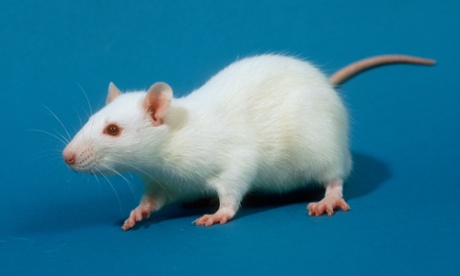
One of the more damming studies on the safety of GM foods was led by biologist Dr. Gilles-Eric Seralini of the University of Caen, which was the first study to examine the long term affects on rats that had consumed Monsanto’s GM corn and its Roundup herbicide. The study was conducted over a 2 year period – which is the average life-span of a rat – as opposed to Monsanto’s usual period of 90 days. The peer-reviewed study found horrifying effects on the rats health, with a 200% to 300% increase in large tumours, severe organ damage to the kidney and liver and 70% of female participant rats suffered premature death. The first tumours only appeared 4 to 7 months into the research, highlighting the need for longer trials.

Initially the study was published in the September issue of Food and Chemical Toxicology, but was then later retracted after the publisher felt the study was “inconclusive”, although there was no suspicion of fraud or intentional deceit. Dr. Seralini strongly protested the decision and believed “economic interests” were behind the decision as a former Monsanto employee had joined the journal. Monsanto is infamous for employing swaths oflobbyists to control the political, scientific and administrative decisions relating to the organisation, and this incident was a major whitewash by the GM producer to stop the barrage of negative media reports relating to the toxic effects of their products. The study led by Dr. Seralini was later published in a less well renowned journal, the Environmental Sciences Europe, which reignited the fears of GM foods safety.

France has recently implemented a ban on Monsanto produced maize (MON810) – a different variety of the Monsanto GM corn that was discussed in the study above (NK603) – citing environmental concerns as the reason for the ban. France joins a list of countries including Italy and Poland who have imposed bans on GM corn over the past few years. Additionally, Russian MPs have introduced a draft into parliament which could see GM producers punished as terrorists and criminally prosecuted if they are deemed to have harmed the environment or human health. In India, many of the GM seeds sold to Indian farmers under the pretext of greater harvests failed to deliver, which led to an estimated 200,000 Indian farmers committing suicide due to an inability to repay debts.
There is growing evidence to support the theory that bee colonies are collapsing due to GM crops being used in agriculture, with America seeing the largest fall in bee populations in recent years. Resistance to Monsanto and GM foods has been growing in recent years after the launch of the worldwide ‘March Against Monsanto’ in 2012, which organises global protests against the corporation and its toxic products within 52 countries. Monsanto was also voted the ‘most evil corporation’ of 2013 in a poll conducted by the website Natural News, beating the Federal Reserve and British Petroleum to take the top position.

Monsanto Produced and Supplied Toxic Agent Orange
Researching Monsanto’s past reveals a very dark history that has been well documented for years. During the Vietnam War, Monsanto was contracted to produce and supply the US government with a malevolent chemical for military application. Along with other chemical giants at the time such as Dow Chemical, Monsanto produced the military herbicide Agent Orange which contained high quantities of the deadly chemical Dioxin. Between 1961 and 1971, the US Army sprayed between 50 and 80 million litres of Agent Orange across Vietnamese jungles, forests and strategically advantageous positions. It was deployed in order to destroy forests and fertile lands which provided cover and food for the opposing troops. The fallout was devastating, with Vietnam estimating that 400,000 people died or were maimed due to Agent Orange, as well as 500,000 children born with birth defects and up to 2 million people suffer from cancer or other diseases. Millions of US veterans were also exposed and many have developed similar illnesses. The consequences are still felt and are thought to continue for a century as cancer, birth defects and other diseases are exponential due to them being passed down through generations.

Today, deep connections exist between Monsanto, the ‘Military Industrial Complex’ and the US Government which have to be documented to understand the nature of the corporation. On Monsanto’s Board of Directors sits the former Chairman of the Board and CEO of the giant war contractor Lockheed Martin, Robert J. Stevens, who was also appointed in 2012 by Barack Obama to the Advisory Committee for Trade Policy and Negotiations. As well as epitomising the revolving door that exists between the US Government and private trans-national corporations, Stevens is a member of the parallel government in the US, the Council on Foreign Relations (CFR). A second board member at Monsanto is Gwendolyn S. King, who also sits on the board of Lockheed Martin where she chairs the Orwellian ‘Ethics and Sustainability Committee”. Individuals who are veterans of the corporate war industry should not be allowed control over any populations food supply! Additionally, Monsanto board member Dr. George H. Poste is a former member of the Defense Science Board and the Health Board of the U.S. Department of Defense, as well as a Fellow of the Royal Society and a member of the CFR.

Bill Gates made headlines in 2010 when The Bill and Melinda Gates Foundation bought 500,000 Monsanto shares worth a total of $23 million, raising questions as to why his foundation would invest in such a malign corporation. William H. Gates Sr. – Bill’s father – is the former head of Planned Parenthood and a strong advocate of eugenics– the philosophy that there are superior and inferior types of human beings, with the inferior type often sterilised or culled under the pretext of being a plague on society. During his 2010 TED speech, Bill Gates reveals his desire to reduce the population of the planet by “10 or 15 percent” in the coming years through such technologies as “vaccines”:
“The world today has 6.8 billion people. That’s heading up to about 9 billion. Now if we do a really good job on new vaccines, health care, reproductive health services, we could lower that by perhaps 10 or 15 percent” (4.37 into the video).

In 2006, Monsanto acquired a company that has developed – in partnership with the US Department of Agriculture – what is popularly termed terminator seeds, a future major trend in the GM industry. Terminator Seeds or suicide seeds are engineered to become sterile after the first harvest, destroying the ancient practice of saving seeds for future crops. This means farmers are forced to buy new seeds every year from Big-Agri, which produces high debts and a form of servitude for the farmers.
Sources:

Wednesday, July 2, 2014

NO GMO MARKET GROWS EVERY YEAR

(Shutterstock*)Aversion to GMO Foods Higher Than Ever, and Growing


By  J. D. Heyes, contributing writer to Natural News
Most likely led by states like Vermont and others pushing for labeling of genetically modified organisms in food, aversion to GMOs in what we buy for our families to eat is now higher than ever, and is continuing to grow.
The drive to eat healthier, followed by parents’ growing concerns about feeding GMO foods to their kids, is driving the awareness and antipathy, says the Organic Trade Association in a new report.
“Of all the thoughts that race through the mind of a mom or dad as they do the weekly grocery shopping and decide whether to put an organic or non-organic item in the shopping cart, the desire to stay away from foods that have been genetically modified has never been greater,” the group said in a press release.
Avoiding GMOs both for themselves and their children is fast becoming a primary reason why more parents are selecting organic foods for their families, the trade group said in its report, “U.S. Families’ Organic Attitudes and Beliefs 2014 Tracking Study,” which is a survey of more than 1,200 households around the nation that have at least one child living in them under the age of 18.

‘Each Year We Are Seeing Increases’

Nearly one-quarter of parents who buy organic foods said they did so to steer clear of GMOs, which is one of the top reasons they selected organic, and that is the largest amount in the four years since the survey has been taken, said the group. That’s up significantly from 16 percent of parents who said the same thing in last year’s survey.
Of the 15 reasons for buying organic that parents were asked to rate, not buying GMOs showed the biggest jump from attitudes in 2013, the group found.
“Each year we see an increase in parents’ self-described knowledge of organic topics. Parents have become more informed about the benefits of organic, and they have also become more aware of the questions surrounding GMOs. That heightened awareness is being reflected in their buying decisions,” said OTA CEO and Executive Director Laura Batcha.
In its press release, the OTA noted:
Demand for organic products is booming, with sales in the United States jumping to $35.1 billion in 2013, a 12 percent hike from the previous year and a new record. OTA’s survey shows that eight out of ten American families now make organic products a part of their grocery list if not all the time, at least sometimes.
Indeed, as more parents get better educated on organic issues (seven in 10 parents in the survey told OTA they feel “extremely well informed” or “know quite a bit” about organic foods) they have become more familiar with the term GMO. In fact, the group said 73 percent of parents, whether they were buying organic foods or not, knew what “GMO” stood for.

And Parents Don’t Mind Paying More for Organic, Either

OTA’s Gwendolyn Wyard, Regulatory Director for Organic Standards & Food Safety, however, emphasized that while parents can be assured when buying an organic product with the USDA Organic seal that it will always be non-GMO, products with only the non-GMO label are not necessarily organic.
She further noted that the non-GMO assurance is another great characteristic of buying organic food, and that the organic seal itself relates a host of other benefits that parents seem to value, such as no artificial colors, no preservatives and no synthetic hormones.
“Parents have apparently caught on. The big decider when purchasing organic products appears to be the USDA Organic seal, with nearly three-quarters of parents saying they actively seek out that organic seal,” the group said.
OTA adds in a separate release that parents are also increasingly willing to pay more for organic foods. In a separate report, the group found that 47 percent of respondents said that half or more of their weekly grocery purchase consists of organic foods, even though they cost more.
SOURCE:   http://www.theepochtimes.com/n3/778829-aversion-to-gmo-foods-higher-than-ever-and-growing/

OREGON GE FOOD LABELING INITIATIVE MAKES IT TO BALLOT

Oregon proponents of GMO labeling say expect ballot measure to qualify

PORTLAND Ore. Tue Jul 1, 2014 9:21pm EDT

(Reuters) - Advocates of mandatory labeling of genetically engineered crops in Oregon said they had collected more than enough signatures to qualify a measure for the November ballot, and planned to submit them on Wednesday to state officials. 

The statewide ballot measure, if it passes, would require labeling of products containing genetically modified ingredients intended to make them resistant to disease and insects, beginning in January 2016.

“We’ve done this in a very short period of time,” Oregon Right to Know spokesman Sandeep Kaushik said of the 150,000 signatures collected since the group won a court challenge in May to seek the ballot measure. “We’re really pleased with how well our signature gathering has gone.” 

The group needs 87,213 valid signatures by Thursday to get its measure on the ballot. 
GMO labeling advocates say there are concerns about the safety and environmental impact of genetically engineered crops, and labels would help consumers distinguish products containing GMOs so they can avoid them if they wish.

But the move away from GMOs has upset the food and agriculture industries, including makers of genetically modified corn, soybeans, canola and other crops widely used in packaged foods. They say their products are safe and that mandatory labels will confuse consumers and increase costs.

Scott Dahlman, executive director of Oregonians for Food and Shelter, said in a statement he expected a broad base of opposition if the initiative qualified. Oregonians voted against GMO labeling in 2002. 

"This is a costly and misleading initiative that would hurt thousands of Oregon family farmers and small store owners, cost Oregon taxpayers millions of dollars and increase grocery bills for Oregon families by hundreds of dollars each year," he said. 

Voters in two small Oregon counties in May approved ballot measures to ban the cultivation of genetically engineered crops within their boundaries. Kaushik said those votes showed there was widespread interest and concern over GMOs. 

“People feel like they have a right to know whether the food they’re buying in grocery stores for their families is engineered in a lab or not,” he said. 

Consumer sentiment has pushed a growing number of U.S. food companies to start using non-genetically modified ingredients because of the consumer backlash against GMOs. Vermont in May became the first state to mandate GMO labeling. 

(Editing by Cynthia Johnston and Peter Cooney)

Source:  http://www.reuters.com/article/2014/07/02/us-usa-gmo-oregon-idUSKBN0F703O20140702

Wednesday, June 25, 2014

SERALINI STUDY REPUBLISHED - CENSORS CONTINUE TO VILIFY IT

Gilles-Eric Seralini, a professor at the University of Caen in Normandy, said rats fed NK603 corn and Roundup weedkiller developed liver and kidney disease and mammary tumours

Controversial Seralini study linking GM to cancer in rats is republished

Paper on link between GM corn and cancer in lab rats is republished after journal withdrew it – but critics say it is still flawed
Gilles-Eric Seralini, a professor at the University of Caen in Normandy, said rats fed NK603 corn and Roundup weedkiller developed liver and kidney disease and mammary tumours Photograph: Alamy
French scientists who in 2012 wrote a contested study linking pesticide-treated, genetically-modified corn with cancer in lab rats returned to the attack on Tuesday, republishing their work online.

Denying accusations of bad science, the team said the work, which was withdrawn by the journal which first printed it, had been republished in Environmental Sciences Europe, owned by Germany's Springer group.

The raw data has also been placed in the public domain for others to scrutinise, the researchers said.

"Censorship of research into the risks of a technology so intertwined with global food safety undermines the value and credibility of science," the team said in a statement.
The research kicked up a hornet's nest when it was first published in September 2012.
Its authors, led by Gilles-Eric Seralini, a professor at the University of Caen in Normandy, said rats fed NK603 corn and Roundup weedkiller developed liver and kidney disease and mammary tumours.

Many other scientists said at the time that the study was flawed. And commentators on Tuesday said nothing has changed through publishing it again.

NK603, made by the US agribusiness giant Monsanto, has been engineered to be immune to the weedkiller Roundup. As a result, farmers can spray their fields to kill weeds without harming their crops.

The authors stood by their original research on Tuesday and lashed out at the journal Food and Chemical Toxicology for withdrawing it - a great humiliation in the scientific world.
"Roundup formulations and Roundup-tolerant GMOs should be considered as (hormonal) disruptors and their present assessments on health are drastically deficient," they wrote.
Open publication in the Springer journal provides a forum "so that science can reclaim its rights against the pressures of the industry seeking to suppress 'whistle-blowers'," they said.
In defence of their study, the scientists said it was the first to be carried out on lab rodents over their normal lifespan of two years as opposed to the usual 90 days.

They said the study was designed to test toxicity rather than causes of cancer.
Critics faulted the experimental method, saying the number of rats studied was too small and their diet was skewed when compared with their natural food intake.

They also attacked the choice of rat - so-called Sprague-Dawley rats, a standard choice for lab experiments but highly prone to developing cancers, particularly in old age.

In an initial reaction Tuesday, critics said their concerns have still not been answered.
"Republishing data that was faulty in the first place in study design and analysis does not provide redemption. Furthermore, it is now possible to publish almost anything in open access journals," said Tom Sanders, a professor of nutrition and dietetics at King's College London.

Source:  http://www.theguardian.com/environment/2014/jun/24/controversial-seralini-study-gm-cancer-rats-republished

PESTICIDES LINKED AGAIN TO AUTISM - ANOTHER STUDY

cropdustingplane

Study Links Pesticide Exposure in Pregnancy to Autism

June 23rd, 2014Reuters
by Kathryn Doyle

NEW YORK (Reuters Health) – In a new study from California, children with an autism spectrum disorder were more likely to have mothers who lived close to fields treated with certain pesticides during pregnancy.

Proximity to agricultural pesticides in pregnancy was also linked to other types of developmental delay among children.
“Ours is the third study to specifically link autism spectrum disorders to pesticide exposure, whereas more papers have demonstrated links with developmental delay,” said lead author Janie F. Shelton, from the University of California, Davis.

There needs to be more research before scientists can say that pesticides cause autism, she told Reuters Health in an email. But pesticides all affect signaling between cells in the nervous system, she added, so a direct link is plausible.

California is one of only a few states in the U.S. where agricultural pesticide use is rigorously reported and mapped. For the new study, the researchers used those maps to track exposures during pregnancy for the mothers of 970 children.

The children included 486 with an autism spectrum disorder (ASD), 168 with a developmental delay and 316 with typical development.

Developmental delay, in which children take extra time to reach communication, social or motor skills milestones, affects about four percent of U.S. kids, the authors write. The Centers for Disease Control and Prevention estimates that one in 68 children has an ASD, also marked by deficits in social interaction and language.

In the new study, about a third of mothers had lived within a mile of fields treated with pesticides, most commonly organophosphates.

Children of mothers exposed to organophosphates were 60 percent more likely to have an ASD than children of non-exposed mothers, the authors report in Environmental Health Perspectives.

Autism risk was also increased with exposure to so-called pyrethroid insecticides, as was the risk for developmental delay. Carbamate pesticides were linked to developmental delay but not ASDs.

For some pesticides, exposure seemed to be most important just before conception and in the third trimester, but for others it didn’t seem to matter when during pregnancy women were exposed.

Dr. Philip J. Landrigan speculated that the pesticides probably drifted from crops through the air, and that’s how pregnant women were exposed. The new study did not measure airborne pesticide levels, however.

Landrigan directs the Children’s Environmental Health Center at the Icahn School of Medicine at Mount Sinai in New York and was not involved in the new study.

“We already knew from animal studies as well as from epidemiologic studies of women and children that prenatal exposure (to pesticides) is associated with lower IQ,” Landrigan told Reuters Health. “This study builds on that, uses the population of a whole state, looks at multiple different pesticides and finds a pattern of wide association between pesticide exposure and developmental disability.”

What’s more, this study almost certainly underestimates the true strength of the association between pesticides and neurological problems, he said, since it did not precisely measure each individual woman’s exposure.

Pesticide registries like the one in California and another in New York are rare, but are critical to public health efforts in this area, Landrigan said. Concerned parents could advocate for registries like them in their own states, he added.

“One lesson or message for parents is to minimize or eliminate use of pesticides in their own homes,” Landrigan said.

In the months before and during pregnancy, it would make sense to avoid using pesticides in the home or on the lawn, he said.

For city-dwelling families, instead of spraying for cockroaches every month, integrated pest management is a better choice. That approach makes chemical pesticides the last resort – first steps are to seal up cracks and crevices in the home, clean up food residue and try relatively non-toxic options, like roach motels.

“If there’s one thing that parents can control it’s what comes into their home,” he said.
“It would be a great first step to stop using organophosphates and pyrethroids inside the home,” Shelton agreed.

Wednesday, June 18, 2014

FORCE-FEEDING EU GE FOOD AND AG DESPITE EXISTING LAWS


BRUSSELS — The top American agriculture official on Tuesday called on the European Union to do more to ease restrictions on gene-altered food and feed crops if it hoped to reach a trans-Atlantic trade pact.
Continue reading the main story
Share This Page


“There can’t be a trade agreement without a serious and significant commitment to agriculture,” the official, Agriculture Secretary Tom Vilsack, told reporters on Tuesday, a day after an informal meeting with European farm ministers. European consumers “ought to have a choice” whether to use biotech foods, he said.

Mr. Vilsack has a tough case to make, though. There continues to be deep resistance to bioengineered agricultural products in the European Union — or to easing many other agricultural trade protections, for that matter. The fight over food, in fact, is a big impediment to progress in talks that are already moving more slowly than officials on both sides had wanted when President Obama announced them last year.

Negotiators are trying to reach a Trans-Atlantic Trade and Investment Partnership, an agreement that goes far beyond cutting import duties by creating a more uniform market and by synchronizing regulations for products like automobiles and medicines. But after five rounds of meetings, the negotiators are at odds in important areas, including how to lower tariffs, whether to include financial services in any deal, and how to create freer trade in food and farming.

The deal is also drawing opposition from groups on both sides of the Atlantic, concerned it will lower environmental standards and weaken consumer protections.

The United States has long insisted that there is no scientific evidence of safety risks from using foods and feeds whose genetic makeup have been altered through bioengineering — whether to make them more resistant to pests and drought or to fine-tune their content. But many Europeans are more cautious, and some deride the products as “Frankenfoods” that must remain heavily restricted on farms and in the food chain. European shops tend to carry few foods with gene-altered ingredients because of skepticism among consumers.

Cultivation in Europe is also almost nonexistent. A Monsanto corn variety approved in 1998 is the only gene-altered crop grown in the bloc. Grown mainly in Spain, the variety represented only 1.4 percent of European Union corn production in 2012.

European Union officials have proposed ways of encouraging more cultivation of such crops. One idea is to give countries that are steadfastly opposed to biotech crops, like Austria, broader scope to ban them from their territory. Those countries would, in turn, then ease their opposition to allowing the crops on a broader European basis. But whether those rules, which still must be approved by the European Parliament, would promote more cultivation is an open question.

As to imports, there is already a significant level of trans-Atlantic trade — but not as much as the United States would like. The European Union has authorized import of 58 gene-altered varieties for food and feed from the rest of the world, including the United States. But new approvals often get stuck for years in complex decision-making processes, even after being given a green light by the European Food Safety Authority, a European Union agency.
Continue reading the main storyContinue reading the main story
Continue reading the main story


“Our view is that the regulatory process should be synchronized,” said Mr. Vilsack. Approvals take about 18 months in the United States compared with an average of about 45 months in the European Union, American officials said.

Europe should also reconsider requirements to label genetically modified foods, said Mr. Vilsack, who added that consumers could use smartphones to scan packaging to check the contents. European ministers “didn’t say that’s a ridiculous idea,” said Mr. Vilsack.

Dacian Ciolos, the European Union’s agriculture minister, said at a news conference on Monday evening that other “crucial issues” discussed with Mr. Vilsack included European demands on American producers to curb use of so-called geographical indications like Feta, meant to protect products like the Greek cheese of the same name.

Most ministers told Mr. Vilsack that the “European Union doesn’t see how any kind of agreement can be struck without geographical indications being part and parcel of that agreement,” Mr. Ciolos said.

On Tuesday during his meeting with reporters, Mr. Vilsack asked, “Where is Feta?” He said it was not even a place in Greece, but simply a manufacturing process. “If only Greeks can use the term Feta, which has been used for a long period of time by a lot of people, and you expand that to all the other cheeses that are at issue here,” he said, “that’s a problem.”