Wednesday, September 1, 2010

AMERICANS EAT PESTICIDES NEVER TESTED ON PEOPLE!!


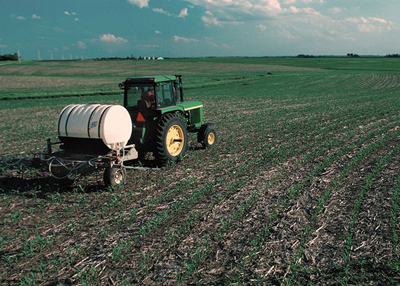
Americans are likely polluted with far more pesticides than current studies report: The vast majority of pesticides that taint food have never been tested in people.

Agribusiness and pesticide companies are not required to test for their chemicals in people, not even for compounds that widely contaminate the food supply. The federal government’s national biomonitoring program, run by the CDC, has likely only scratched the surface of the full burden of pesticide pollution in people. EWG analysis shows that:

* • The CDC has tested Americans for only 32 of the 215 pesticides that government tests turned up on fresh fruits and vegetables since 2001 (not all of these have established residue tolerances on produce).
* The agency has tested people for only 9 of the 35 pesticides found on the greatest number of different fruits and vegetables (at least 15 types each).
* And it has tested for none of the 8 most commonly detected pesticides on fruits and vegetables (compounds tested more than 100 times since 2001, with an overall detection rate of at least 10 percent). These include pesticides found in apples, bananas, strawberries, and other widely consumed favorites.

Very little is known about the safety of real-world pesticide exposures; limited available studies point to increased risks for neurological damage in children.

Even when government research uncovers wide-scale pesticide pollution in body tissues of Americans, follow-up studies are not required or conducted to understand the implications of the exposures.

Industrial produce operators and pesticide interests have asserted that “There are no studies that specifically link pesticide residues in the diet with health effects.” Such studies are not required. The industry has confused an absence of data with proof of safety. They are two vastly different things.

Shoppers’ increasingly common decisions to avoid pesticides or to choose organics are backed by an extensive body of evidence demonstrating that pesticides harm workers, damage the environment, and demonstrate toxicity to laboratory animals. Pesticides are designed to be biologically active; they are designed to kill living organisms. EPA is directed to set standards for pesticides in food that allow a sufficient margin of safety between human exposures and amounts known to be harmful.

But the complexity of people’s diets, the variation in pesticide residues on foods, and the difficulty sorting out effects of pesticide mixtures from additional lifestyle, genetic and environmental factors contributing to diseases like cancer, birth defects, and behavioral problems, all make it difficult to be certain of the risks of pesticides in the diet.

Best studied are a group of neurotoxic pesticides known as organophosphates (OPs). Until strict cut-backs in their use in 2000 over health concerns, these chemicals were some of the most common pesticides in agriculture, accounting for about half of all insecticides used in the U.S. in 1999 (EPA 1999). Individual OP pesticides share a common chemical structure and toxic mechanism in the body. They damage nervous system function by blocking acetylcholinesterase. This enzyme is responsible for ending nerve cells firing—when blocked nerve cells fire continuously, acute poisoning or long-term nerve damage can result. Children are believed to be at higher risk for permanent effects from OP exposures, though neurotoxins can be harmful to people of any age.

EPA estimates that 40 percent of children tested in CDC’s national biomonitoring study from 1999 to 2002 had amounts of OPs in their bodies at levels exceeding standard margins of safety, relative to levels shown to be harmful in laboratory studies (Paynes-Sturges 2009).

In May 2010 researchers at Harvard University published research showing increased risk for ADHD in American children exposed to typical levels of OPs. Scientists analyzed the CDC’s biomonitoring data on OP pesticide exposure for 1,139 children 8 to 15 years old, tested from 2000 to 2004 (Bouchard 2010). They found that every 10-fold increase in dimethyl alkylphosphate (DMAP), an OP metabolite in the body, corresponded to a 55 to 72 percent increase in the odds of ADHD diagnosis. Effects of OPs were most pronounced among children with the hyperactive/impulsive subtype rather than a primarily inattentive ADHD. Because the NHANES study is carefully designed to be a representative sample of Americans, these results are considered generalizable to all American children.

The validity of the Harvard study is bolstered by studies of children more intensely exposed to OP pesticides. Two studies link prenatal OP exposures to increased risk of pervasive developmental disorders (Bouchard 2010 citing Rauh 2006, Eskenazi 2007). Minority children residing in New York City were at greater risk of attention problems, ADHD and pervasive developmental disorder if they had been born with greater concentrations of chlorpyrifos during pregnancy, as measured by umbilical cord blood concentrations at birth (Rauh 2006). New York City was previously an area of intense chlorpyrifos use. Between 72 and 85 percent of participants were exposed to this chemical in their homes during pregnancy, with half using higher risk applications. Children primarily from farmworker families in the Salinas Valley of California performed more poorly on standardized neurobehavioral tests when they were carried residues of dialkyl phosphates (OP metabolites) in their bodies in utero or during early life (Eskenazi 2007). Post-natal exposures to OPs are associated with behavioral problems, pervasive developmental disorder, poorer short-term memory and longer reaction times in studies of children living in agricultural regions of Ecuador and the United States (Eskenazi 2007, and Bouchard 2010 citing Grandjean 2006, Ruckart 2004, Rohlman 2005).

Evidence that everyday exposure to organophosphates may cause permanent effects on children’s brain and behavior is a sobering reminder of the need to safeguard children from harmful chemicals in their diets. Children are at increased risk for high OP exposure due to greater intake of fruits and vegetables than adults (when adjusting for their small body size) and because behaviors and increased hand-to-mouth activity lead to greater ingestion of contaminated dirt and dust. Studies in an agricultural region of California have shown that infants are more at risk to OP toxicity than older children and adults, because their detoxification systems for OPs are less developed. Furthermore, people with lower activity of a detoxifying enzyme known as PON1 are more susceptible to OP toxicity, with the most sensitive newborn 65 to 130 times more affected than the least sensitive adult (Furlong 2006, Holland 2006).

A 1993 report by the National Academy of Sciences evaluated children’s exposures to pesticides on foods and concluded that “infants and children differ both qualitatively and quantitatively from adults in their exposure to pesticide residues in foods” and that some children exceeded safe levels of pesticides in their diets (NAS 1993). Furthermore NAS clarifies that in addition to exposures from multiple foods, safety levels for pesticides account for drinking water contamination and household pesticides. The Food Quality Protection Act of 1996 mandated that EPA systematically review pesticide exposures and restrict the most harmful uses. Subsequent studies provide strong evidence that these policies, and shopper’s efforts to avoid contaminated produce are well justified.

Over the past 15 years EPA eliminated some major uses of OPs that accounted for the highest exposures in children, including home insecticides and some food uses, but children continue to be exposed to OPs that contaminate common foods.

Recently, researchers from Emory University in Atlanta, Georgia released findings on body burden levels of OPs in children, and reported that “this study demonstrate that dietary intake of OP pesticides represents the major source of exposure in young children” (Lu 2008).

Industry groups making claims of safety should be asked if they have tested to learn how much of their chemicals end up in people, including in cord blood, where pollution attests to in utero exposures during especially vulnerable times. They should also be asked what if any research they or others have conducted to discern potential health problems in children and other vulnerable populations exposed to higher but still “normal” amounts of their products.
Source: http://www.foodnews.org/reduce.php#3

Monday, August 30, 2010

NO!!!!! TO CASEY LUGAR ACT, BILL GATES $23M INVESTMENT IN MONSANTO, AND THE GREAT AFRICAN LAND GRAB

Published on Monday, August 30, 2010 by The Guardian/UK
Friends of the Earth Urges End to 'Land Grab' for Biofuels
Charity predicts more food shortages in Africa because of EU target to produce 10% of all transport fuels from biofuels by 2020

by Katie Allen

European Union countries must drop their biofuels targets or else risk plunging more Africans into hunger and raising carbon emissions, according to Friends of the Earth (FoE).

[Friends of the Earth says that biofuel crops, including sugar cane, 'are competing directly with food crops for fertile land'.
(Photograph: Juan Carlos Ulate/Reuters)]Friends of the Earth says that biofuel crops, including sugar cane, 'are competing directly with food crops for fertile land'. (Photograph: Juan Carlos Ulate/Reuters)
In a campaign launching today, the charity accuses European companies of land-grabbing throughout Africa to grow biofuel crops that directly compete with food crops. Biofuel companies counter that they consult with local governments, bring investment and jobs, and often produce fuels for the local market.

FoE has added its voice to an NGO lobby that claims local communities are not properly consulted and that forests are being cleared in a pattern that echoes decades of exploitation of other natural resources in Africa.

In its report "Africa: Up for Grabs", the group says that the key to halting the land-grab is for EU countries to drop a goal to produce 10% of all transport fuels from biofuels by 2020.

"The amount of land being taken in Africa to meet Europe's increasing demand for biofuels is underestimated and out of control," Kirtana Chandrasekaran, food campaigner for FoE in the UK, said. "Especially in Africa, as long as there's massive demand for biofuels from the European market, it will be hard to control. If we implement the biofuels targets it will only get worse. This is just a small taste of what's to come."

A number of European companies have planted biofuel crops such as jatropha, sugar cane and palm oil in Africa and elsewhere to tap into rising demand. But the trend has coincided with soaring food prices and ignited a debate over the dangers of using agricultural land for fuel.

Producers argue they typically farm land not destined, or suitable for, food crops. But campaigners reject those claims, with FoE saying that biofuel crops, including non-edible ones such as jatropha, "are competing directly with food crops for fertile land".

ActionAid claimed this year that European biofuel targets could result in up to 100 million more hungry people, increased food prices and landlessness.

Natural disasters including floods in Pakistan and a heatwave in Russia have wiped out crops in recent weeks and intensified fears of widespread food shortages.

The United Nations has singled out biofuel demand as a factor in what it estimates will be as much as a 40% jump in food prices over the coming decade.

Estimates of how much land in Africa is being farmed by foreign companies and governments, either for food or fuel crops, vary significantly. The FoE report focuses on 11 African countries in what it sees as a rush by foreign companies to farm there. In Tanzania, for example, it says that about 40 foreign-owned companies, including some from the UK, have invested in agrofuel developments. It argues that such activities are actually raising carbon emissions in many cases because virgin forests are being cut down.
Lip service
The report concludes: "While foreign companies pay lip service to the need for 'sustainable development', agrofuel production and demand for land is resulting in the loss of pasture and forests, destroying natural habitat and probably causing an increase in greenhouse gas emissions."

Sun Biofuels, a British company farming land in Mozambique and Tanzania and named in the report, criticised the charity's research as "emotional and anecdotal" and said that its time would be better spent looking into ways to develop equitable farming models in Africa.

Sun's chief executive, Richard Morgan, said his company's leasing of land in Tanzania had taken three years, during which 11 communities, comprising about 11,000 people, were consulted.

"I find it insulting from Friends of the Earth. Somehow it's indirect criticism of Mozambiquan and Tanzanian governments that they would allow this dispossession to take place," he said.

Morgan conceded that such a protracted process could raise expectations among local people of jobs and investment that could not be met, and said that it was often those negative testimonies that were collected by newspapers and NGOs. But he insisted that Sun was creating jobs where possible and that much of the biofuel production was destined for domestic markets in Africa rather than Europe.

"There's an opportunity here to get investment into local communities in an ethical way," he said.

In many cases, biofuel production was replacing or reducing illegal tree felling, Morgan added. "Tanzania has a large landless community felling forest land. If you give employment to those people as an alternative, there is a chance you can intervene commercially there in a good way."

Biofuel crops were being grown on land that was not intended for food production, he said: "Often we are growing trees on land already cut down for charcoal or in some cases tobacco. We haven't displaced anyone."

But FoE argues that "most of the foreign companies are developing agrofuels to sell on the international market". Its campaigners in Africa are demanding that African states should immediately suspend further land acquisitions and investments in agrofuels. Instead, they want to see fundamental changes in consumption habits in developed countries - be it making more use of public transport or adopting different diets.

Chandrasekaran said: "Biofuels is just a small part of what is happening. What needs to change are consumption patterns in the west. That means [eating less] meat and dairy, given more than a third of the world's agricultural land goes to feeding meat and dairy production. It also means [reducing] consumption of fuel."
© 2010 Guardian News and Media Limited

Sunday, August 29, 2010

Over 100,000 U.S. Citizens Deliver NO ANTIBIOTICS in LIVESTOCK Letters to FDA!!!


Americans to U.S. Food and Drug Administration: Preserve Life-Saving Medicines; Reduce Antibiotic Use in Food Animal Production

More than 100,000 citizens join scientific experts and public interest organizations in calling on FDA to tighten oversight and curtail misuse and overuse of antibiotics on industrial farms

WASHINGTON - August 27 - On Thursday a broad coalition of organizations hand-delivered the U.S. Food and Drug Administration (FDA) more than 180,000 letters responding to the agency’s request for comments on rules governing the use of antibiotics on industrial farms. By the tens of thousands, American citizens have sent the FDA a clear message: antibiotics are a vital foundation of public health in the United States; overuse and misuse has created a threatening crisis of antibiotic resistance; and it is time for the federal government to ensure strict veterinary oversight and force the food animal industry to curtail the routine use of antibiotics.

The letters were collected by a coalition of organizations committed to saving antibiotics as pillars of public health in the United States. The groups include: Center for Food Safety; Center for Science in the Public Interest; CREDO Action; FamilyFarmed.org; Farm Aid; Food & Water Watch; Food Democracy Now!; The Humane Society of the United States; Organic Consumers Association; and Union of Concerned Scientists.

The correspondence from citizens responded to requests by FDA for comments on two recent actions related to oversight and control of antibiotic use in food animal production. In March, the FDA announced its intention to alter its Veterinary Feed Directive (VFD) guidelines, which govern the role and procedures veterinarians must follow with regard to prescribing antibiotic use in animal agriculture. In June, the agency issued draft guidance calling on the food animal industry to voluntarily curtail the non-judicious use of antibiotics on industrial farms, which threatens human health.

Reflecting the view of leading scientific and health experts, the citizen comments express concern that the planned revisions to VFD guidelines could weaken veterinary oversight and controls on antibiotic use on industrial farms and that the FDA guidance on non-judicious use does not sufficiently curtail the misuse and overuse of antibiotics in animals that are not sick.

Here are examples of comments sent to FDA:

* “My healthy and gorgeous dream boy of a son, Simon, died within 16 hours of his first symptoms. The cause: antibiotic resistance. Simon contracted an antibiotic resistant bacterium, MRSA (methicillin resistant Staphylococcus aureus). His infection could
have been prevented years ago when bacteria actually succumbed to antibiotics.”
* “Take this opportunity to protect our food supply, our population, and the future of medicine with a meaningful regulation that helps to solve a dangerous current situation.”
* “Antibiotics in agriculture should be used under direct supervision of a veterinarian on individual animals.”
* “I am an infectious disease specialist, and well aware of the progressively increasing problem of resistant bacteria, now not only a problem in hospitalized patients, but in many individuals acquiring hard to treat infections in the community. Scientific research has established that the widespread non-therapeutic use of antibiotics in the raising of food animals, has contributed greatly to this problem. I strongly support new regulations to ban the use of antibiotics in feed, and restriction of antibiotics to treatment for infection, carried out by licensed veterinarians.”

Together, the coalition of organizations is calling on FDA to heed the overwhelming scientific evidence and outpouring of citizen concern by (1) strengthening the agency’s VFD guidelines and (2) making mandatory, rather than voluntary, its June guidance to ensure that antibiotics only be used under veterinary supervision to treat sick animals, thus protecting human health.

News Media Contacts

Center for Food Safety: Paige Tomaselli, staff attorney, 619.339.3180, ptomaselli@icta.org

Center for Science in the Public Interest: Jeff Cronin, director of communications, 202.777.8370, jcronin@cspi.org

CREDO Action: Adam Klaus, campaign manager, 415.369.2047, aklaus@credomobile.com

FamilyFarmed.org: Jim Slama, founder and president, 708.763.9920, jimslama@familyfarmed.org

Farm Aid: Hilde Steffey, program director, 617.354.2922, hilde@farmaid.org

Food & Water Watch: Darcey Rakestraw, communications director, 202.683.2467, drakestraw@fwwatch.org

Food Democracy Now! Dave Murphy, founder and director, 917.968.7369, dave@fooddemocracynow.org

The Humane Society of United States: Jordan Crump, public information officer, 240.654.2964, jcrump@humanesociety.org

Organic Consumers Association: Ronnie Cummins, national director, 218.349.3836 ronnie@organicconsumers.org

Union of Concerned Scientists: Brise Tencer, Washington representative, Food and Environment Program, 202.378.0606, btencer@ucsusa.org
###
Food & Water Watch is a nonprofit consumer organization that works to ensure clean water and safe food. We challenge the corporate control and abuse of our food and water resources by empowering people to take action and by transforming the public consciousness about what we eat and drink.

Friday, August 27, 2010

MASSIVE AFRICAN LAND GRAB - GATES IN BED WITH MONSANTO & GMO'S


Published on Friday, August 27, 2010 by The Huffington Post
Monsanto in Gates' Clothing? The Emperor's New GMOs

by Eric Holt Gimenez

If you had any doubts about where the Bill and Melinda Gates Foundation is really placing its bets, AGRA Watch's recent announcement of the Foundation's investment of $23.1 million in 500,000 shares of Monsanto stock should put them to rest. Genetic engineering: full speed ahead.

If you are one of those people who believes the axiom that Monsanto is the farmer's friend (and the corollary, that its climate-ready, bio-fortified GMOs can save the world from hunger) you will not be surprised, disappointed, or find any conflict of interest in this investment.

But if you are part of the growing population who gets their information about GMOs from scientists who are not beholden to corporate funding, has a problem with anti-trust issues, or is getting queasy about the increasing monopoly power of philanthropy capital... it's time to say the Emperor has no clothes.

Under the guise of "sustainability" the Foundation has been spearheading a multi-billion dollar effort to transform African into a GMO-friendly continent. The public relations flagship for this effort is the Alliance for a Green Revolution in Africa (AGRA), a massive Green Revolution project. Up to now AGRA spokespeople have been slippery, and frankly, contradictory about their stance on GMOs.

The first Director of AGRA was Gary Toenniessen, a career program officer for Rockefeller Foundation. He said AGRA was not ruling out GMOs and if and when they were introduced it would be with all the appropriate "safeguards." After AGRA was criticized for not having any Africans, Kofi Anan was named Chairman in 2007. He first said GMOs were out of the picture, the next day he recapitulated. Last Spring, Joe DeVries, who runs the AGRA seed program was asked by a Worldwatch blogger if they were engaging in genetic engineering. "Read our lips," said Joe DeVries. "We are not promoting or funding research for GMOs (genetically modified organisms)..." In fact, in Kenya alone AGRA has used funds from the Gates Foundation to write grants for research in genetically modified agriculture. Nearly 80% of Gates' funding in Kenya involves biotech and there have been over $100 million in grants to organizations connected to Monsanto. In 2008, some 30% of the Foundation's agricultural development funds went to promoting or developing genetically modified seeds (See Ending Africa's Hunger)..


More to the point is that--as Monsanto and Gates are fully aware--to establish a healthy GMO industry one first needs a strong conventional breeding program in place: labs, experiment stations, agronomists, extensionists, molecular biologists... and farmer's seeds. All of which Gates, Rockefeller, Monsanto and AGRA are actively lining up.

They also need the power of U.S. government funding. That is where the U.S. Agency for International Development and the Casey-Lugar come in. USAID is now headed up by former Gates employee Rajiv Shah. The Casey-Lugar Global Food Security act ties foreign aid to GMOs. When the Gates Foundation places a bet, they like to hold all the cards.
Africa's seeds are a potential windfall investment for Monsanto. Regardless of the philanthropic side of its intentions, cloaked in the sheep's clothing of AGRA, the Gates Foundation is moving stealthily opening African seed market to global corporations. When the research, extension, and U.S. foreign aid is all in place Monsanto will swoop in for the feast.
Copyright © 2010 HuffingtonPost.com, Inc.

Eric Holt Gimenez, Ph.D. is a food system researcher and agroecologist. He is the Executive Director of Food First/Institute for Food and Development Policy. He is the main author of a new book on the world food crisis: "Food Rebellions: Crisis and the Hunger for Justice" from Food First (www.foodfirst.org)

Thursday, August 26, 2010

AIN'T NOTHIN' LIKE THE REAL THING! But how do you find NON-GMO food??


Published on Wednesday, August 25, 2010 by YES! Magazine
A Month Without Monsanto
April Dávila wondered what it would take to cut the GMO giant out of her family's life. She found that it was far more entrenched than she'd ever realized.

by April Dávila

In January of this year, while procrastinating on Facebook, I followed a link to an article reporting on evidence that there may be health effects associated with consuming Monsanto's genetically modified (GM) corn. Clicking on that link was one of those moments on which I look back and laugh. I had no idea how my life was about to change.
Monsanto's Reach

The article I stumbled onto concerned a study done in 2009 by a group of French scientists investigating the safety of genetically modified food. Their results, as published in the International Journal of Biological Sciences, pointed toward kidney and liver damage in rats fed GM corn.

I began to research where exactly Monsanto corn appeared in my family's diet. With a little online sleuthing, I learned that in addition to producing the genetically modified corn, Monsanto produces several other genetically modified crops such as soy, sugar beets, and cotton. Many of these crops form the foundation of our diets: 70 to 80 percent of American processed foods contain genetically engineered ingredients, according to the Grocery Manufacturers of America. A large percentage of the cotton in our clothes and homes begins in Monsanto's labs.

Probing a little deeper, I was surprised to learn that a company specializing in genetically modified plant crops also had an enormous influence on America's meat industry. Sixty percent of genetically modified corn goes to feed America's beef cattle. Additionally, Monsanto's recombinant bovine growth hormone (rBGH) is used to increase milk production in many dairy cows.

Tracing Foods Back to their Source
I decided to see if I could go the entire month of March without consuming any Monsanto products. I committed to an all organic, vegan diet, and reluctantly invested in a small organic cotton wardrobe. It was an experiment born of curiosity: I wanted to know just how deeply my life was influenced by Monsanto, a company I knew little about before that click of my mouse in January.

By day two of my attempt to remove Monsanto from my life, I realized I was in way over my head. For the past 10 years Monsanto has bought up seed companies around the globe. They now own a majority of the seed lines in America, including a large percentage of organic seeds. For everyday purposes, a Monsanto seed that is grown organically is still organic, but in my attempt to avoid Monsanto, I was left without any easy way of knowing what foods fit my experiment. I retreated to subsisting on wild-caught fish while I dug deep to try to figure out where exactly my foods came from.

With the help of sustainable food advocate Cassie Gruenstein, I got in touch with dozens of health food stores and manufacturers to ask where they sourced their products. I spent hours at the farmers' market asking farmers what seed companies they bought from, googling on my iPhone before making purchases. It took several weeks, but I slowly built a somewhat normal Monsanto-free existence.

Unfortunately, with the exception of a few national brands (check out Annie's, Inc. Massa Organics, and Lundberg Farms for a good start), there is no easy way to avoid Monsanto. It requires talking with the person who grew your food--every ingredient of every bite.
Good First Steps

While it's extremely difficult to entirely avoid Monsanto, there are some basic guidelines that anyone can use to minimize the genetically modified organisms in their lives.

1. Avoid processed foods. In particular, eliminate High Fructose Corn Syrup (HFCS) from your diet and be sure to read labels. HFCS appears in everything from sodas to wheat bread.
2. Consider going vegetarian, limiting your meat consumption, or buying grass-fed varieties. Over 60 percent of genetically modified corn goes to feed cattle on polluting concentrated animal feeding operations (CAFOs) in America.
3. Buy organic dairy products to make sure animals weren't given Monsanto's recombinant bovine growth hormone.
4. Buy organic cotton when you can. Monsanto is a major player in the cotton industry. Even though cotton makes up only 2.5 percent of the world's crops, it is doused with 16 percent of the world's pesticides. Cotton pesticides, most of which are listed as "extremely hazardous" by the World Health Organization, turn up regularly in water sources around the globe.

What most amazed me during my month without Monsanto was the influence that one corporation had in my daily life--without me knowing anything about it. Once I started looking, Monsanto was everywhere. Once I started making the effort to avoid it, I found something else that surprised me: the confidence that comes from really knowing what I'm eating.

April Dávila wrote this article for YES! Magazine, a national, nonprofit media organization that fuses powerful ideas with practical actions. April is a freelance writer living and working in Los Angeles. Find out more about her at AprilDavila.com.
YES! Magazine encourages you to make free use of this article by taking these easy steps. This work is licensed under a Creative Commons License

GMO CROPS BEING KILLED BY KILLER PIGWEED


GMO Crop Catastrophe in USA a lesson for EU
by F. William Engdahl* 22 August 2010 From: Frankfurt (Germany)

As the European Union moves closer to approving the cultivation of GMOs despite stiff widespread opposition, it ought to be paying urgent attention to the agricultural arms race unfolding in the United States. The gospel of high-tech genetically modified (GM) crops is no longer sounding quite so sweet. Roundup-resistant “superweeds” are plaguing Monsanto crops across southern US states, driving farmers to use more herbicides, abandon their farms or .... return to conventional crops.

Roundup Resistance Fields invaded by poison-resistant weeds will require additional – and in some cases more environmentally harmful – herbicides.

Recently the unelected potentates of the EU Commission in Brussels have sought to override what has repeatedly been shown to be the overwhelming opposition of the European Union population to the spread of Genetically Modified Organisms (GMO) in EU agriculture. EU Commission President now has a Maltese accountant as health and environment Commissioner to rubber stamp the adoption of GMO. The former EU Environment Commissioner from Greece was a ferocious GMO opponent. As well, the Chinese government has indicated it may approve a variety of GMO rice. Before things get too far along, they would do well to take a closer look at the world GMO test lab, the USA. There GMO crops are anything but beneficial. Just the opposite.

What is carefully kept out of the Monsanto and other agribusiness propaganda in promoting genetically manipulated crops as an alternative to conventional is the fact that in the entire world until the present, all GMO crops have been manipulated and patented for only two things - to be resistant or "tolerant" to the patented highly toxic herbicide glyphosate chemicals that Monsanto and the others force farmers to buy as condition for buying their patented GMO seeds. The second trait is GMO seeds that have been engineered genetically to resist specific insects. Contrary to public relations myths promoted by the agribusiness giants in their own self-interest, there exists not one single GMO seed that provides a greater harvest yield than conventional, nor one that requires less toxic chemical herbicides. That is for the simple reason there is no profit to be made in such.

Giant Super-weeds Plague

Dr. Mae-Wan Ho, world renowned genecist and biophysicist.

As prominent GMO opponent and biologist, Dr Mae-Wan Ho of the Institute of Science in London has noted, companies such as Monsanto build into their seeds herbicide-tolerance (HT) due to glyphosate-insensitive form of the gene coding for the enzyme targeted by the herbicide. The enzyme is derived from soil bacterium Agrobacterium tumefaciens. Insect-resistance is due to one or more toxin genes derived from the soil bacterium Bt (Bacillus thuringiensis). The United States began large scale commercial planting of GMO plants, mainly soybeans and corn and cotton around 1997. By now, GM crops have taken over between 85 percent to 91 percent of the areas planted with the three major crops, soybean, corn and cotton in the US, on nearly 171 million acres.

The ecological time-bomb that came with the GMO according to Ho, is about to explode. Over several years of constant application of patented glyphosate herbicides such as Monsanto’s famous and highly Roundup, new herbicide-resistant "super-weeds" have evolved, nature’s response to man-made attempts to violate it. The super-weeds require significantly more not less herbicide to control.

ABC Television, a major US national network, made a recent documentary about the super-weeds under the rubric, "super weeds that can’t be killed. [1]

They interviewed farmers and scientists across Arkansas who described fields overrun with giant pigweed plants that can withstand as much glyphosate as farmers are able to spray. They interviewed one farmer who spent almost €400 000 in only three months in a failed attempt to kill the new super-weeds.

The new super-weeds are so robust that harvester combines are unable to harvest the fields and hand tools break trying to cut them down. At least 400 000 hectares of soybean and cotton in Arkansas alone have become invested with this new mutant biological plague. Detailed data on other agricultural regions is not available but believed similar. The pro-GMO and pro-agribusiness US Department of Agriculture has been reported lying about the true state of US crop harvest partly to hide the grim reality and to prevent an explosive revolt against GMO in the world’s largest GMO market.


Palmer amaranth, or pigweed, is a particularly tenacious Roundup-resistant pest that has been known to damage harvesting equipment.

One variety of super-weed, palmer pigweed can grow up to 2.4 meters high, withstands severe heat and prolonged droughts, and produces thousands of seeds with a root system that drains nutrients away from crops. If left unchecked, it takes over an entire field in a year. Some farmers have been forced to abandon their land. To date palmer pigweed infestation in GMO crop regions has been identified in addition to Arkansas, also in Georgia, South Carolina, North Carolina, Tennessee, Kentucky, New Mexico, Mississippi and most recently, Alabama and Missouri.

Weed scientists at the University of Georgia estimate that just two palmer pigweed plants in every 6 meter length of cotton row can reduce yield by at least 23 percent. A single weed plant can produce 450 000 seeds. [2]

Roundup Toxic Danger Being Covered-up

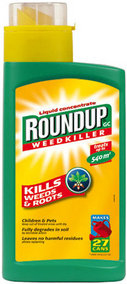
Glyphosate is the most widely used herbicide in the US and the world at large. Patented and sold by Monsanto since the 1970s under the trade name Roundup, it is a mandatory component of buying GMO seeds from Monsanto. Just go to your local garden store and ask for it and read the label carefully.


As I detail in my book, Seeds of Destruction: The Hidden Agenda of Genetic Manipulation, GMO crops and patented seeds were developed in the 1970’s with significant financial support from the pro-eugenics Rockefeller Foundation, by what were essentially chemical companies - Monsanto Chemicals, DuPont and Dow Chemicals. All three were involved in the scandal of the highly toxic Agent Orange used in Vietnam, as well as Dioxin in the 1970’s, and lied to cover up the true damage to its own employees as well as to civilian and military populations exposed.

Their patented GMO seeds were seen as a clever way to force increased purchase of their agricultural chemicals such as Roundup. Farmers must sign a legal contract with Monsanto in which it stipulates that only Monsanto Roundup pesticide may be used. Farmers are thus trapped both in buying new seeds from Monsanto each harvest and buying the toxic glyphosate.

France’s University of Caen, in a team led by molecular biologist, Gilles-Eric Seralini, did a study that showed Roundup contained one specific inert ingredient, polyethoxylated tallowamine, or POEA. Seralini’s team demonstrated that POEA in Roundup was more deadly to human embryonic, placental and umbilical cord cells than even the glyphosate itself. Monsanto refuses to release details of the contents of its Roundup other than glyphosate, calling it "proprietary."

The Seralini study found that Roundup’s inert ingredients amplified the toxic effect on human cells - even at concentrations much more diluted than those used on farms and lawns! The French team studied multiple concentrations of Roundup, from the typical agricultural or lawn dose down to concentrations 100,000 times more dilute than the products sold on shelves. The researchers saw cell damage at all concentrations.

Glyphosate and Roundup are advertised as "less toxic to us than table salt" in a pamphlet from the Biotechnology Institute promoting GMO crops as ’Weed Warrior.’ Thirteen years of GMO crops in the USA has increased overall pesticide use by 318 million pounds, not decreased as promised by the Four Horsemen of the GMO Apocalypse. The extra disease burden on the nation from that alone is considerable.

Nonetheless after introduction of Monsanto GMO seeds commercially in the USA, use of glyphosate has risen more than 1500% between 1994 and 2005. In the USA some 100 million pounds of glyphosate are used on lawns and farms every year, and over the last 13 years, it has been applied to more than a billion acres. When questioned, Monsanto’s technical development manager, Rick Cole, reportedly said the problems were "manageable." He advised farmers to alternate crops and use different makes of herbicides produced by Monsanto. Monsanto is encouraging farmers to mix glyphosate with its older herbicides such as 2,4-D, banned in Sweden, Denmark and Norway for links to cancer and reproductive and neurological damage. 2,4-D is a component of Agent Orange, produced by Monsanto for use in Vietnam in the 1960s.

US Farmers Turn to Organics

Farmers across the United States are reported to be going back to conventional non-GMO crops instead. According to a new report from the US Department of Agriculture, retail sales of organic food went up to $21.1 billion in 2008 from $3.6 billion in 1997. [3] The market is so active that organic farms have struggled at times to produce sufficient supply to keep up with the rapid growth in consumer demand, leading to periodic shortages of organic products.

The new UK Conservative-Liberal coalition government is strongly backing lifting a de facto ban on GMO in that country. UK Chief Scientific Adviser, Prof. John Beddington, recently wrote an article in which he misleadingly claimed " The next decade will see the development of combinations of desirable traits and the introduction of new traits such as drought tolerance. By mid-century much more radical options involving highly polygenic traits may be feasible." He went on to promise "cloned animals with engineered innate immunity to diseases" and more. I think we can pass that one up, thank you.

A recent study by Iowa State University and the US Department of Agriculture assessing the performance of farms during the three-year transition it takes to switch from conventional to certified organic production showed notable advantages of organic farming over GMO or even conventional non-GMO crops. In an experiment lasting four years - three years transition and first year organic - the study showed that although yields dropped initially, they equalized in the third year, and by the fourth year, the organic yields were ahead of the conventional for both soybean and corn.

As well, the International Assessment of Agricultural Knowledge, Science and Technology for Development (IAASTD) has recently been published, the result of three-year deliberation by 400 participating scientists and non-government representatives from 110 countries around the world. It came to the conclusion that small scale organic agriculture is the way ahead for coping with hunger, social inequities and environmental disasters. [4] As Dr Ho argues, a fundamental shift in farming practice is needed urgently, before the agricultural catastrophe spreads further across Germany and the EU to the rest of the world. [5]

F. William Engdahl-
Author of Gods of Money: Wall Street and the Death of the American Century and Full Spectrum Dominance: Totalitarian Democracy in the New World Order. His other books include Seeds of Destruction: The Hidden Agenda of Genetic Manipulation. and A Century of War: Anglo-American Oil Politics and the New World Order.

[1] "Super weed can’t be killed", ABC News, 6 October 2009. See also, Jeff Hampton, N.C. farmers battle herbicide-resistant weeds, The Virginian-Pilot, 19 July 2009.

[2] Clea Caulcutt, ‘Superweed’ explosion threatens Monsanto heartlands, Clea Caulcutt, 19 April 2009.

[3] Carolyn Dimitri and Lydia Oberholtzer, Marketing U.S. organic foods: recent trends from farms to consumers, USDA Economic Research Service, September 2009.

[4] International Assessment of Agricultural Knowledge, Science and Technology for Development, IAASTD, 2008.

[5] Ho MW UK Food Standards Agency study proves organic food is better. Science in Society 44, 32-33, 2009.
Source: http://ht.ly/2vdQr

ANY FISH YOU WISH? CHECK HERE FIRST:


Food & Water Watch Releases Comprehensive 2010 Smart Seafood Guide
Only Guide to Consider Socio-Economic Impact of Consuming Seafood; Warns Against Turning to Imported Fish Post-Gulf Spill


WASHINGTON - August 25, 2010 - On Wednesday, the national consumer advocacy group Food & Water Watch released its 2010 Smart Seafood Guide to direct consumers in making safer, more sustainable seafood decisions. This year, researchers analyzed over 100 types of seafood (60 percent more than in 2009) to create the only guide assessing not only the human health and environmental impacts of eating certain seafood, but also the socio-economic impacts on coastal and fishing communities.

In their 2010 guide, Food & Water Watch highlighted what they refer to as the “Dirty Dozen” — species that fail to meet two or more of their criteria for safe and sustainable seafood. This year, the worst offender was imported coastal-farmed shrimp. According to the guide, the shrimp mostly come from countries where health, safety, labor and environmental standards are much weaker than in the U.S. This often means the shrimp were raised in crowded, dirty farms, and doused with assorted chemicals, antibiotics and pesticides, some of which are illegal to use in the U.S.

“The guide comes at a critical time. We’ve been fielding countless questions from consumers on seafood safety after the Gulf oil spill,” said Marianne Cufone, Food & Water Watch’s Fish Program Director. “Unfortunately, because of the spill, many people are considering imported seafood as a safer alternative to domestic. Often, it’s not.

The guide not only educates consumers on seafood selection, but also offers information on U.S. seafood production and regulation. For instance:

• Less than 2 percent of imported seafood is inspected.

• Over 70 percent of domestic shrimp and about 60 percent of domestic oysters came from the Gulf of Mexico prior to the spill.

• The average consumer eats around 16 pounds of seafood annually, about 4 pounds of which is shrimp.

The guide steers consumers away from certain types of seafood like fish raised in factory farm conditions that pose threats to both the marine ecosystem and public health; unregulated imports; depleted fish (like bluefin tuna); and fish more likely to contain harmful contaminants like mercury and PCB (like swordfish).

The guide is offered as an online tool for consumers searching for seafood based on taste or U.S. region of origin. In addition, Food & Water Watch has developed a smaller, printed version for consumers to reference before making a purchase at markets or restaurants.

“It’s really the most consumer friendly guide out there,” Cufone said. “We’re not telling you what to eat. We’re providing you with important information so that you can make safer, more sustainable seafood choices based on your own personal tastes and priorities.”

For more information on the Gulf spill’s impact on the availability of certain seafood items listed on the 2010 Smart Seafood Guide, check the latest government updates at: http://www.fda.gov/Food/FoodSafety/Product-SpecificInformation/Seafood/ucm210970.htm">http://www.fda.gov/Food/FoodSafety/Product-SpecificInformation/Seafood/ucm210970.htm and http://response.restoration.noaa.gov/dwh.php?entry_id=809">http://www.fda.gov/Food/FoodSafety/Product-SpecificInformation/Seafood/ucm210970.htm
and
http://www.fda.gov/Food/FoodSafety/Product-SpecificInformation/Seafood/ucm210970.htm and http://response.restoration.noaa.gov/dwh.php?entry_id=809">http://www.fda.gov/Food/FoodSafety/Product-SpecificInformation/Seafood/ucm210970.htm and http://response.restoration.noaa.gov/dwh.php?entry_id=809">http://response.restoration.noaa.gov/dwh.php?entry_id=809">http://www.fda.gov/Food/FoodSafety/Product-SpecificInformation/Seafood/ucm210970.htm and http://response.restoration.noaa.gov/dwh.php?entry_id=809">http://www.fda.gov/Food/FoodSafety/Product-SpecificInformation/Seafood/ucm210970.htm and http://response.restoration.noaa.gov/dwh.php?entry_id=809
CONTACT: Food & Water Watch, Lauren Wright, 202-683-4929; lwright@fwwatch.org
###

Food & Water Watch is a nonprofit consumer organization that works to ensure clean water and safe food. We challenge the corporate control and abuse of our food and water resources by empowering people to take action and by transforming the public consciousness about what we eat and drink.