Monday, May 17, 2010

WHAT TOOK THEM SO LONG TO LINK THIS????? AND, NOW WHAT???


ADHD In Children: PESTICIDES May Be Missing Link

CARLA K. JOHNSON | 05/17/10 08:08 AM | AP

Adhd Children Pesticides Fruits Vegetables
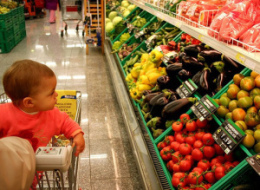
Photo from Flickr: fazen

CHICAGO — A new analysis of U.S. health data links children's attention-deficit disorder with exposure to common pesticides used on fruits and vegetables.

While the study couldn't prove that pesticides used in agriculture contribute to childhood learning problems, experts said the research is persuasive.

"I would take it quite seriously," said Virginia Rauh of Columbia University, who has studied prenatal exposure to pesticides and wasn't involved in the new study.

More research will be needed to confirm the tie, she said.

Children may be especially prone to the health risks of pesticides because they're still growing and they may consume more pesticide residue than adults relative to their body weight.

In the body, pesticides break down into compounds that can be measured in urine. Almost universally, the study found detectable levels: The compounds turned up in the urine of 94 percent of the children.

The kids with higher levels had increased chances of having ADHD, attention-deficit hyperactivity disorder, a common problem that causes students to have trouble in school. The findings were published Monday in Pediatrics.

The children may have eaten food treated with pesticides, breathed it in the air or swallowed it in their drinking water. The study didn't determine how they were exposed. Experts said it's likely children who don't live near farms are exposed through what they eat.

"Exposure is practically ubiquitous. We're all exposed," said lead author Maryse Bouchard of the University of Montreal.
Story continues below

She said people can limit their exposure by eating organic produce. Frozen blueberries, strawberries and celery had more pesticide residue than other foods in one government report.

A 2008 Emory University study found that in children who switched to organically grown fruits and vegetables, urine levels of pesticide compounds dropped to undetectable or close to undetectable levels.

Because of known dangers of pesticides in humans, the U.S. Environmental Protection Agency limits how much residue can stay on food. But the new study shows it's possible even tiny, allowable amounts of pesticide may affect brain chemistry, Rauh said.

The exact causes behind the children's reported ADHD though are unclear. Any number of factors could have caused the symptoms and the link with pesticides could be by chance.

The new findings are based on one-time urine samples in 1,139 children and interviews with their parents to determine which children had ADHD. The children, ages 8 to 15, took part in a government health survey in 2000-2004.

As reported by their parents, about 150 children in the study either showed the severe inattention, hyperactivity and impulsivity characteristic of ADHD, or were taking drugs to treat it.

The study dealt with one common type of pesticide called organophosphates. Levels of six pesticide compounds were measured. For the most frequent compound detected, 20 percent of the children with above-average levels had ADHD. In children with no detectable amount in their urine, 10 percent had ADHD.

"This is a well conducted study," said Dr. Lynn Goldman of the Johns Hopkins Bloomberg School of Public Health and a former EPA administrator.

Relying on one urine sample for each child, instead of multiple samples over time, wasn't ideal, Goldman said.

The study provides more evidence that the government should encourage farmers to switch to organic methods, said Margaret Reeves, senior scientist with the Pesticide Action Network, an advocacy group that's been working to end the use of many pesticides.

"It's unpardonable to allow this exposure to continue," Reeves said.

NO TO THE LUGAR-CASEY "GLOBAL FOOD SECURITY " ACT" - S 384 THIS IS ALL ABOUT BILLION$$$$ TO MONSANTO!!!


By Annie Shattuck. Edited by Emily Schwartz Greco, April 17, 2009

Editor's Note: This commentary was adapted from the report "Why the Lugar-Casey Global Food Security Act will Fail to Curb Hunger," by Annie Shattuck and Eric Holt-Giménez. (Food First Policy Brief No. 18. Institute for Food and Development Policy. Oakland, California.)


A new bill before the Senate would create a federal mandate for genetically modified (GM) crop research as part of U.S. aid programs, despite evidence that these crops will fail to curb hunger.

The Senate Foreign Relations Committee approved the sweet-sounding Global Food Security Act (SB 384) last month with little fanfare. The legislation, also known as the Lugar-Casey Act for the bill's authors Senator Richard Lugar (R-IN) and Robert Casey (D-PA), includes a provision sought after by aid groups that would allow food aid to be purchased — at least in part, locally. The bill aims to reform aid programs to focus on longer-term agricultural development, and restructure aid agencies to better respond to crises. While the focus on hunger is commendable, funding for agricultural development — some $7.7 billion worth of it — under the proposed law would be directed in large part to genetically modified crop research.

The bill is proving to be divisive among aid groups. But according to a new report by Food First that I co-authored, this bill is not an isolated piece of legislation, but a coordinated roll-out of the "new Green Revolution," — a project that includes the Gates Foundation's multi-billion dollar Alliance for a Green Revolution in Africa (AGRA). In fact, the legislation is based on an industry-friendly report funded by the Gates Foundation. Initiated by the Chicago Council on Global Affairs in fall of 2008 and drafted by the end the year, the hastily prepared report on which the new law is based calls for increasing research funding for biotechnology.
Ignoring the Evidence

In contrast, the International Assessment of Agricultural Knowledge Science, and Technology for Development (IAASTD), a recent four-year study conducted by the World Bank and the Food and Organization (FAO) in consultation with more than 400 scientists and development experts, reached the opposite conclusions. The IAASTD found that reliance on resource-extractive industrial agriculture is unsustainable, particularly in the face of worsening climate, energy, and water crises. And it concluded that expensive, short-term technical fixes — including GM crops — don't adequately address the complex challenges of the agricultural sector and often exacerbate social and environmental harm. The IAASTD called for land reform, agro-ecological techniques (proven to enhance farmers' adaptive capacity and resilience to environmental stresses such as climate change and water scarcity), building local economies, local control of seeds, and farmer-led participatory breeding programs.

Evidence in favor of these alternatives is building. A 2008 study by the United Nations Conference on Trade and Development found that "organic agriculture can be more conducive to food security in Africa than most conventional production systems, and…it is more likely to be sustainable in the long term." Numerous studies have documented these alternatives' ability not only to raise yield — but reduce poverty and inequality, the root cause of hunger.
Lessons from the First Green Revolution

The Lugar-Casey Act represents the biggest project in agriculture since the original Green Revolution industrialized farming in the 1950s and 1960s. The first Green Revolution increased global food production by 11% in a very short time, but per capita hunger also increased equally as much. How could this be? Green Revolution technologies are expensive. The fertilizers, seeds, pesticides, and machinery needed to cash in on productive gains put the technology out of reach of most small farmers, increasing the divide between rich and poor in the developing world. Poor farmers were driven out of business and into poverty-stricken urban slums.

The new Green Revolution the Lugar-Casey bill highlights suffers from all these same problems. This time, however, the genetically engineered seeds will be under patent and privately owned by the biotechnology corporations that monopolize the seed industry. Patented seeds can be up to 35% more expensive than traditional and hybrid varieties.

Moreover, while the first Green Revolution did significantly raise yields, genetic modification has yet to do so. A recent report by the Union of Concerned Scientists showed that GM crops don't raise the potential yield of crops at all — the best they can do is marginally reduce losses, something improved farming practices, conventional pesticides, and agroecological techniques do as well. According to microbiologist Margaret Mellon, "After more than 3,000 field trials, only two types of engineered genes are in widespread use, and they haven't helped raise the ceiling on potential yields. This record does not inspire confidence in the future of the technology."
New Subsidies, New Markets

The funding the Lugar-Casey bill mandates is essentially a subsidy to private research and development goals: it has nothing to do with reducing hunger. Public money will go to U.S. corporations to produce patented products, essentially subsidizing risky projects and privatizing gain in the name of charity.

While funding from the Lugar-Casey Act may greatly expand current government-biotech partnerships, it certainly does not invent them. The U.S. government is already funding public-private private research partnerships with foreign aid dollars. One such partnership between Arcadia Biosciences, USAID (the U.S. agency responsible for delivering foreign aid), and Mahyco Seeds, an Indian seed company in which Monsanto has a significant ownership stake, will license the seeds — developed with public funds — to Mahyco.

Another partnership between USAID and Monsanto to develop a virus-resistant sweet potato in Kenya failed to deliver any useful product for farmers. After fourteen years and $6 million, local varieties vastly outperformed their genetically modified cousins in field trials. Meanwhile, conventional breeders in Uganda developed a virus-resistant strain in a few years at a small fraction of the cost. What the USAID-Monsanto partnership did succeed in, however, was creating a legal framework to open Kenya to conventional biotech products. In 2001 Kenyan legislators passed the Industrial Property Act, which according to patent expert Robert Lettington "may actually place very little restriction on the patenting of life forms at all." Lettington was right; this year Kenya approved a biosafety law that will allow for commercialization of genetically modified crops.

Currently, GM crops are legal in only three African nations. India and the Philippines are the only Southeast Asian nations that allow biotech plantings; Honduras is the only Central American nation to permit GM crops. Once attached to a pool of foreign aid money, the pressure to open markets to biotechnology will be substantial. The countries targeted for initial projects — Kenya, Uganda, Zambia, Malawi, Bangladesh, Cambodia, Guatemala, and Honduras — are all nations where the biotech industry has made significant inroads. They also represent significant potential markets — and a windfall for U.S. seed and chemical companies.

One thing is clear: The Global Food Security Act isn't just about feeding the hungry — it's about advancing the interests of U.S. agribusiness. The IAASTD found that agroecological techniques, stricter regulation of multinational agribusiness, and increased democratic control of the global food system can address the root causes of hunger in a way that a biotechnology never will. Lugar-Casey's renewed focus on agricultural development is welcome but that focus must come with a commitment to put the interests of small farmers before that of industry.
Annie Shattuck, a Foreign Policy In Focus contributor, is a policy analyst at the Institute for Food and Development Policy, also known as Food First, in Oakland, California.
Recommended Citation:

Annie Shattuck, "Global Food Security Act" (Washington, DC: Foreign Policy In Focus, April 17, 2009)

Monday, May 10, 2010

STILL MOWING IT ALL DOWN FOR PROFIT


World Governments Fail to Halt Biodiversity Loss
Published on Monday, May 10, 2010 by Reuters
by Janet Lawrence

LONDON - World governments have failed to meet a 2010 target to halt biodiversity loss and action must be taken to preserve the species and ecosystems upon which human life depends, a United Nations report said on Monday.

In a move endorsed by the U.N. General Assembly, more than 190 countries committed in 2002 to achieve a significant reduction in the rate of biodiversity loss by 2010.
But the report said: "There are multiple indications of continuing decline in biodiversity in all three of its main components -- genes, species and ecosystems."
U.N. Secretary-General Ban Ki-moon said: "The consequences of this collective failure, if it is not quickly corrected, will be severe for us all."

Natural habitats in most parts of the world are shrinking and nearly a quarter of plant species are estimated to be threatened with extinction, said the Global Biodiversity Outlook-3 report.

The abundance of vertebrate species fell by nearly a third between 1970 and 2006 and crop and livestock genetic diversity is declining in farming. "Biodiversity underpins the functioning of the ecosystems on which we depend for food and fresh water...Current trends are bringing us closer to a number of potential tipping points that would catastrophically reduce the capacity of ecosystems to provide these essential services," said Ban.

The report said there had been significant progress in slowing the rate of loss for tropical forests and mangroves in some regions. But freshwater wetlands, sea ice habitats, salt marshes and coral reefs all show serious decline.

FOOD, WATER, MEDICINE

"Business as usual is no longer an option if we are to avoid irreversible damage to the life-support systems of our planet," said Ahmed Djoghlaf, Executive Secretary of the Convention on Biological Diversity.

The report said climate change, pollution, habitat change, overexploitation and invasive alien species were the five main drivers of biodiversity loss and warned the provision of food, medicine, fresh water and crop pollination could be at risk.

The report, based on the work of 110 national reports, also highlighted areas where the 2010 target had prompted action. It said more protected areas on land and in coastal waters had been created and conservation efforts had targeted some species. At least 31 bird species would have become extinct in the past century without them.

Some 170 countries now had national action plans.

"This suggests that with adequate resources and political will, the tools exist for loss of biodiversity to be reduced at wider scales," it said. An international meeting in Nagoya, Japan, in October will consider goals for the next decade.

The U.N. Environment Programme said a lack of economic value attached to the multi-trillion-dollar benefits provided by ecosystems had contributed to the loss of biodiversity. It said restructuring of the global economy after the financial crisis provided an opportunity to introduce regulation and market incentives to help stem the losses.

(Editing by Angus MacSwan)
© 2010 Reuters

Saturday, May 8, 2010

HUNDREDS OF THOUSANDS OF CHILDREN AT WORK IN BIG AG - OUR TAX SUBSIDY $$ HARD AT WORK IN FARM LABOR


Published on Friday, May 7, 2010 by GRITtv
Child Labor Down on the Farm: Report by Laura Flanders
We often assume that child labor in the U.S. ceased after the labor movement fought for and won child labor laws many years ago. But a new report from the Children's Rights Division of Human Rights Watch notes that not only are hundreds of thousands of children working on farms around the country--they are doing so legally because of loopholes in the law.

We speak to Zama Coursen-Neff, Deputy Director of the Children's Rights Division, and via phone, Maria S. Mandujano, a former child farmworker who recently testified before Congress on children working on the farm.
http://www.grittv.org/2010/05/07/child-labor-down-on-the-farm/

Friday, May 7, 2010

BOYCOTT! EVERYONE OFF THE (PLASTIC) BOTTLES!!


Mass. Town Votes to Ban Sale of Bottled Water

Michelle Ruiz
Michelle Ruiz Contributor
AOL News

(May 5) -- Environmentalists have long frowned on bottled water, urging drinkers to go green by sticking to the tap or H20 filtered at home. Now one Massachusetts town has sparked a battle of the bottle with its decision to pull it from shelves altogether.

Residents in Concord, in what seems to be a first for a U.S. town, voted last week to ban the sale of plastic water bottles in their small, affluent municipality effective Jan. 1. The decision has prompted celebration from environmental activists and objection from bottled water industry executives who don't want other cities and states to follow suit.

Ruben Alarcon, of Chicago, buys bottled water at K-Mart.
Phil Velasquez, Chicago Tribune/MCT
Concord, Mass., residents voted to ban the sale of plastic water bottles in their town effective Jan. 1. Here, a man buys bottled water from a Kmart.

The move is a victory for 82-year-old activist and Concord resident Jean Hill, who spearheaded the effort to ban the plastic bottles. She presented the Town Council with a slide show featuring photos of plastic polluting the ocean and mounting in garbage dumps.

"All these discarded bottles are damaging our planet, causing clumps of garbage in the oceans that hurt fish, and are creating more pollution on our streets,'' Hill told the Boston Globe. "This is a great achievement to be the first in the country to do this. This is about addressing an injustice.''

Hill pointed out in her presentation that more than 100 municipalities across the U.S. have cracked down on bottled water. New York, Illinois and Virginia have cut spending on the product. Elsewhere in Massachusetts, Boston, Somerville and Cambridge have pledged to gradually reduce city spending on bottled water. Hill also decried the plastic-fueled garbage dump swirling in the middle of the Atlantic Ocean.

Hill's impassioned presentation swayed Town Council Chairman Stanly Black, who switched his initial vote against the ban. He told the Concord Journal that he was "so moved" by Hill's presentation that he voted in favor of the ban even though he agrees that the council doesn't have the authority to ban the sale of bottled water.

"The statistics about the amount of trash are appalling," Black said. "There's an island bigger than Texas floating around in the Pacific."

Black and Hill had the support of Concord resident Lal Minton, who wrote in a letter to the Concord Journal that bottled water has become a "scourge."

"People older than 75 were obliged by their mothers to give up the bottle when they were babies," he wrote. "They have survived into their 80s."

Concord apparently is the first U.S. municipality to approve a ban on bottled water, Nick Guroff, communications director for Corporate Accountability International, told the Journal.

Selectwoman Virginia McIntyre told the Globe that she supports the ban in theory but has trouble backing it -- and its potential legal fallout -- in practice.

"It's questionable whether Town Meeting even has the authority to ban the sale of plastic water bottles,'' she said. "We understand it's an emotional issue, and probably the right thing to do, but why should we spend scarce public resources on legal fees defending it? I doubt that's the best use of tax dollars.''

The International Bottled Water Association rallied against the ban in a statement that threatened a potential "legal challenge." It says the $10 billion industry promotes health by encouraging people to drink up.

"Bottled water is a safe, healthy, convenient food product," the statement read. "With the current high rates of diabetes, obesity and heart disease, any actions that discourage or prevent consumers from drinking water -- whether tap or bottled -- are not in the public interest."

The association also said that "any efforts to reduce the environmental impact of consumer packaging must focus comprehensively on all product containers and not single out any one product."

Whether the ban will be more than a symbolic move in Concord remains to be seen. Those desperately seeking a sip of bottled water need only cross the Concord town line to buy the bottles at a neighboring Costco.

For Hill, the vote remains a triumph.

"I think it's a disgrace what's going on with these bottles,'' she told the Globe. "This is the starting of making a real change in Massachusetts.''

SAY NO TO GRABBING EVERY LAST ACRE OF AGRICULTURAL LAND ON EARTH!


(photo by Flickr user afromusing)
Published on Friday, May 7, 2010 by GRAIN

The World Bank in the Hot Seat Over Land Grabbing

A curious thing happened last week. A lot of people were under the impression that the World Bank was going to release its long-awaited study on global land grabs at its annual land conference in Washington DC on 26 April 2010. This is what GRAIN was told. It's what many journalists were told. And it's what those involved in producing the study expected. But it didn't happen.
[Environmental impact assessments are rarely carried out, and people are routinely booted off their land, without consultation or compensation. The Bank even revealed that investors are deliberately targeting areas where there is "weak land governance". (photo by Flickr user afromusing)]Environmental impact assessments are rarely carried out, and people are routinely booted off their land, without consultation or compensation. The Bank even revealed that investors are deliberately targeting areas where there is "weak land governance".
Instead, the Bank gave another powerpoint presentation summarising what the study will show, reiterated its proposed seven principles for "socially responsible" land grabs and unveiled its new business-to-business website -- a kind of internet dating service to match up corporate land grabbers and government land givers.

This is not the first time that this study has been delayed. Indeed, ever since the Bank started compiling the data for it, tight political reins have been put on any public sharing of the results. They initially said the report would be out in December 2009. Then it was supposed to be March 2010. Then, we were assured, it would be released at the land conference last week. We do know that all of the research and analysis was completed long ago. So what's holding the Bank back?

Bad news

The partial glimpse of the study presented in Washington last week sheds some light on an answer. The Bank initially wanted to do a comprehensive study of 30 countries, the hot spots for the land grabs. But it had to cut back severely on its expectations because, as it admits, the governments would not provide them with information. The corporations wouldn't talk either, we were told by people writing the country chapters. This in itself is a powerful statement that says volumes about the hush-hush nature of these deals. If the World Bank can't get access to the information, who can?

The Bank decided instead to base its study on the projects that have been reported by the media and captured on the farmlandgrab.org website. The Bank identified nearly 400 projects in 80 countries in this way, nearly one quarter (22%) of which are already being implemented. The study thus makes it plain that the global land grab is very real and moving along faster and further than many have assumed (See box for a basic glimpse of what the study is expected to say.)

BOX: What the World Bank study is expected to say

[NB: GRAIN has not seen the World Bank's report. The following is drawn simply from publicly available documents, plus some verification from World Bank staff and consultants.]

The World Bank study focuses on large-scale farmland acquisitions of the last few years - what we all call land grabbing. While it largely confirms many things we already know, people have been awaiting the release of this report because the Bank was supposed to get access to more information than anyone else up to now. After all, most of these deals are shrouded in secrecy and controversy, and attract accusations of neocolonialism, even genocide.

The Bank inventorised 389 land deals in 80 countries. The bulk (37%) of the so-called investment projects are meant to produce food (crops and livestock), while biofuels come in second place (35%). Unsurprisingly, Africa is the target of half the land grab projects, followed by Asia, Latin America and Eastern Europe.

In terms of countries being approached for their land, the Bank reveals that, in Africa, Sudan comes in first place, followed by Ghana and Madagascar. In Asia-Pacific, Indonesia ranks first, followed by the Philippines and Australia. In Latin America, Brazil is the favoured destination, then Argentina and Paraguay. In terms of country of origin of the land grabbers, China and the UK tie in the top slot, followed by Saudi Arabia.

Finally, the Bank did statistical analysis of what draws land grabbers to certain countries rather than others - the "probability" factors. Three are particularly noteworthy: land availability, low mechanisation and weak land governance. This means that investors will prioritise places where: (a) it is relatively easy to get control over people's land; (b) large-scale holdings are possible; and (c) bringing in machinery will yield quick productivity gains.

The Bank's most significant findings, however, are about the impacts of these projects on local communities. Its overwhelming conclusion, shared at the land conference last week, is that these projects are not providing benefits to local communities. Environmental impact assessments are rarely carried out, and people are routinely booted off their land, without consultation or compensation. The Bank even revealed that investors are deliberately targeting areas where there is "weak land governance".

It is hard to see how, given these damning findings, the Bank could come up with anything positive to say about this new wave of foreign investment in farmland; this probably explains its reluctance to release the report. The Bank, after all, embarked on the study "to provide guidance to Bank clients (in government and the private sector) and partners who may be faced with or interested in large scale land acquisition so as to enable them to maximize the long-term benefits from such investments." 1 And, while its study waits in limbo, the Bank is becoming more and more committed to making the land grabs happen. European investors, for instance, say that they will be using the Bank's Multilateral Investment Guarantee Agency to provide them with political risk insurance for their farmland deals. Should anything backfire, "You'll have the World Bank on your side," says Gary Vaughan-Smith of London-based SilverStreet Capital LLP, which recently launched a US$300-million fund to invest in farmland in Africa. "They're going to have enormous clout if there are any difficulties." 2

Not winning anyone over

The problem for the Bank and the other land grab promoters, however, is that hardly anyone is fooled by talk of "win-win" guidelines or codes or principles to make it all work for everyone's benefit. No matter how hard they try, they can't shake the "land grab" label or stigma off these transactions.

"Here's what I'm sure of", weighs in Howard Buffet, son of Warren Buffet, in an Oakland Institute report released in time for the Bank's conference last week. "These deals will make the rich richer and the poor poorer, creating clear winners who benefit while the losers are denied their livelihoods." 3

If the Bank and its friends at partner UN agencies hoped that last week's events in Washington would finally give them some control over the land grab discussion, they were mistaken. More than 100 groups from more than 100 countries crashed their party by releasing a common declaration a few days before, which denounced their "seven principles" for socially responsible land grabbing. They didn't beat about the bush. As they see it, on the ground, this land grab is nothing but a massive transfer of lands from small food producers to foreign corporations, from sustainable farms to industrial plantations, and these groups were making it crystal clear that they are committed to throwing this trend into reverse. Against this, the Bank's "win-win", or responsible investment initiative, looks hollower than ever.

Going further

The World Bank conference materials are being posted online here: http://go.worldbank.org/IN4QDO1U10

Reports and statements reflecting the social movement against the World Bank's proposals for "socially responsible" land grabbing are available at farmlandgrab.org: http://farmlandgrab.org/cat/world-bank

Anyone can join or respond to the collective statement against win-win land grabbing drawn up by La Vía Campesina and allies at http://farmlandgrab.org/12200 (English), http://farmlandgrab.org/12259 (French), http://farmlandgrab.org/122 (Spanish) and http://farmlandgrab.org/12262(Arabic).

1 World Bank, "Large scale acquisition of land rights for agricultural or natural resource-based use, Concept note", 18 February 2009.

2 Drew Carter, "Fertile ground for investment," Pensions & Investments, 19 April 2010: http://farmlandgrab.org/12218

3 Oakland Institute, "(Mis)investment in agriculture: The role of the International Finance Corporation in the global land grab," 26 April 2010: http://farmlandgrab.org/12429