Friday, March 12, 2010

GLYPHOSATE-RESISTANT WEEDS, FROM ROUNDUP READY CROPS

Mar-05-2010 03:59printcomments
Judge in California Could Halt Planting of Genetically Modified Sugar Beets
Tim King Salem-News.com
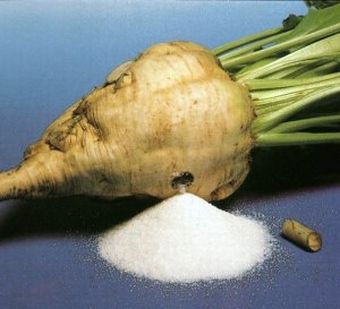


Case in front of San Francisco federal judge could change future of 'mad scientist' food products on our dinner plates. Sugar beets

(SAN FRANCISCO) - A case involving genetically modified (GM) food will be in front of a federal judge Friday in San Francisco.

Researchers say the future of generations of Americans hangs in the balance, as the judge could order a halt to the planting or harvesting of any GM “Roundup Ready” sugar beets in the U.S.

This would strike a blow to growers in the Red River Valley, where more sugar beets are grown than any other region. Most of these growers have already been using Roundup Ready seed varieties for two years.

Scientists say that is no type of positive proof. GM foods are put through a complicated unnatural process. Our reporter April Scott took this on just a few days ago in her article, While We Were Sleeping... GM Food and the Brink of No Return[1]

"The process behind genetically modified food involves a careful re-configuration of genes combining e-coli bacteria, soil bacteria and the cauliflower mosaic virus that causes tumors in plants. They add an antibiotic and then artificially force it into plant cells with a gene invasion technique. All this is so farmers can douse nearly unlimited amounts of Roundup Herbicide on the crops and the plants won’t die."
-Professor Robert Kremer

The Organic & Non-GMO Report published an article in January, stating that scientists are finding many negative impacts of Roundup Ready GM crops.

They say the USDA doesn’t want to publicize studies showing negative impacts.

They spoke to Robert Kremer, a microbiologist with the US Department of Agriculture’s Agricultural Research Service and an adjunct professor in the Division of Plant Sciences at the University of Missouri.

He is co-author of one of five papers published in the October 2009 issue of The European Journal of Agronomy that found negative impacts of Roundup herbicide, which is used extensively with Roundup Ready genetically modified crops.

Kremer has been studying the impacts of glyphosate, the primary ingredient in Monsanto’s Roundup herbicide, since 1997.

The Organic & Non-GMO Report interviewed Mr. Kremer about his research and the reluctance of the USDA to publicize the findings of the five papers.


Please give me an overview of your research
RK: We started in 1997 wanting to see if this new system, Roundup Ready, would change the production of nematodes in soybean. We started looking at organisms in soybean roots and saw microorganisms colonizing the roots. We suspected that glyphosate was having an impact. There was a root fungi problem that seemed to be encouraging sudden death syndrome (SDS).
We saw the increase of these fungi in the Roundup Ready (genetically modified) system, both soybeans and corn.

What types of things are you seeing in the Roundup Ready system?
RK: This system is altering the whole soil biology. We are seeing differences in bacteria in plant roots and changes in nutrient availability. Glyphosate is very systemic in the plant and is being released through the roots into the soil. Many studies show that glyphosate can have toxic effects on microorganisms and can stimulate them to germinate spores and colonize root systems. Other researchers are showing that glyphosate can immobilize manganese, an essential plant micronutrient.

What are glyphosate’s impacts on beneficial soil bacteria?
RK: The most obvious impact is on rhizobia, a bacterium that fixes nitrogen. It has been shown that glyphosate can be toxic to rhizobia. (Nitrogen fixing bacteria are important to soils because nitrogen is the most commonly deficient nutrient in many soils.)

What about research showing increased incidence of Fusarium in Roundup Ready GM crops?
RK: We’ve taken field surveys and seen an increase in Fusarium with the use of glyphosate. Some Roundup Ready varieties even without using glyphosate tend to be more susceptible to being impacted by Fusarium. It could be an unintended consequence of genetic manipulation that could make it more susceptible.

Your paper also mentioned the potential of glyphosate to contaminate groundwater.
RK: Yes, under certain circumstances. The big assumption for claims that glyphosate is benign is that it isn’t immediately absorbed by the soil. But research is showing that isn’t necessarily true; that it is still available in the soil.
If soil is full of phosphorous, glyphosate could leach into ground water. For example, farmers may use manure from confined animal feeding operations as a fertilizer. The soil will then contain high amounts of phosphorus, which overwhelms the soil. Any glyphosate that hits the soil will be a potential contaminant. It can stay in the soil or it might run off into streams or waterways.

What about glyphosate resistant weeds?
RK: We have eight different species of glyphosate resistant weeds in Missouri. Some species of Johnson Grass are found in fields where Roundup is used year after year. It is a very aggressive weed.
To solve the problem of weed resistance, genetic engineers are developing soybeans that tolerate Roundup and Dicamba, another herbicide. They are incorporating another gene resistant to another herbicide. When resistance happens again, will they then develop a plant resistant to five or six herbicides? It’s an illogical circle.

With so much glyphosate being used, what types of long-term impacts do you think could occur?
RK: We are already seeing glyphosate-resistant weeds. If we continue to use glyphosate in the same fields year after year, it’s a matter of time until microbial communities in the soil will shift to more detrimental species.
The use of glyphosate stimulates detrimental pathogens in the growing season but they go back down after the growing season. Eventually, they may build up in the soil and not go back down.

Are many researchers looking at the possibly negative impacts of glyphosate or Roundup Ready crops?
RK: There are a handful of researchers. There is more research looking at the production of these crops.

The papers published in the European Journal of Agronomy received no publicity in the United States. Why is that?
RK: I was working with USDA-ARS to publish a news release about these studies. I’ve gone all the way to the administrators, but they are reluctant to put something out. Their thinking is that if farmers are using this (Roundup Ready) technology, USDA doesn’t want negative information being released about it. This is how it is. I think the news release is still sitting on someone’s desk.

What about your future research?
RK: We’re looking at some methods that could be used to overcome negative effects if we continue to use Roundup Ready crops, such as supplementation of nutrients by foliar application. I’m more interested in sustainable agriculture. More farmers are interested in using cover cropping to maintain soil quality and other organic amendments. But it’s a steep learning curve for them.
Monsanto
One of the primary proponents behind GM food is the Monsanto group, they brought Americans and Vietnamese the memorable cancer causing Agent Orange, a defoliant sprayed over the jungles during the Vietnam War. It has caused terrible birth defects and abnormalities in the children of those exposed to it.

Our writers Chuck Palazzo and John Paul Rossie, both report about the issues facing human beings as a result of the extensive military use of Agent Orange.

No Vietnam Veterans will tell you Monsanto is a good company[3].

The research says they are doing it to us again with GM foods
, and roping the farmers into using these controversial methods because there is more profit involved, with no regard for what ingesting these things really does or will mean to the human body, already overwhelmed by so many preservatives and questionable ingredients[4].

The judge’s decision could affect many in agriculture. Besides the growers and other share owners, thousands of people work in the plants and drive beet-hauling trucks, an article in the Grand Fork Herald explains[2].

So lawyers from the group American Crystal will be on hand to do everything they can to persuade the judge not to put forth the order halting the planting of the controversial products.

It seems a tall order to believe that something controversial and fairly new could have such an impact, they have always grown sugar beets, but they never profited the way they do now.

The company's lawyers will use the fact that many people could potentially lose their jobs as a bargaining chip, along with "we have already been doing this for two years" as if that is any kind of proof.

Proof of profit perhaps, by tricking nature, in a nation that freaks out over stem cell research to save human lives, but allows the corporate sector to go mad and bring these potentially dangerous products to our dinner tables.


And they are trying all over the world to get governments and companies to buy in. It is a travesty and sooner or later somebody is going to put their foot down over these reckless attempts to push profits by selling products that are not fully tested or evaluated.

Good decisions have emerged from the San Francisco Federal Court in the past, we will see what happens.
http://www.salem-news.com/articles/march052010/roundup-judge.php

SUPER PESTS FROM SUPER FAILURES IN INDIA


Bt cotton has failed admits Monsanto

Dinesh C. Sharma
New Delhi, March 6, 2010

The ongoing debate on biotechnology crops in India took a new turn on Friday when American seed firm Monsanto disclosed that cotton pest--pink bollworm--has developed resistance to its much-touted Bt cotton variety in Gujarat.

The company has reported to the regulator, the Genetic Engineering Approval Committee (GEAC), that pink bollworm has developed resistance to its genetically modified (GM) cotton variety, Bollgard I, in Amreli, Bhavnagar, Junagarh and Rajkot districts in Gujarat.

This was detected by the company during field monitoring in the 2009 cotton season.

The Bt cotton variety in question was developed using a gene--Cry1AC--derived from soil bacterium Bacillus thuringiensis. It was supposed to be resistant to pest attacks. But, of late, the pest has developed resistance to the gene.

The same gene has been used in Bt brinjal to make it resistant to pests. Bollgard cotton was cited as a great success of GM technology by Union science minister Prithviraj Chavan in his July 2009 letter to former health minister A. Ramadoss.

"Resistance is natural and expected," Monsanto said in a statement. The company blamed pink bollworm resistance to Cry1Ac protein in Gujarat to "early use of unapproved Bt cotton seeds" by farmers and "limited refuge planting". Farmers are supposed to maintain a distance between Bt cotton farms and other farms as a "refuge". It also advised farmers to take up "need-based application of insecticide sprays" and "properly manage crop residue and unopened bolls after harvest". A second generation variety, Bollgard II, introduced by Monsanto in 2006, contains two proteins, Cry1Ac and Cry2Ab.

The company says no resistance has been observed in the variety anywhere in the country, including Gujarat.

The revelation has not surprised environment action groups. "This is the pattern Monsanto has been following everywhere. Once Bollgard 1 fails, they start pushing Bollgard 2 and tell farmers to apply more pesticides. This is a vicious circle that Indian cotton farmers have got into," Devinder Sharma of Forum for Biotechnology and Food Safety said.

"There is a lesson here for Bt brinjal because the arguments in favour of the crop are same as those given for Bollgard cotton," Kavita Kuruganti of Kheti Virasat said.

In a report submitted to environment minister Jairam Ramesh, K.R. Kranthi of the Central Institute for Cotton Research had cautioned about the likely failure of Bt cotton. "Farmers are not following the recommended 'refugia'. With about 90 per cent area under Bt cotton, bollworms can develop resistance soon. The concern needs to be addressed on priority before it is too late," the report says.

Not only has Bt cotton been rendered ineffective, it has also led to detection of some new pests never before reported from India. It is toxic only to bollworm and does not control any other pests of cotton. "New sucking pests have emerged as major pests causing significant economic losses", the report says.

At the same time, productivity of cotton has fallen from 560 kg lint per hectare in 2007 to 512 kg lint per hectare in 2009.

And pesticide expenditure has gone up from from Rs 597 crore in 2002 to Rs 791 crore in 2009.
http://indiatoday.intoday.in/site/Story/86939/India/Bt+cotton+has+failed+admits+Monsanto.html

WRONG DATA FROM MONSANTO??? CAN IT BE?????

Top scientist says Monsanto data is wrong

Vivek Deshpande Monday , Mar 08, 2010 at 0319 hrs Nagpur:

Reacting to the report, the director of the Central Institute of Cotton Research (CICR) has said that the data provided by Monsanto is wrong. Director Keshav Kranthi also negated the claim that Mahyco-Monsanto Biotech (MMB) has been conducting field monitoring research across India since 2003 in collaboration with CICR, saying that the institute was not part of any such testing.

“They have collected the surviving larvae — there would always be 10 resistant bollworm larvae out of every 10,000 — and have conducted tests on them. Such tests will always show resistance. It doesn’t mean there is across-the-board resistance to Cry1 Ac,” Kranthi told The Indian Express, adding, “I have written about it to GEAC.” Kranthi, winner of the first International Cotton Scientist of the Year award of UN’s Cotton Advisory Committee last year, is credited with designing a model that shows how resistance to Bt protein will slowly grow with the surviving larvae inter-mating and growing in numbers.

“That study is for American bollworm, not pink bollworm where the larvae would generally become weak due to resistance effort and will not survive. Nowhere in the world is pink bollworm known to have survived after developing resistance to Cry1Ac,” he said.
http://www.indianexpress.com/news/Top-scientist-says-Monsanto-data-is-wrong/588135

GMO'S BAN EXTENDED IN SWITZERLAND!!!!!!!!!!!!!!

Switzerland stands strong against GE
09 March 2010


Zurich, Switzerland — The Swiss Parliament has just extended its ban on the cultivation of genetically engineered (GE) plants for three more years. Originally enacted in 2005, Switzerland will stay GE-free until at least 2013.

The original moratorium was backed by Swiss voters in a referendum 5 years ago. Supporters of the ban included farmers, who were concerned about the impacts of GE crops on organic produce. Our Swiss office has been supporting these farmers and Swiss consumers to ensure the country remains GE-free. This is a significant national victory, but more than that it is an example for the rest of the EU. It sends a strong message to EU Commission President Barroso, who is clearly trying to force GE crops into the EU and is trying to bypass standard authorisation procedures. The EU needs to follow the Swiss example by implementing a moratorium on all GE food in order to protect the environment, agriculture and people.

Greenpeace activists planted the word "Gentechfrei" ("GE Free") alongside the railway line between Bern and Zurich. Greenpeace Switzerland asked for an extension of the moratorium on growing genetically engineered crops.

Thursday, March 11, 2010

TOO MUCH IS NEVER ENOUGH - DYING FOR A DRINK


Groundwater Levels Continue Downward Spiral Around Coca-Cola Plant Continues Bottling in Drought Area, Farmers and Villagers Left Without Water

KALA DERA, INDIA - March 11, 2010 - The Coca-Cola company has continued to operate its bottling plant in Kala Dera in Jaipur, India even as the area has been declared a drought area last summer and the groundwater levels are falling sharply - leaving the largely agrarian community with severely restricted access to water.

Data obtained this week by the India Resource Center from the Central Groundwater Board, a government agency, confirm that groundwater levels in Kala Dera fell precipitously again - a drop of 4.29 meters (14 feet) in just one year between August 2008 and August 2009, from 30.83 meters below ground level to 35.12 meters respectively.

The latest government figures on groundwater depletion are extremely alarming given last year's sharp drop in groundwater levels - 5.83 meters (19 feet) between May 2007 and May 2008.

Kala Dera has never experienced such sharp drops in groundwater levels and such precipitous drops have become common since Coca-Cola started its bottling operations in 2000.

In the nine years prior to Coca-Cola's bottling operations in Kala Dera, groundwater levels fell just 3 meters. In the nine years since Coca-Cola has been operating in Kala Dera, the groundwater levels have dropped 22.36 meters.

CONTACT: India Resource Center
Amit Srivastava, India Resource Center +91 98103 46161 (India), +1 415 336 7584 (US)
Mahesh Yogi, Kala Dera Jan Sangharsh Samiti, India +91 98295 99140

U.S. COURT RULES BAYER INTENTIONALLY CONTAMINATED RICE

Food and Water Europe Welcomes US Court Ruling: Bayer 'Intentionally' Contaminated US Rice
Statement of Food & Water Europe Executive Director Wenonah Hauter

BRUSSELS - March 11, 2010- "We welcome the Woodruff County, Arkansas court finding that German corporation Bayer CropScience ‘intentionally' contaminated US rice supplies. We applaud the decision requiring the company to pay Lennie Joe Kyle, the farmer who suffered losses when his rice was contaminated with Bayer's genetically modified (GM) product, a total of US$1.3 million. This amount includes the first punitive damages for loss of future earnings ever awarded against Bayer."

"The case is one of a raft of hundreds of cases stemming from the 2006 contamination of US rice supplies with Bayer's experimental GM LL601 rice - an incident which continues to undermine US exports years later. The company has already been ordered by federal courts to pay four other farmers a total of US$3.5 million."

"While we are pleased to see the courts step in to protect farmers and consumers when regulatory bodies fail, it is a pity that farmers have to go to these lengths to get satisfaction for their losses. As Mr. Kyle said, ‘It's a lot to do with the way the big companies act. They think the farmer is just going to tuck his tail and take it, but we're not going to anymore.'

"GM is clearly an unpredictable technology that has proved both difficult to contain and damaging when it escapes. It is simply not necessary to take these chances with the safety of our food supply or the viability of our farms. It is important to see Bayer being held accountable for the damage they have done. Hopefully the court decision will act as a warning to other GM companies."

Food & Water Europe is a program of Food & Water Watch, Inc., a non-profit consumer NGO based in Washington, DC, working to ensure clean water and safe food in Europe and around the world. We challenge the corporate control and abuse of our food and water resources by empowering people to take action and transforming the public consciousness about what we eat and drink.

CONTACT: Food and Water Europe
Eve Mitchell, Food and Water Europe, The Black Isle, Scotland
emitchell@fweurope.org +44 (0)1381 610 740
Gabriella Zanzanaini, Food and Water Europe, Brussels
gzanzanaini@fweurope.org, +3248840966
For more information, visit http://www.foodandwaterwatch.org/world/europe/

Saturday, March 6, 2010

BAN AGRIBIZ'S USE OF "DOWNER" LIVESTOCK IN FOOD SUPPLY!!!


USDA’s Latest Slaughterhouse Violations Heighten Urgency for Federal Ban on All Sick Animals Entering Food Supply
WATKINS GLEN, NY - March 5 2010- In response to the United States Department of Agriculture’s (USDA) widely reported failure to act on reports of illegal, inhumane and unsafe slaughterhouse practices cited by one of its Food Safety and Inspection Service’s supervisory veterinarians, Gene Baur, president and co-founder of Farm Sanctuary, the nation’s leading farm animal protection organization, issued the following statement:

“Yesterday members of Congress heard testimony from Dean Wyatt, a supervisory veterinarian at the USDA's Food Safety and Inspection Service, about instances in which he and other inspectors were overruled when citing slaughterhouses for violations such as shocking and butchering days-old calves that were too weak or sick to stand and butchering conscious pigs, despite rules that they first be stunned and unconscious. In addition to being illegal, inhumane and unsafe, this behavior falls well outside the bounds of what most Americans consider acceptable conduct, and the USDA’s repeated decision to turn a blind eye toward it is cause for national outrage and concern.

“For nearly a quarter century, Farm Sanctuary has worked to end the suffering of ‘downers,’ animals too sick, weak or injured to walk on their own. It is one of our cornerstone campaigns because these animals suffer the greatest abuse at the hands of slaughterhouse workers, who will use any means necessary to get them onto the killing floor, including beating, pushing, prodding, hitting and dragging. If cats or dogs were treated in this manner, public outcry would demand that swift action be taken to protect these animals and punish those responsible for allowing the abuse to occur. Having cared for thousands of rescued farm animals at our shelters in Watkins Glen, NY and Orland, CA, l can assure you that cows, pigs, goats, sheep, chickens and turkeys experience pain and suffering the same as dogs and cats, and deserve to be treated with respect.

“It’s completely understandable that the American people should feel betrayed by the USDA for allowing its allegiance to the profit-driven interests of big agribusiness to undermine its duty to protect the health and safety of both humans and animals, but we have the power to channel this frustration and disappointment into positive change. I urge everyone to express their disapproval of the USDA’s unconscionable conduct by signing our petition to President Obama to ban downed pigs and all other downed livestock from entering the food supply. This month marks the one year anniversary of the Obama administration’s ban on allowing sick and injured cattle to enter the food supply, and the USDA’s most recent failures only serve to underscore the critical urgency that President Obama ban all other downed livestock from entering the U.S. food supply.”
###
Farm Sanctuary is the nation's leading farm animal protection organization. Since incorporating in 1986, Farm Sanctuary has worked to expose and stop cruel practices of the "food animal" industry through research and investigations, legal and institutional reforms, public awareness projects, youth education, and direct rescue and refuge efforts. Farm Sanctuary shelters in Watkins Glen, N.Y., and Orland, Calif., provide lifelong care for hundreds of rescued animals, who have become ambassadors for farm animals everywhere by educating visitors about the realities of factory farming.
CONTACT: Farm Sanctuary
Meredith Turner,
646-369-6212,
mturner@farmsanctuary.org