Friday, March 5, 2010

MOB RULES - COMING TO A CROP NEAR YOU!


Food Field Report: Plow Shares
David La Spina for The New York Times

The Crop Mob gathers mulch and finishes the greenhouse — just two of the day’s tasks at Okfuskee Farm in Silk Hope, N.C.

By CHRISTINE MUHLKE
Published: February 24, 2010

“Who brought their own wheelbarrow?” Rob Jones asked the group of 20-somethings gathered on a muddy North Carolina farm on a chilly January Sunday. Hands shot up and wheelbarrows were pulled from pickups sporting Led Zeppelin and biodiesel bumper stickers, then parked next to a mountain of soil. “We need to get that dirt into those beds over there in the greenhouse,” he said, nodding toward a plastic-roofed structure a few hundred feet away. “The rest of you can come with me to move trees and clear brush to make room for more pasture. Watch out for poison ivy.”

Bobby Tucker, the 28-year-old co-owner of Okfuskee Farm in rural Silk Hope, looked eagerly at the 50-plus volunteers bundled in all manner of flannel and hand-knits. In five hours, these pop-up farmers would do more on his fledgling farm than he and his three interns could accomplish in months. “It’s immeasurable,” he said of the gift of same-day infrastructure.

It’s the beauty of being Crop Mobbed.

The Crop Mob, a monthly word-of-mouth (and -Web) event
in which landless farmers and the agricurious descend on a farm for an afternoon, has taken its traveling work party to 15 small, sustainable farms. Together, volunteers have contributed more than 2,000 person-hours, doing tasks like mulching, building greenhouses and pulling rocks out of fields.
http://graphics8.nytimes.com/images/2010/02/28/magazine/28food-span/28food-span-articleLarge-v2.jpg

“The more tedious the work we have, the better,” Jones said, smiling. “Because part of Crop Mob is about community and camaraderie, you find there’s nothing like picking rocks out of fields to bring people together.”

The affable, articulate Jones, 27, is part of the group’s grass-roots core, organizing events and keeping them moving. The Mob was formed during a meeting about issues facing young farmers, during which an intern declared that better relationships are built working side by side than by sitting around a table. So one day, 19 people went to Piedmont Biofarm and harvested, sorted and boxed 1,600 pounds of sweet potatoes in two and a half hours. A year later, the Crop Mob e-mail list has nearly 400 subscribers, and the farm fests now draw 40 to 50 volunteers.

The Crop Mob works well partly because the area around Chapel Hill, Raleigh and Durham is so rich in small-scale, sustainable farms, and the sustainable-agriculture program at Central Carolina Community College draws students from across the nation who stay put after graduation.

One of the biggest issues facing sustainable agriculture is that it’s “way, way, way more labor-intensive than industrial agriculture,” Jones said. “It’s not sustainable physically, and it’s not sustainable for people personally: they’re working all the time and don’t have an opportunity to have a social life. So I think Crop Mob brings that celebration to the work, so that you get that sense of community that people are looking for, and you get a lot of work done. And we have a lot of fun.”

“It’s good to get off the farm you’re farming,” said Jennie Rasmussen, a 25-year-old Indiana native who traded an office job for community gardening before moving to the area to farm. “It’s great to meet other people who have the same challenges and just network and build community.”

“Networking” and “building community” popped up in almost every conversation I had that day, and it never came across as slick or earnest. Both have real context here, as these mostly farmless farmers hear about internships, learn about affordable land and find potential dates. For those who don’t farm, it’s a way to explore getting their fingernails dirty. One woman, who recently moved to the area from New Jersey after losing her job in the financial-services industry, was eager to plug in to the vibrant local food scene. “I’m trying not to hinder the effort,” she said with a laugh as she distributed twigs on a hügelkultur bed made from dead trees.

The farmer Trace Ramsey, who is part of the Mob core as well as its documentarian, has watched the young-farmer phenomenon explode. “People are interested in authentic work,” he said. “I think they’re tired of what they’ve been told they should accomplish in their life, and they’re starting to realize that it’s not all that exciting or beneficial from a community perspective or an individual perspective.” At 36, Ramsey joked that he’s the old man of the project — remarkable considering the average American farmer is 57. But as people of all ages become involved, he said, “what started as a young-farmer movement is just becoming a farmer movement.”

By the end of the afternoon, the transformation was remarkable. The towering piles of soil and mulch had dwindled to child’s height. The greenhouse beds were filled and the walls framed out by older volunteers who knew what to do with the table saw. The Tamworth pigs had a new fenced-in grazing area to uproot. Thickets and trees were removed from the edge of a field, a bonfire built from the haul. Garden rows were tidied while someone sang. And the hügelkultur beds were handsomely finished. The dreary mess of winter had been cleared to make way for a well-ordered spring.

There was even time for a pecan-tree-planting demo before the buffet lunch. (Farmers are required only to feed the workers; no money is exchanged.) Tucker, bleary from exhaustion, thanked the smiling gang. The group then threw around ideas for which farm should be Mobbed next. When it was agreed that a volunteer’s employer would win the reciprocal-labor lottery, she hopped around in excitement.

The idea is catching on, Jones said. Requests for advice on starting mini-Mobs have come in from around the state. Two Crop Mobbers are traveling to Spain to talk to farmers. In cities, Jones added, there’s no reason that backyard and community gardeners can’t mob, too. Because anywhere there’s dirt, a community can grow.
http://www.nytimes.com/2010/02/28/magazine/28food-t-000.html
facebook contact:
http://www.facebook.com/group.php?gid=329782632114&ref=search&sid=575939211.3777324066..1

Wednesday, March 3, 2010

HEAVY COST OF POISON FOOD SUPPLY

An estimated 76 million people in the United States get sick each year with foodborne illness and 5,000 die, according to the U.S. Centers for Disease Control and Prevention.

The new study, an initiative of the Pew Charitable Trusts and Georgetown University, considered more pathogens and health-related costs, pushing the price tag to $152 billion. Overall, foodborne illness costs related to produce total $39 billion per year, the study estimated.
Published on Wednesday, March 3, 2010 by Reuters
http://www.commondreams.org/headline/2010/03/03-7

Tuesday, March 2, 2010

CAN'T JUDGE A FRUIT BY ITS LABEL


by Jeffrey Smith

Author and Founder of the Institute for Responsible Technology
Posted: February 23, 2010
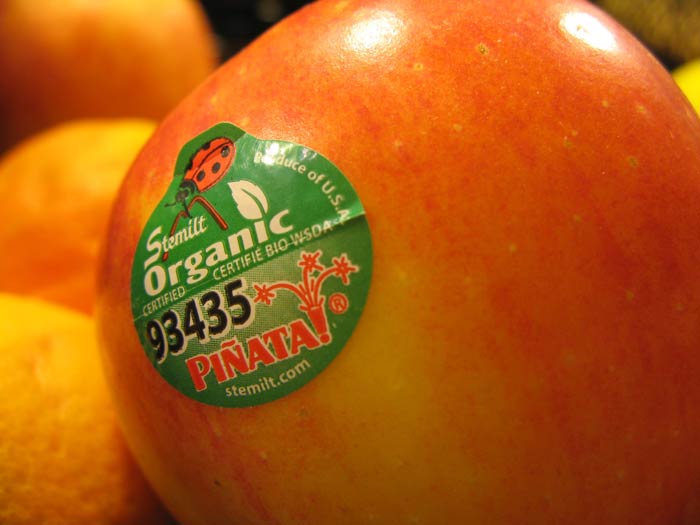
PLU Codes Do Not Indicate Genetically Modified Produce

Let's put a rumor to rest. No, the 5-digit PLU codes on produce do not tell you what is genetically modified or natural. This urban legend has circulated long enough, even on the best of websites. It's time to take it down.


The 4-digit PLU codes on the sometimes-pain-in-the-neck labels glued to apples, for example, tell the checkout lady which is a small Fuji (4129) and which is a Honeycrisp (3283). She'll know what to charge you and the inventory elves will know what's what. If there's a 5-digit code starting with 9, then it's organic.

These numbers, organized by the Produce Marketing Association, have nothing to do with you. According to Kathy Means, Association Vice President of Public Relations and Government Affairs, this is an optional convention for retailers and their supplier and is not designed as a communication tool for customers. If you want to know which items are organic, look for the word Organic; and stop squinting at tiny codes.

GMO codes are hypothetical

Those that run PLU-universe figured that someday some retailer might want to distinguish between a GMO and a non-GMO for price or inventory purposes. So they created a convention of 5 digits starting with an 8, just in case it catches on. But it hasn't. No one uses that number 8 as far as we can tell. And why would they? Most Americans say they would avoid GMOs if they were labeled.

Some seed companies don't even want gardeners to know which seed is genetically modified. One company that sells zucchini seeds outfitted with virus genes announced that they would refuse to sell seed packets in Vermont, since the state legislature requires GM seeds to be labeled.

Shopping Guide helps you avoid GMOs

Where does that leave you—if you happen to be one of those finicky eaters who values your immune and reproductive systems, and don't want your kids to end up with the organ damage common among GMO-fed lab animals?

Fortunately, we've got you covered. Go to www.NonGMOShoppingGuide.com and peruse the long lists of non-GMO and GMO brands by category. Download a two-page version, order the pocket guide, or even equip your iPhone with the new app "ShopNoGMO".

Although a list of non-GMO brands won't help you figure out if your produce is genetically modified, the great news is that there are only 4 GMO veggies or fruits at this point: papaya, but only from Hawaii and no where else; some zucchini and yellow squash, and some corn on the cob. For these, unless it says organic or boasts a non-GMO sign in the store, eating them is a gamble. It could be GMO.

If you're not sure if GMOs are bad for you, we've got you covered there too. Visit www.HealthierEating.org, and read, listen, or watch, and find out why more and more doctors and medical organizations are prescribing non-GMO diets to all patients.

International bestselling author and filmmaker Jeffrey M. Smith is the executive director of the Institute for Responsible Technology. His first book, Seeds of Deception: Exposing Industry and Government Lies About the Safety of the Genetically Engineered Foods You're Eating, is the world's bestselling and #1 rated book on GMOs. His second, Genetic Roulette: The Documented Health Risks of Genetically Engineered Foods, documents 65 health risks of the GM foods Americans eat everyday. Both are distributed by Chelsea Green Publishing. To help you choose healthier, non-GMO brands, use the Non-GMO Shopping Guide.
http://www.huffingtonpost.com/jeffrey-smith/plu-codes-do-not-indicate_b_473088.html

Monday, March 1, 2010

OF MICE & CLONES - BROUGHT TO YOU BY OUR GOOD FRIENDS FROM CANADA

To Market, to Market to buy a fat CLONE......

Orwell-Speak Award Goes to Canada's GM "Enviropig"

by Kristen Ridley
Gene Modification, Industrial Farming, Meat

Published February 28, 2010 @ 07:34AM PT

By the time this post goes live, Environment Canada will have officially announced its approval of a genetically engineered pig, allowing the animal to overcome its first hurdle on the way to a grocery store near you (if you happen to live in Canada), and possibly to become the first transgenic animal to enter our collective diet.

Developed by the University of Guelph in Ontario, these Yorkshire pigs have genes from mice that reduce the amount of phosphorous in the pigs' feces by up to two thirds by allowing them to digest phosphorous from grain. Like cows, industrially farmed pigs are fed almost nothing but corn; unlike cows, they don't become sick from it, but it isn't exactly a balanced diet. The pigs can't absorb the phosphorous they need on this diet, requiring mineral phosphate supplements to be added to their feed — which further increases the already concentrated amount of phosphorous in their feces.

Excess phosphorous is a problem because it runs off into bodies of water, causing algae blooms that strangle fish and other sea life. So naturally the University has trademarked this new low-phosphorous pig as, no joke, the Enviropig.

Once again (and again) we see incomplete industrial solutions being offered for industrially-caused problems. Industrial agriculture's motto ought to be Solutions in search of a problem.

Health Canada will have to approve the pigs as fit for human consumption before they are released on the market. The University of Guelph has also submitted an application to the FDA, but it is unclear if or when these "Frankenswine" — excuse me, "Enviropigs" might be approved for use in the United States.

Hey, Canada, I have a great idea for you. A groundbreaking solution. It's not as if you're short on space up there: Why don't you quit cramming thousands of pigs into tiny warehouses and let them eat — and shit — as nature intended?

Photo credit: Just chaos

WHY DOES THE USA ALLOW THESE BANNED FOODS ON OUR SHELVES????


7 Foods Banned in Europe Still Available in the U.S.

By Christine Lepisto, TreeHugger

Genetically Modified Foods
Although the E.U. is continuously coming under attack for policies banning GM foods, the community is highly suspicious of genetically modified foods, and the agro-industrial pressures that drive their use. The problem with GM foods is that there is simply not sufficient research and understanding to inform good public policy. In spite of widespread GM use without apparent negative impacts in other countries, the recent public reaction to trans-fats are reason enough to support a precautionary principle for the food supply chain.

Pesticides in Your Food

The E.U. has acted against the worst pesticides typically found as residuals in the food chain. A ban on 22 pesticides was passed at the E.U. level, and is pending approval by the Member States. Critics claim the ban will raise prices and may harm malaria control, but advocates of the ban say action must be taken against the pesticides which are known to cause harm to health and nevertheless consistently found in studies of food consumption.

Bovine Growth Hormone This drug, known as rBGH for short, is not allowed in Europe. In contrast, U.S. citizens struggle even for laws that allow hormone-free labeling so that consumers have a choice. This should be an easy black-and-white decision for all regulators and any corporation that is really concerned about sustainability: give consumers the information. We deserve control over our food choice.

Chlorinated Chickens

Amid cries that eating American chickens would degrade European citizens to the status of guinea pigs, the E.U. continued a ban on chickens washed in chlorine. The ban effectively prevents all import of chickens from the U.S. into Europe. If chicken chlorination is “totally absurd” and “outrageous” for Europeans, what does that mean for Americans?

Food Contact Chemicals

Phthalates and Bisphenols in plastic are really beneficial. They help manufacturers create plastic products with the softness and moldability needed to fulfill consumer needs. But when the food contact additives are found in the food and liquids contained by those plastics, trouble starts. Both the U.S. and Europe stringently regulate food contact use of chemicals. However, the standard of approval is different. In Europe, the precautionary principle requires that the suppliers of chemicals prove their additives safe, or they will be banned. Of course, although the E.U. has banned phthalates in toys, both phthalates and bisphenol-A remain approved for food contact uses — subject to strict regulations on their use.

Stevia, the natural sweetener

The U.S. recently approved this “natural” sweetener as a food additive. Previously, it was sold in the U.S. under the less stringent dietary supplement laws. It has been embraced in Japan for over three decades, but E.U. bans still stand — pointing to potential disturbances in fertility and other negative health impacts. But the sweetener is credited with potentially positive health effects too. Is this a case where consumer choice should prevail?

Planned Ban: Food Dyes

Many food dyes previously recognized as safe are suspected of contributing to attention deficit disorder. Action is afoot as the UK evaluates a ban on synthetic food colors. Regulation in the E.U. often starts through the leadership of one Member State, which pushes the concepts up to Brussels after a proof-of-concept pilot phase. Red 40, Yellow 5, Yellow 6, Blue 1, Blue 2, Green 3, Orange B, and Red 3 are among the food colors associated with hyperactivity.
http://www.care2.com/greenliving/7-foods-banned-in-europe-still-available-in-the-us.html

Wednesday, February 24, 2010

HAPPY, COMPARED TO WHAT?????

The Happy Story of GM Crops

Published on Wednesday, February 24, 2010 by CommonDreams.org
http://www.commondreams.org/view/2010/02/24-4

by Jim Goodman

Since the first commercial cultivation of Genetically Modified (GM) crops in 1996, Monsanto and the rest of the big six Biotech seed companies, (Pioneer/DuPont, Syngenta, Dow, BASF and Bayer) have become masters at the art of story telling.

Farmers, always looking for the next big technology fix, loved the stories; the promise of better yields, less chemicals needed for weed control, higher profits and of course, a solution to the elusive goal of feeding the world.

Governments, seeing biotechnology as a huge economic engine, embraced the technology. University research was shifted almost exclusively to biotech crops.

GM was the wave of the future, bankers encouraged planting GM crops to guarantee a "profitable harvest". Crop insurance premiums were lower for farmers planting GM. Everyone bought the story.

In a recent opinion piece in the Wisconsin State Journal former Secretary of Agriculture John Block touted the virtues of GM crops and credited them with producing higher yields, lower pesticide use and solving the ever growing problem of world hunger. Current Agriculture Secretary Tom Vilsack plugged GM at last weeks USDA Outlook Conference.

Problem is, the promises were just good stories. The believers are missing the truth.

Weeds have become resistant to Monsanto's Roundup herbicide and insects became resistant to the toxins produced by their GM corn.

As GM was planted on more acres, overall pesticide use went up, not down.

A University of Kansas study found that GM crops actually had lower yields than their conventional counterparts.

Even as the problems of GM crops become more apparent, the cost of GM seed continues to rise. Many farmers are backing away from GM, but finding non-GM seed is difficult, considering Monsanto controls roughly 90% of the corn and soy genetics in the U.S.

With corn and soy well under their control, Monsanto now hopes to gain USDA approval for Roundup resistant alfalfa. A perennial crop, alfalfa is the fourth most widely grown crop in the U.S. and again, Monsanto sees profit. The contamination of non-GM and organic alfalfa, the potential for further reduction of bee populations, among other problems, seem of little consequence.

Feeding the world? GM will not do it, even former Monsanto CEO Robert Shapiro admitted "The commercial industrial technologies that are used in agriculture today to feed the world... are not inherently sustainable."

Still, Monsanto bills itself as a leader in global sustainability, ignoring the fact that true sustainability cannot be achieved when your only driving goal is the next quarterly profit report.

The world stands a better chance of feeding itself by using and improving upon farming methods that have been relied upon for centuries. In Africa, for example, if indigenous crops, long adapted to their environment, were put forward as the solution to hunger, studies show that the population could have adequate food supplies and at times, cash income from sales of surplus crops.

So, why do so many continue to believe, to have faith in the story, when the evidence is against them?

When GM crops do not yield as promised?

When a USDA report shows that farmers actually loose income by planting GM crops?

When seed costs are unreasonably high as are the fertilizers and chemicals that are absolutely required to grow GM?

When consumers continue to reject GM foods citing concerns of their serious health risks?

When GM will not feed the world?

The GM story as told by the Biotech giants paints the future as a happy and prosperous place; farmers are profitable, everyone is well fed and the environment is protected.

The real GM story is not so happy, it is a story of market control, of environmental degradation, of deceived farmers and consumers.
Jim Goodman is a dairy farmer from Wonewoc WI and an IATP Food and Society Fellow