Tuesday, March 2, 2010

CAN'T JUDGE A FRUIT BY ITS LABEL


by Jeffrey Smith

Author and Founder of the Institute for Responsible Technology
Posted: February 23, 2010
PLU Codes Do Not Indicate Genetically Modified Produce

Let's put a rumor to rest. No, the 5-digit PLU codes on produce do not tell you what is genetically modified or natural. This urban legend has circulated long enough, even on the best of websites. It's time to take it down.
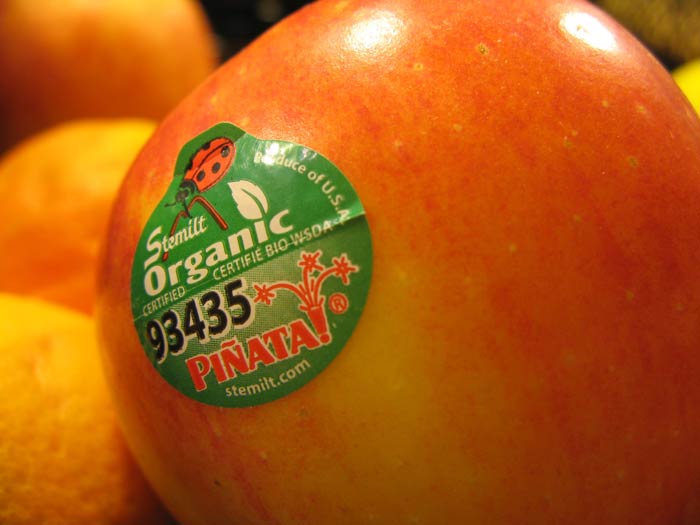


The 4-digit PLU codes on the sometimes-pain-in-the-neck labels glued to apples, for example, tell the checkout lady which is a small Fuji (4129) and which is a Honeycrisp (3283). She'll know what to charge you and the inventory elves will know what's what. If there's a 5-digit code starting with 9, then it's organic.

These numbers, organized by the Produce Marketing Association, have nothing to do with you. According to Kathy Means, Association Vice President of Public Relations and Government Affairs, this is an optional convention for retailers and their supplier and is not designed as a communication tool for customers. If you want to know which items are organic, look for the word Organic; and stop squinting at tiny codes.

GMO codes are hypothetical

Those that run PLU-universe figured that someday some retailer might want to distinguish between a GMO and a non-GMO for price or inventory purposes. So they created a convention of 5 digits starting with an 8, just in case it catches on. But it hasn't. No one uses that number 8 as far as we can tell. And why would they? Most Americans say they would avoid GMOs if they were labeled.

Some seed companies don't even want gardeners to know which seed is genetically modified. One company that sells zucchini seeds outfitted with virus genes announced that they would refuse to sell seed packets in Vermont, since the state legislature requires GM seeds to be labeled.

Shopping Guide helps you avoid GMOs

Where does that leave you—if you happen to be one of those finicky eaters who values your immune and reproductive systems, and don't want your kids to end up with the organ damage common among GMO-fed lab animals?

Fortunately, we've got you covered. Go to www.NonGMOShoppingGuide.com and peruse the long lists of non-GMO and GMO brands by category. Download a two-page version, order the pocket guide, or even equip your iPhone with the new app "ShopNoGMO".

Although a list of non-GMO brands won't help you figure out if your produce is genetically modified, the great news is that there are only 4 GMO veggies or fruits at this point: papaya, but only from Hawaii and no where else; some zucchini and yellow squash, and some corn on the cob. For these, unless it says organic or boasts a non-GMO sign in the store, eating them is a gamble. It could be GMO.

If you're not sure if GMOs are bad for you, we've got you covered there too. Visit www.HealthierEating.org, and read, listen, or watch, and find out why more and more doctors and medical organizations are prescribing non-GMO diets to all patients.

International bestselling author and filmmaker Jeffrey M. Smith is the executive director of the Institute for Responsible Technology. His first book, Seeds of Deception: Exposing Industry and Government Lies About the Safety of the Genetically Engineered Foods You're Eating, is the world's bestselling and #1 rated book on GMOs. His second, Genetic Roulette: The Documented Health Risks of Genetically Engineered Foods, documents 65 health risks of the GM foods Americans eat everyday. Both are distributed by Chelsea Green Publishing. To help you choose healthier, non-GMO brands, use the Non-GMO Shopping Guide.
http://www.huffingtonpost.com/jeffrey-smith/plu-codes-do-not-indicate_b_473088.html

Monday, March 1, 2010

OF MICE & CLONES - BROUGHT TO YOU BY OUR GOOD FRIENDS FROM CANADA

To Market, to Market to buy a fat CLONE......

Orwell-Speak Award Goes to Canada's GM "Enviropig"

by Kristen Ridley
Gene Modification, Industrial Farming, Meat

Published February 28, 2010 @ 07:34AM PT

By the time this post goes live, Environment Canada will have officially announced its approval of a genetically engineered pig, allowing the animal to overcome its first hurdle on the way to a grocery store near you (if you happen to live in Canada), and possibly to become the first transgenic animal to enter our collective diet.

Developed by the University of Guelph in Ontario, these Yorkshire pigs have genes from mice that reduce the amount of phosphorous in the pigs' feces by up to two thirds by allowing them to digest phosphorous from grain. Like cows, industrially farmed pigs are fed almost nothing but corn; unlike cows, they don't become sick from it, but it isn't exactly a balanced diet. The pigs can't absorb the phosphorous they need on this diet, requiring mineral phosphate supplements to be added to their feed — which further increases the already concentrated amount of phosphorous in their feces.

Excess phosphorous is a problem because it runs off into bodies of water, causing algae blooms that strangle fish and other sea life. So naturally the University has trademarked this new low-phosphorous pig as, no joke, the Enviropig.

Once again (and again) we see incomplete industrial solutions being offered for industrially-caused problems. Industrial agriculture's motto ought to be Solutions in search of a problem.

Health Canada will have to approve the pigs as fit for human consumption before they are released on the market. The University of Guelph has also submitted an application to the FDA, but it is unclear if or when these "Frankenswine" — excuse me, "Enviropigs" might be approved for use in the United States.

Hey, Canada, I have a great idea for you. A groundbreaking solution. It's not as if you're short on space up there: Why don't you quit cramming thousands of pigs into tiny warehouses and let them eat — and shit — as nature intended?

Photo credit: Just chaos

WHY DOES THE USA ALLOW THESE BANNED FOODS ON OUR SHELVES????


7 Foods Banned in Europe Still Available in the U.S.

By Christine Lepisto, TreeHugger

Genetically Modified Foods
Although the E.U. is continuously coming under attack for policies banning GM foods, the community is highly suspicious of genetically modified foods, and the agro-industrial pressures that drive their use. The problem with GM foods is that there is simply not sufficient research and understanding to inform good public policy. In spite of widespread GM use without apparent negative impacts in other countries, the recent public reaction to trans-fats are reason enough to support a precautionary principle for the food supply chain.

Pesticides in Your Food

The E.U. has acted against the worst pesticides typically found as residuals in the food chain. A ban on 22 pesticides was passed at the E.U. level, and is pending approval by the Member States. Critics claim the ban will raise prices and may harm malaria control, but advocates of the ban say action must be taken against the pesticides which are known to cause harm to health and nevertheless consistently found in studies of food consumption.

Bovine Growth Hormone This drug, known as rBGH for short, is not allowed in Europe. In contrast, U.S. citizens struggle even for laws that allow hormone-free labeling so that consumers have a choice. This should be an easy black-and-white decision for all regulators and any corporation that is really concerned about sustainability: give consumers the information. We deserve control over our food choice.

Chlorinated Chickens

Amid cries that eating American chickens would degrade European citizens to the status of guinea pigs, the E.U. continued a ban on chickens washed in chlorine. The ban effectively prevents all import of chickens from the U.S. into Europe. If chicken chlorination is “totally absurd” and “outrageous” for Europeans, what does that mean for Americans?

Food Contact Chemicals

Phthalates and Bisphenols in plastic are really beneficial. They help manufacturers create plastic products with the softness and moldability needed to fulfill consumer needs. But when the food contact additives are found in the food and liquids contained by those plastics, trouble starts. Both the U.S. and Europe stringently regulate food contact use of chemicals. However, the standard of approval is different. In Europe, the precautionary principle requires that the suppliers of chemicals prove their additives safe, or they will be banned. Of course, although the E.U. has banned phthalates in toys, both phthalates and bisphenol-A remain approved for food contact uses — subject to strict regulations on their use.

Stevia, the natural sweetener

The U.S. recently approved this “natural” sweetener as a food additive. Previously, it was sold in the U.S. under the less stringent dietary supplement laws. It has been embraced in Japan for over three decades, but E.U. bans still stand — pointing to potential disturbances in fertility and other negative health impacts. But the sweetener is credited with potentially positive health effects too. Is this a case where consumer choice should prevail?

Planned Ban: Food Dyes

Many food dyes previously recognized as safe are suspected of contributing to attention deficit disorder. Action is afoot as the UK evaluates a ban on synthetic food colors. Regulation in the E.U. often starts through the leadership of one Member State, which pushes the concepts up to Brussels after a proof-of-concept pilot phase. Red 40, Yellow 5, Yellow 6, Blue 1, Blue 2, Green 3, Orange B, and Red 3 are among the food colors associated with hyperactivity.
http://www.care2.com/greenliving/7-foods-banned-in-europe-still-available-in-the-us.html

Wednesday, February 24, 2010

HAPPY, COMPARED TO WHAT?????

The Happy Story of GM Crops

Published on Wednesday, February 24, 2010 by CommonDreams.org
http://www.commondreams.org/view/2010/02/24-4

by Jim Goodman

Since the first commercial cultivation of Genetically Modified (GM) crops in 1996, Monsanto and the rest of the big six Biotech seed companies, (Pioneer/DuPont, Syngenta, Dow, BASF and Bayer) have become masters at the art of story telling.

Farmers, always looking for the next big technology fix, loved the stories; the promise of better yields, less chemicals needed for weed control, higher profits and of course, a solution to the elusive goal of feeding the world.

Governments, seeing biotechnology as a huge economic engine, embraced the technology. University research was shifted almost exclusively to biotech crops.

GM was the wave of the future, bankers encouraged planting GM crops to guarantee a "profitable harvest". Crop insurance premiums were lower for farmers planting GM. Everyone bought the story.

In a recent opinion piece in the Wisconsin State Journal former Secretary of Agriculture John Block touted the virtues of GM crops and credited them with producing higher yields, lower pesticide use and solving the ever growing problem of world hunger. Current Agriculture Secretary Tom Vilsack plugged GM at last weeks USDA Outlook Conference.

Problem is, the promises were just good stories. The believers are missing the truth.

Weeds have become resistant to Monsanto's Roundup herbicide and insects became resistant to the toxins produced by their GM corn.

As GM was planted on more acres, overall pesticide use went up, not down.

A University of Kansas study found that GM crops actually had lower yields than their conventional counterparts.

Even as the problems of GM crops become more apparent, the cost of GM seed continues to rise. Many farmers are backing away from GM, but finding non-GM seed is difficult, considering Monsanto controls roughly 90% of the corn and soy genetics in the U.S.

With corn and soy well under their control, Monsanto now hopes to gain USDA approval for Roundup resistant alfalfa. A perennial crop, alfalfa is the fourth most widely grown crop in the U.S. and again, Monsanto sees profit. The contamination of non-GM and organic alfalfa, the potential for further reduction of bee populations, among other problems, seem of little consequence.

Feeding the world? GM will not do it, even former Monsanto CEO Robert Shapiro admitted "The commercial industrial technologies that are used in agriculture today to feed the world... are not inherently sustainable."

Still, Monsanto bills itself as a leader in global sustainability, ignoring the fact that true sustainability cannot be achieved when your only driving goal is the next quarterly profit report.

The world stands a better chance of feeding itself by using and improving upon farming methods that have been relied upon for centuries. In Africa, for example, if indigenous crops, long adapted to their environment, were put forward as the solution to hunger, studies show that the population could have adequate food supplies and at times, cash income from sales of surplus crops.

So, why do so many continue to believe, to have faith in the story, when the evidence is against them?

When GM crops do not yield as promised?

When a USDA report shows that farmers actually loose income by planting GM crops?

When seed costs are unreasonably high as are the fertilizers and chemicals that are absolutely required to grow GM?

When consumers continue to reject GM foods citing concerns of their serious health risks?

When GM will not feed the world?

The GM story as told by the Biotech giants paints the future as a happy and prosperous place; farmers are profitable, everyone is well fed and the environment is protected.

The real GM story is not so happy, it is a story of market control, of environmental degradation, of deceived farmers and consumers.
Jim Goodman is a dairy farmer from Wonewoc WI and an IATP Food and Society Fellow

Wednesday, February 10, 2010

SUPPORT H.R. 4310: CUT U.S. TAX BREAKS ON JUNK FOOD ADS TO KIDS!

Congressman Dennis Kucinich: Don’t Subsidize Childhood Obesity
Revoke tax breaks for junk food advertising


WASHINGTON - February 9 - Congressman Dennis Kucinich (D-OH) today made the following statement after First Lady Michelle Obama announced a new effort to combat childhood obesity:
http://www.highlighthealth.com/wp-content/uploads/2007/09/tv-kids.jpg
“I support the First Lady’s ambitious efforts to combat childhood obesity. During childhood, we develop the eating habits and preferences that can drive our food choices for the rest of our lives. We need to ensure that families can make their own decisions about their diet, without the manipulative influence of the highly profitable and sometimes predatory junk food industry.

“Most Americans don’t know that the government now subsidizes the marketing of junk food and fast food to kids in order to cement their brand and taste allegiances early in life. That is why I introduced HR 4310, which would revoke the tax breaks that companies receive for advertising and marketing unhealthy food to children,” said Kucinich.

According to the Institute of Medicine, in 2004 approximately $10 billion was spent on food advertising directed at children. Plainly stated, marketing to children works. If it didn’t work, they wouldn’t do it. A child’s developing brain is no match for a $10 billion industry that uses the best behavioral and developmental research to create emotional bonds to brands before the children’s ability to distinguish fact from opinion has developed.

“By continuing to use hard-earned taxpayer money to subsidize this marketing and advertising, we are undercutting our own efforts to curb the obesity epidemic. HR 4310 would end this practice, protect American children, and ensure that they grow up in a healthy environment. Moreover, in today’s budget-conscious environment, HR 4310 is a commonsense way to provide funding for the First Lady’s initiative,” added Kucinich.
CONTACT: Congressman Dennis Kucinich - Nathan White (202)225-5871
http://www.commondreams.org/newswire/2010/02/09-10

SORRY, HILL...GMO's NOT The Solution - Helen Clark, United Nations


When asked directly if she agreed with US Secretary of State Hillary Clinton's science advisor, Dr. Nina Federoff, that without GE (genetic engineering) the world would suffer future food shortages, [the Chief Administrator of the United Nations Development Programme, Helen Clark] said "I don't think GE is the solution to the food security problem."

Head of the UNDP gets it right on agriculture
Centre for Integrated Research in Biosafety: Press Release, 17 February 2010
http://www.inbi.canterbury.ac.nz/

The Chief Administrator of the United Nations Development Programme said today that world food security depended upon getting "back to basics" with agriculture.

Former New Zealand Prime Minister Helen Clark, who now heads the UNDP, spoke on what she saw as the solution to future food security problems. Responding to questions today on Zealand's national radio show Nine to Noon, Ms. Clark said that "smarter farming and production has got to be part of the solution".

When asked directly if she agreed with US Secretary of State Hillary Clinton's science advisor Dr. Nina Federoff that without GE (genetic engineering) the world would suffer future food shortages, she said "I don't think GE is the solution to the food security problem."

Instead, Clark argued for more funding for agriculture that emphasised solutions to the problems faced by poor farmers. Public funding for extension services and agricultural research that improves productivity and yield had to increase rather than relying upon genetically modified organisms.

Ms. Clark could have been reading straight from the International Assessment of Agricultural Knowledge, Science and Technology for Development (IAASTD), the internationally peer-reviewed World Bank and UN report published last year after winning endorsement from 58 governments. This report represents the work of the largest research effort to date on the history and future of modern agriculture. Consistent with Clark’s statements, the IAASTD also endorsed a renewed emphasis on technologies that have proven track records for improving yield, reducing external inputs into agroecosystems, preventing the conversion of more land for agriculture and helping agriculture to improve the lives of poor and subsistence farmers.

Those kinds of technologies include conventional crop breeding, agroecological methods for increasing soil moisture retention and decreasing erosion, and intensification using more diverse cropping strategies and cover crops rather than fossil fuel-intensive fertilizers and damaging monocultures.

The giant agrochemical and biotechnology companies, along with Federoff, have been advocating reduced regulation and broader uptake of GE in order to feed the world. Clark noted, however, that using crops for biofuel was competing with crops for food. She concluded that "I wouldn't jump to the conclusion that modified crops were the answer."

For more on the IAASTD
http://www.agassessment.org/
https://sites.google.com/site/therightbiotechnology/

Professor Jack A. Heinemann
Director INBI
Dr. Joanna Goven
Deputy Director